This guide covers everything about music in the classroom. As of April 2026, the integration of music into the classroom is more vital than ever, offering a powerful avenue to enhance cognitive, social, and emotional development. Far from being a mere extracurricular activity, music education actively supports core academic goals, fostering creativity and critical thinking skills essential for today’s learners.
Last updated: May 1, 2026
- Music in the classroom demonstrably improves memory, attention span, and problem-solving abilities across all age groups.
- Integrating music into subjects like math and science can significantly boost student comprehension and retention.
- As of 2026, digital tools and platforms offer innovative ways to deliver music education, making it more accessible.
- Early childhood music programs lay a crucial foundation for lifelong learning and emotional well-being.
- Active participation in music-making is linked to higher levels of student engagement and reduced behavioural issues.
The Undeniable Cognitive Advantages of Music in the Classroom
Music is not just auditory; it’s a complex cognitive workout. Engaging with music, whether through listening, singing, or playing an instrument, stimulates multiple areas of the brain simultaneously. This interconnected activity strengthens neural pathways, leading to improved memory recall and enhanced executive functions.
Research consistently shows a correlation between music education and academic achievement. For instance, a meta-analysis of studies published up to 2025 indicated that students with sustained music instruction often score higher on standardized tests, particularly in mathematics and language arts. This isn’t magic; it’s brain science in action. The rhythmic patterns in music can mirror mathematical sequences, while lyrical content aids in language acquisition.
Boosting Engagement Through Active Music-Making
One of the most immediate impacts of music in the classroom is its ability to capture and hold student attention. Active music-making, in particular, draws students in, making learning an immersive and enjoyable experience. When students are actively participating—clapping rhythms, singing along, or playing simple instruments—they are less likely to disengage.
This active participation is especially potent in elementary and early childhood settings. A study by the National Association for Music Education (NAfME) (2024) highlighted that schools with strong music programs often report higher overall student attendance and greater classroom participation rates. When students feel connected and excited about an activity, their willingness to contribute and learn increases dramatically.
Use Case: In a third-grade class learning about the solar system, students could create a rhythmic piece where each planet has a distinct percussive sound and a specific rhythmic pattern corresponding to its orbit. This makes abstract concepts tangible and memorable.
Music as a Bridge to Other Subjects: Arts Integration Strategies
Music is a powerful tool for arts integration, allowing educators to weave musical elements into non-music subjects. This cross-curricular approach deepens understanding and caters to diverse learning styles. For example, history lessons can come alive through period music, while literature can be explored through song analysis or creation.
As of 2026, digital platforms offer a wealth of resources for arts integration. Many educational technology companies provide interactive tools that allow students to compose simple melodies, create soundscapes, or even analyse the structure of musical pieces. These tools make complex concepts accessible and engaging.
A secondary school English class studying Shakespeare could analyse how music is used in film adaptations to convey mood and character. They could then attempt to compose a short piece of music to underscore a specific scene, exploring thematic elements through sound.
Supporting Social-Emotional Learning with Music
Beyond cognitive benefits, music plays a crucial role in nurturing social-emotional development. Group music activities encourage cooperation, empathy, and communication. Learning to play in an ensemble, for instance, requires listening to others, responding in kind, and working towards a shared goal.
Music therapy, though often seen as a specialised field, incorporates principles that benefit all students. The emotional expression facilitated by music can help students process feelings, build resilience, and develop self-awareness. According to the American Music Therapy Association (as of April 2026), structured musical experiences can reduce anxiety and improve mood in educational settings.
Early Childhood Music: Laying the Foundation for Lifelong Learning
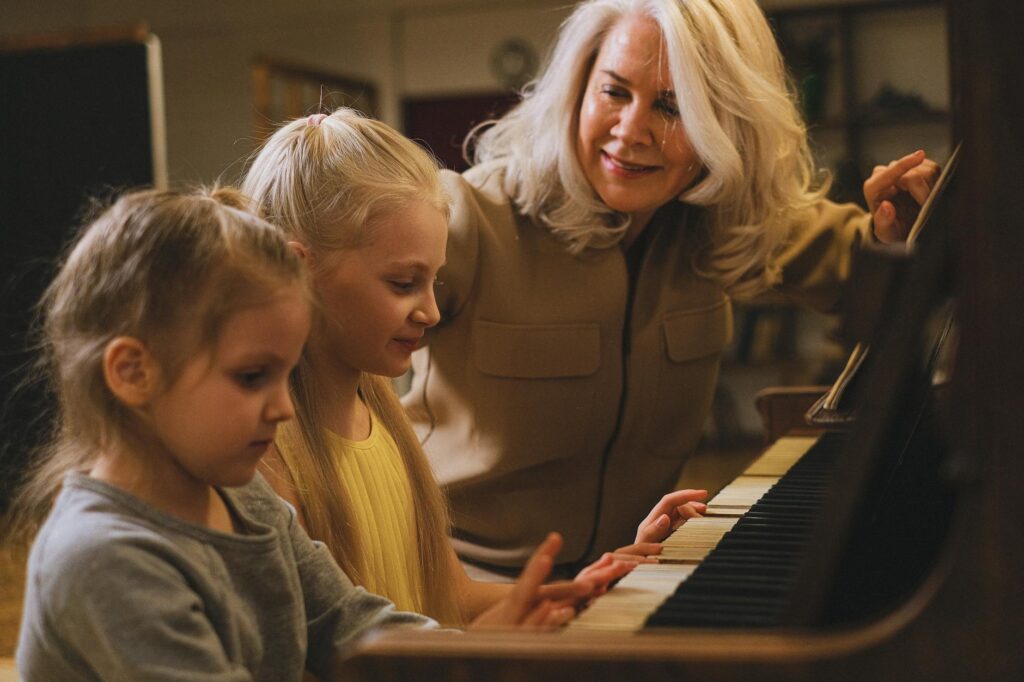
The impact of music on very young children is profound. Early childhood music education, often starting from infancy, is instrumental in developing language skills, fine and gross motor skills, and auditory processing. Singing simple songs, engaging in rhythmic play, and exploring basic instruments provide a rich sensory experience.
The Williamsburg Families publication recently highlighted summer 2026 registration for Early Childhood Music School (ECMS) classes, underscoring the continued demand and recognition for these programs. These early experiences are not just about fun; they are building critical cognitive and social-emotional architecture. For example, learning nursery rhymes with actions helps toddlers develop both language comprehension and motor coordination simultaneously.
Use Case: A preschool teacher might use hand drums and shakers to teach concepts like ‘fast’ and ‘slow,’ or ‘loud’ and ‘soft.’ This hands-on exploration makes abstract concepts concrete and fun, simultaneously developing rhythm and listening skills.
Music Technology and Digital Resources in the 2026 Classroom
The world of music education has been transformed by technology. As of 2026, numerous digital tools and software applications are available to support music learning. These range from virtual instruments and music notation software to AI-powered composition tools and interactive learning platforms.
Platforms like GarageBand, Soundtrap, and others allow students to explore music creation without needing physical instruments. They can experiment with different genres, record their own compositions, and collaborate with peers remotely. This technological integration democratizes music creation and learning, making it more accessible than ever before.
Addressing Challenges: Budgetary Constraints and Program Cuts
Despite the clear benefits, music programs often face challenges, including budget cuts and staffing shortages. Recent news from the Gresham-Barlow School District indicates potential cutbacks for the 2026-27 school year, a situation mirrored in various districts nationwide. This reality necessitates creative solutions for maintaining music education.
When faced with budget constraints, schools can explore several avenues. Community partnerships with local music organisations or professional musicians can provide resources or guest instruction. Also, integrating music activities into existing subjects can maintain exposure even when dedicated music classes are reduced. The Big Rapids schools’ ninth consecutive music award, reported by Midland Daily News in April 2026, shows that sustained commitment, even with limited resources, can yield significant recognition and success.
Solution: Advocate for music education by gathering data on its positive impact on student outcomes. Share success stories, like the PCSD Elementary Music Program’s receipt of the State Sorenson Legacy Award, to build support among administrators and the community.
Practical Implementation: Music Activities for Every Classroom
Integrating music doesn’t require a dedicated music teacher or extensive equipment. Simple, effective activities can be implemented by any educator. These activities are designed to be flexible and adaptable to various age groups and subject areas.
- Rhythm and Beat Activities: Use clapping, stomping, or simple percussion instruments (shakers, drums) to explore steady beat, tempo (fast/slow), and rhythm. This can reinforce counting in math or understanding metre in poetry.
- Call and Response: A simple vocal or instrumental pattern is sung/played, and students respond with the same pattern. This is excellent for memory, listening skills, and group cohesion.
- Movement to Music: Use music to guide physical activity, helping students understand dynamics (loud/soft), mood, and different musical styles. This is great for kinesthetic learners and can be tied to storytelling.
- Songwriting and Lyric Creation: Students can write lyrics to existing melodies or compose simple original songs to summarize concepts learned in science, history, or literature.
- Instrument Exploration: If available, allow students to explore various classroom instruments, learning their sounds and how to play them respectfully. Even simple instruments like recorders or ukuleles can be introduced.
Real-World Examples of Music in the Classroom
The impact of music in the classroom is best understood through real-world applications. Consider the Crown Point Junior Music Academy’s celebration of its new dedicated music centre in April 2026, an investment signifying the value placed on structured music education. This dedicated space allows for specialised instruction and performance opportunities.
On a broader scale, the Oak Ridge National Laboratory (ORNL) has explored the intersection of music and science, noting how understanding wave phenomena in music can deepen comprehension of physics principles. This interdisciplinary approach highlights music’s potential beyond the arts classroom. Even in unexpected places like Enfield High School, described by FOX61 Student News, a ‘revolutionary class’ united students through sound and music, demonstrating its power to build community and connection.
Common Mistakes and How to Avoid Them
While the benefits of music in the classroom are substantial, educators may encounter pitfalls. One common mistake is treating music as an optional add-on rather than an integral part of the curriculum. This can lead to its de-prioritization when time or resources are scarce.
Another error is focusing solely on passive listening without active engagement. Students benefit most when they are actively creating, moving, or performing. Finally, educators might feel intimidated if they don’t have formal music training. However, many effective music activities require no prior musical expertise, focusing instead on rhythm, movement, and vocal exploration.
Solution: Start small. Incorporate a 5-10 minute music activity daily or weekly. Use readily available online resources and professional development opportunities to build confidence and skill. Collaborate with colleagues who may have music backgrounds.
Expert Tips for Enhancing Music in Your Classroom
To truly harness the power of music, consider these advanced strategies. Firstly, ensure your music integration is meaningful, not superficial. Connect musical activities directly to learning objectives in other subjects; don’t just play music in the background.
Secondly, foster a sense of community through music. Group performances, even informal ones, build confidence and belonging. Thirdly, embrace technology. As noted, digital tools provide unparalleled opportunities for creation and learning.
Explore apps that allow students to record their own songs or analyse musical structures. Finally, actively seek professional development. Many organisations offer workshops and resources for educators on integrating music effectively, even without a formal music background. As of April 2026, numerous online courses and webinars are available covering topics from early childhood music to using technology in music education.
Unique Insight: Consider using music to teach concepts of pattern recognition and prediction, which are foundational skills for coding and data analysis. For example, analysing the recurring motifs in a classical piece or the beat structure in a pop song can illustrate these principles in a highly engaging way.
Frequently Asked Questions
What are the primary benefits of music in the classroom?
Music in the classroom enhances cognitive functions like memory and attention, improves social-emotional skills such as empathy and cooperation, and boosts overall academic performance. It also increases student engagement and creativity across various subjects.
How can I integrate music if I’m not a music teacher?
You can use simple rhythmic activities, call-and-response songs, movement to music, or lyric writing related to your subject matter. Focus on participation and exploration rather than technical proficiency. Numerous online resources offer easy-to-follow lesson ideas.
What age groups benefit most from music education?
All age groups benefit, but early childhood music education is particularly crucial for foundational development in language, motor skills, and auditory processing. Older students benefit from complex musical engagement that hones critical thinking and collaborative skills.
Are there specific music programs that are being cut in 2026?
While specific programs vary by district, news in April 2026 suggests some school districts are facing budgetary constraints that could lead to scaling back or cutting music programs. Proactive advocacy and creative resourcefulness are key to maintaining these vital programs.
How does music affect a student’s emotional well-being?
Music provides an outlet for emotional expression, helps students process feelings, reduces anxiety, and builds resilience. Group music-making fosters a sense of belonging and improves social connections, contributing to a positive school climate.
What digital tools are available for music in the classroom as of 2026?
As of 2026, popular digital tools include GarageBand, Soundtrap, and various music notation software. These platforms offer virtual instruments, composition features, and interactive learning experiences, making music creation more accessible.
Conclusion
Integrating music into the classroom is a proven strategy for enriching the educational experience, fostering complete student development, and enhancing academic outcomes. From boosting cognitive function to nurturing social-emotional growth, the power of music is undeniable.
Actionable Takeaway: Commit to introducing at least one new music-based activity into your teaching routine each week, focusing on how it directly supports your existing curriculum goals.
Editorial Note: This article was researched and written by the Class Room Centre editorial team. We fact-check our content and update it regularly. For questions or corrections, contact us. Knowing how to address music in the classroom early makes the rest of your plan easier to keep on track.