The Allure of the ‘Stars Classroom’: More Than Just Sparkles?
The concept of a ‘stars classroom‘ has long been a staple in educational settings, promising a vibrant, motivating space where every pupil feels seen and celebrated. As of May 2026, the desire for engaging learning environments remains paramount for educators across the UK, and the ‘stars classroom‘ model, with its emphasis on recognition and positive reinforcement, continues to be a popular choice. However, beneath the surface of glittering rewards and star charts lies a more complex reality. Is the ‘stars classroom’ a genuine pathway to enhanced learning and behaviour, or is it a well-intentioned approach that can inadvertently foster competition and superficial engagement?
Last updated: May 5, 2026
Key Takeaways
- A ‘stars classroom’ typically uses visual rewards and recognition to motivate pupils and improve behaviour.
- While effective for some, the approach can inadvertently create a competitive atmosphere and may not suit all learning styles.
- Successful implementation in 2026 requires careful consideration of inclusivity, diverse motivation drivers, and avoiding over-reliance on external rewards.
- Integrating ‘stars classroom’ elements with intrinsic motivation strategies offers a more balanced and effective pedagogical approach.
- Authentic recognition, focusing on effort and progress rather than just outcomes, is crucial for long-term pupil development.
Understanding the ‘Stars Classroom’ Philosophy
At its core, the ‘stars classroom’ model is built on principles of behaviourism and positive reinforcement. The idea is simple: reward desired behaviours and academic achievements, and those behaviours are more likely to be repeated. This often manifests as sticker charts, gold stars, special privileges for top performers, or even a designated ‘star pupil’ of the week.
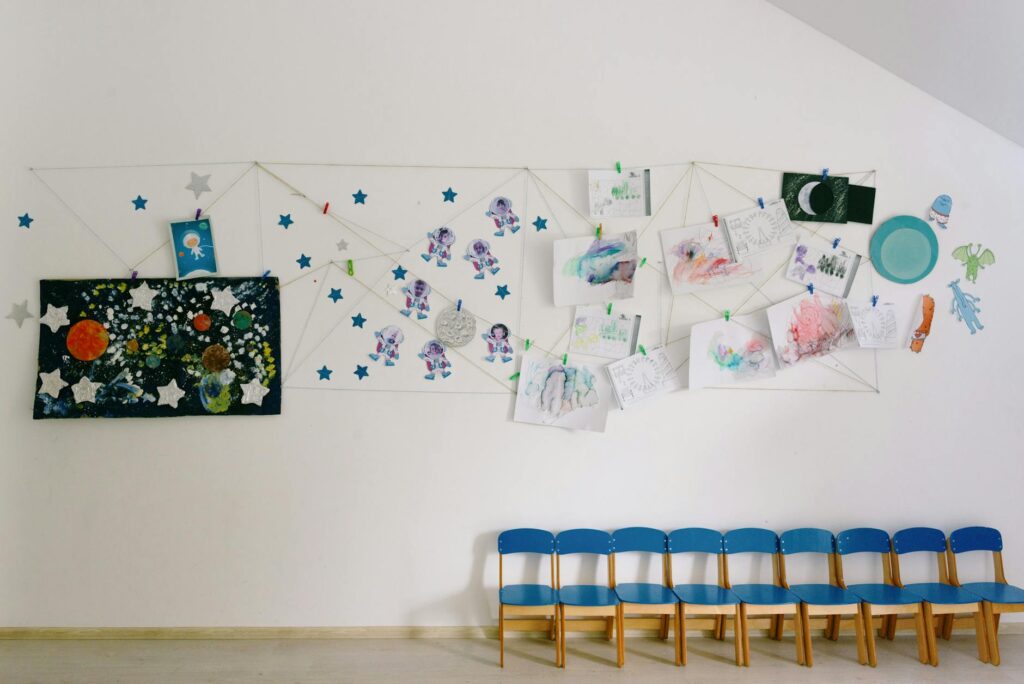
The visual cues—bright colours, themed displays, and tangible rewards—create an immediate sense of energy and purpose within the learning space. For younger pupils, especially in Key Stages 1 and 2, this can be incredibly effective in establishing routines and encouraging participation. A well-decorated classroom, often featuring elements that signify ‘stars’ or high achievement, can make the school day feel more exciting.
Where it gets harder is in understanding the psychological underpinnings. Proponents argue that this external motivation builds confidence and encourages a proactive approach to learning. However, educational psychologists, including those at the Education Endowment Foundation (EEF), frequently highlight the importance of fostering intrinsic motivation—the desire to learn for learning’s sake.
This means that while a ‘stars classroom’ can be a useful tool, it shouldn’t be the sole strategy. A balanced approach acknowledges that while external rewards can be a starting point, the ultimate goal is to cultivate a genuine love for learning that doesn’t rely on constant external validation. The risk is that pupils may become conditioned to perform only when a reward is on offer, potentially diminishing their inherent curiosity and drive.
The Tangible Benefits: Why Schools Embrace the ‘Stars’
The appeal of the ‘stars classroom’ is undeniable, especially from an administrative or busy teacher’s perspective. The visual impact of a well-managed reward system can lead to noticeable improvements in pupil behaviour and engagement, at least in the short term. For instance, a classroom where ‘star behaviours’ like tidiness, attentiveness, or participation are consistently acknowledged can see a reduction in disruptive incidents.
Consider a Year 3 class in a primary school in Manchester. The headteacher introduced a ‘Star of the Week’ award, tied to specific criteria like ‘most improved reader’ or ‘best team player’. The weekly announcement, complete with a small certificate and a mention in the school newsletter, visibly excited the pupils. Teachers reported an uptick in pupils actively trying to demonstrate these ‘star’ qualities in the days leading up to the award.
Beyond individual recognition, themed ‘stars classroom’ decor can create a cohesive and visually stimulating learning environment. This can be particularly beneficial during transitional periods, such as the start of a new academic year or after holidays, helping to re-establish a positive atmosphere. The EEF’s guidance on behaviour management often points to the importance of clear expectations and positive framing, which a well-executed ‘stars classroom’ theme can help to achieve.
Plus, the concept aligns with a broader trend in education towards creating more positive and encouraging school climates. In 2026, with mental well-being and positive psychology playing an increasingly prominent role in educational discourse, the ‘stars classroom’ offers a simple, accessible way for teachers to foster a sense of achievement and belonging among their pupils. It provides a visible framework for celebrating effort and progress, which can be particularly impactful for students who may not always be top academic performers.
The Hidden Drawbacks: When Stars Outshine the Sun
However, the ‘stars classroom’ approach is not without its critics and potential pitfalls. One of the most significant concerns is the creation of an overly competitive environment. When only a select few pupils are consistently recognised as ‘stars’, it can leave the majority feeling overlooked, demotivated, or even resentful.
This can be particularly damaging for pupils who struggle with certain aspects of schoolwork or behaviour. Instead of feeling encouraged, they might feel like perpetual underachievers, leading to disengagement and a negative self-perception. A study by Psychology Today (2025) indicated that a constant focus on external rewards can diminish a child’s intrinsic motivation, leading them to see learning as a chore rather than an exploration.
And, the definition of ‘star’ behaviour or achievement can be narrow. What constitutes a ‘star’ in one classroom might be different in another, and the criteria might not accommodate the diverse strengths and talents that pupils possess. For example, a pupil excelling in artistic expression or collaborative problem-solving might not be recognised in a system focused primarily on academic grades or quiet compliance.
The sustainability of such reward systems is also a question. What happens when the novelty wears off? Teachers may find themselves in an ‘arms race’ of ever-increasing rewards, which can be time-consuming and resource-intensive. For schools with limited budgets, maintaining elaborate reward schemes can be a significant challenge. According to TES (Times Educational Supplement), many educators report that the most effective recognition is often the most authentic, focusing on specific efforts rather than generic accolades.
Strategies for a More Inclusive and Effective ‘Stars Classroom’
Transforming the ‘stars classroom’ from a potentially divisive system into an inclusive and genuinely motivating one requires a strategic shift. The key is to broaden the definition of ‘star’ and focus on celebrating individual progress and effort, rather than solely on comparative achievement.
One effective strategy is to shift from ‘Star Pupil’ to ‘Star Achiever’ or ‘Effort Star’. Stars classroom allows recognition for pupils who demonstrate consistent hard work, improvement, or resilience, regardless of their absolute attainment level. For instance, a pupil who has significantly improved their reading fluency over a term, or one who consistently helps classmates, can be celebrated equally alongside those achieving top marks.
Teachers can also implement a ‘Growth Mindset’ approach, inspired by the work of Carol Dweck. This involves praising effort, strategy, and progress, encouraging pupils to see challenges as opportunities for learning. This moves the focus away from innate talent (‘you’re a star because you’re smart’) towards the process of learning (‘you’re a star because you tackled that difficult problem with persistence’).
Peer recognition can also be a powerful tool. Encouraging pupils to nominate their classmates for demonstrating positive qualities, such as kindness, helpfulness, or creativity, fosters a sense of community and shared responsibility for a positive classroom atmosphere. This democratises the ‘star’ concept, making it a collective achievement.
Finally, diversify the reward system. While stickers and certificates have their place, consider offering experiential rewards. These could include extra reading time, choosing a class activity, being a ‘teacher’s helper’ for a day, or even a brief one-on-one discussion with the teacher about their progress and interests. These personalised rewards often hold more meaning than generic tokens.
Beyond External Rewards: Cultivating Intrinsic Motivation
The most impactful classrooms, as research from the Education Endowment Foundation (EEF) consistently shows, are those that nurture intrinsic motivation. This is the internal drive that compels individuals to learn because they find the activity inherently interesting, challenging, or satisfying.
How can a ‘stars classroom’ incorporate this? By making learning itself the reward. This can be achieved through inquiry-based learning, project-based learning, and providing pupils with choice and autonomy in their learning. When pupils have a say in what they learn or how they demonstrate their understanding, they become more invested.
For example, instead of rewarding a pupil for completing a worksheet on fractions, celebrate their engagement with a ‘Fraction Investigator’ project where they design a pizza and calculate the cost of different slices. The intrinsic reward comes from the challenge, creativity, and application of knowledge.
Another method is to foster a sense of competence and self-efficacy. Teachers can achieve this by providing constructive feedback that focuses on specific strengths and areas for improvement, rather than just grades. When pupils believe they can succeed, they are more likely to persevere. As the Department for Education (DfE) guidance on promoting positive behaviour suggests, building a strong teacher-pupil relationship based on trust and mutual respect is fundamental.
Mastery orientation, where the focus is on developing skills and understanding rather than outperforming others, is also key. In a mastery-focused classroom, a pupil might be celebrated for ‘mastering the art of persuasive writing’ rather than simply being the ‘best writer’ in the class. This reframes achievement as a personal journey of growth.
Case Study: The ‘Shining Stars’ Initiative at Oakwood Primary
Oakwood Primary School, a busy secondary school in Leeds, implemented a modified ‘stars classroom’ approach in September 2025, focusing on effort and collaboration. Instead of a single ‘star pupil’, they introduced ‘Shining Stars’ for different categories: ‘Bright Spark’ for innovative ideas, ‘Team Player’ for exceptional collaboration, ‘Resilience Champion’ for overcoming challenges, and ‘Kindness Crusader’ for outstanding empathy.
The criteria were clearly communicated, and nominations could come from teachers, support staff, and even peers. Each week, a small number of pupils were recognised in a school assembly. The ‘reward’ wasn’t a tangible item but a certificate, a special mention in the weekly school bulletin sent to parents, and the opportunity to display their work related to their ‘star’ achievement in a dedicated ‘Shining Stars’ display area in the main corridor.
The headteacher, Ms Anya Sharma, noted, “We wanted to capture the essence of recognition without fostering unhealthy competition. By diversifying the categories and allowing peer nominations, we saw pupils genuinely celebrating each other’s successes. The ‘Kindness Crusader’ award, for instance, led to a noticeable increase in supportive interactions among pupils.”
Challenges included ensuring the criteria were applied consistently across all year groups and that the nomination process remained fair and transparent. Initial feedback from some Year 7 pupils suggested they still preferred more traditional rewards like small prizes. However, over the academic year, the school observed a sustained improvement in overall class participation and a reduction in reported bullying incidents. The approach demonstrated that a ‘stars classroom’ can be adapted to align with broader school values like inclusivity and mutual respect, moving beyond a simple reward-for-performance model.
Practical Implementation: Making Your Classroom Shine Authentically
Implementing a successful ‘stars classroom’ in 2026 requires more than just a few star stickers. It demands thoughtful planning and a commitment to inclusivity. Here’s a breakdown of practical steps:
- Define Clear, Inclusive Criteria: What does ‘star’ behaviour or achievement look like in your classroom? Ensure criteria reflect effort, progress, collaboration, kindness, and creativity, not just academic attainment. Communicate these clearly to pupils and parents.
- Diversify Recognition Methods: Move beyond stickers. Consider verbal praise (specific and genuine), positive notes home, ‘shout-outs’ in class, opportunities for leadership roles, or choice-based rewards (e.g., picking a class game, extra computer time).
- Focus on Effort and Growth: Celebrate the process, not just the outcome. Acknowledge pupils for tackling difficult tasks, showing resilience, or demonstrating improvement, even if they haven’t reached the ‘top’ yet.
- Empower Peer Recognition: Create opportunities for pupils to acknowledge and appreciate each other’s positive contributions. This builds community and reinforces shared values.
- Integrate with Intrinsic Motivation: Use the ‘stars’ concept as a springboard. Link recognition to opportunities for deeper learning, problem-solving, or creative expression. Make the learning itself the ultimate reward.
- Regularly Review and Adapt: What’s working? What isn’t? Solicit feedback from pupils and observe their engagement. Be prepared to adapt your system to meet their evolving needs and ensure it remains fair and motivating for everyone.
Common Mistakes to Avoid in a ‘Stars Classroom’
Even with the best intentions, pitfalls exist. Avoiding these common errors is crucial for ensuring your ‘stars classroom’ truly shines for all:
- Over-reliance on External Rewards: Pupils may become dependent on stickers or praise, losing their internal drive to learn.
- Focusing Solely on Performance: Neglecting to recognise effort, improvement, or positive social behaviour can alienate pupils who aren’t top academic performers.
- Lack of Consistency: Inconsistent application of rules and rewards leads to confusion and can breed resentment.
- Public Shaming of Non-Stars: Directly or indirectly highlighting those who don’t receive awards can be detrimental to their self-esteem.
- Unclear or Unfair Criteria: If pupils don’t understand why someone is a ‘star’, the system loses its credibility.
- Ignoring Individual Needs: A one-size-fits-all reward system won’t motivate every pupil. Some may thrive on public recognition, while others prefer private acknowledgment or intrinsic rewards.
Expert Insights: Making Every Pupil Feel Like a Star
The most effective ‘stars classroom’ environments, as observed in leading UK schools, are those that master the art of authentic, personalised recognition. For instance, a teacher in a Year 5 class at a London academy discovered that for one pupil, the ultimate reward wasn’t a certificate but the chance to use a special maths calculator for a week. For another, it was being allowed to present their historical research project to a younger class.
Authenticity is key. Generic praise like “good job” is less impactful than specific feedback like, “I was really impressed with how you broke down that complex problem to find the answer, Sarah. That shows real analytical thinking.” This level of detail not only validates the pupil’s effort but also provides a model for others.
And, consider the environment. Displaying pupil work prominently, not just the ‘best’ pieces but also those showing a strong effort or a unique perspective, sends a powerful message. A well-organised display area, perhaps themed with subtle ‘star’ elements, can serve as a constant, visible reminder of achievement for everyone.
It’s also vital to remember that ‘star’ potential exists in all areas. As the National Curriculum emphasizes a broad and balanced education, so too should our recognition systems. Celebrating achievements in reading, maths, science, art, music, physical education, and social skills ensures a more complete view of pupil development. The Department for Education (DfE) advocates for a whole-child approach, and recognition systems should reflect this.
Frequently Asked Questions
What is a ‘stars classroom’?
A ‘stars classroom’ is an educational environment that uses visual rewards, recognition, and positive reinforcement to motivate pupils, encourage desired behaviours, and celebrate academic achievements. It often features themed decor and systems like sticker charts or ‘star pupil’ awards.
Are ‘stars classrooms’ effective in 2026?
They can be effective for boosting short-term engagement and behaviour, particularly for younger pupils. However, their long-term impact is debated, with concerns about fostering extrinsic motivation and potential for unhealthy competition if not implemented thoughtfully.
How can I make a ‘stars classroom’ more inclusive?
Focus on celebrating individual effort, progress, and a diverse range of achievements (e.g., kindness, collaboration, resilience) rather than solely on top academic performance. Allow peer nominations and offer varied, personalised recognition methods.
What are the downsides of a ‘stars classroom’?
Potential downsides include fostering over-reliance on external rewards, creating competitive environments that demotivate some pupils, and the risk of superficial engagement where pupils only perform for rewards.
How can I balance ‘stars’ with intrinsic motivation?
Integrate reward systems with opportunities for pupil choice, autonomy, and inquiry-based learning. Frame recognition around effort and growth, making the learning process itself rewarding.
What are some alternatives to traditional ‘star’ rewards?
Consider experiential rewards like extra reading time, choosing a class activity, or being a ‘teacher’s helper’. Personalised verbal praise, positive notes home, and opportunities to share work or lead discussions are also highly effective.
Conclusion: Crafting a Classroom Where Everyone Shines
The ‘stars classroom’ model, when implemented thoughtfully and with a focus on inclusivity, can indeed be a powerful tool for enhancing pupil motivation and fostering a positive learning environment. By shifting the emphasis from competitive achievement to individual growth, effort, and a wide spectrum of talents, educators can create a space where every pupil genuinely feels like a star. The most successful approach in 2026 marries the visual appeal and motivational power of recognition with strategies that cultivate deep, intrinsic engagement, ensuring that the pursuit of learning is its own greatest reward.
Last reviewed: May 2026. Information current as of publication; pricing and product details may change.
Editorial Note: This article was researched and written by the Class Room Center editorial team. We fact-check our content and update it regularly. For questions or corrections, contact us.