
any physics learning environment.
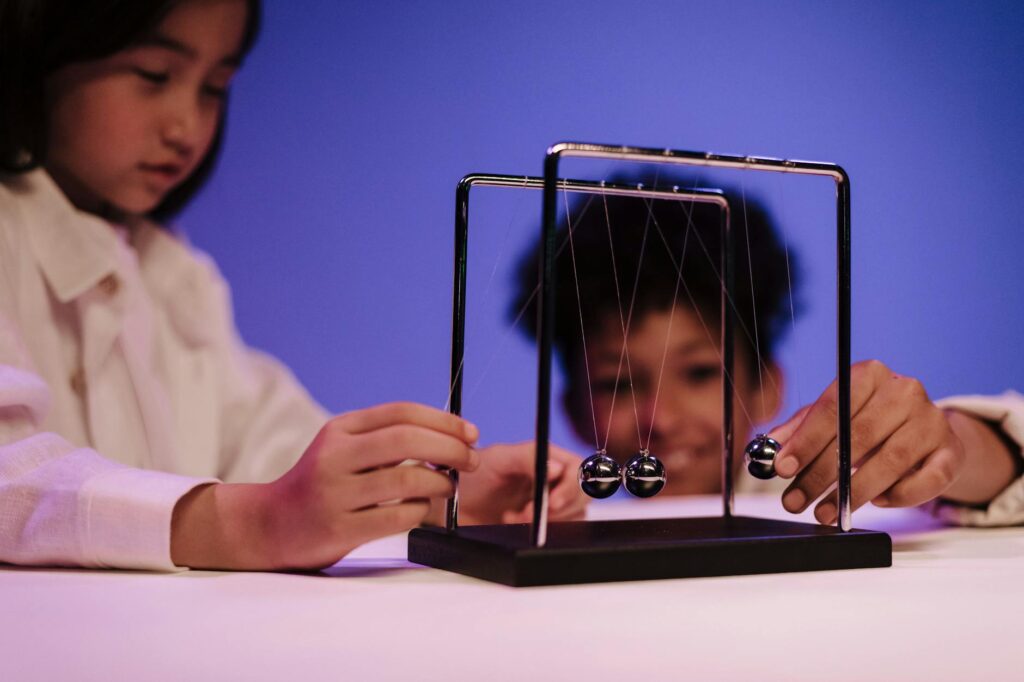
Foundational Elements of an Effective Physics Classroom
22222
This guide covers everything about the physics classroom. What constitutes an effective physics classroom in 2026? It begins with a thoughtful layout that supports varied teaching methodologies. Flexible furniture, such as mobile tables and stackable chairs, allows educators to reconfigure the space quickly for lectures, group work, or practical demonstrations. Ample storage is essential for organising the diverse equipment required for physics experiments, from basic pendulums to advanced oscilloscopes. Clear labelling and systematic organisation not only prevent damage to delicate apparatus but also instill good practice in pupils.
Last updated: May 5, 2026
Consider a Year 9 class at a secondary school in Manchester. Previously, their lab was a rigid setup with fixed benches, making collaborative experiments cumbersome. After a refurbishment, they now have modular tables. During a lesson on forces, pupils could easily arrange their tables into pods, allowing them to share a force sensor and data logger for a friction experiment. This flexibility directly enhanced their engagement and understanding of how different surface types affect frictional forces.
Essential Physics Teaching Aids and Equipment
22222
The tools within a physics classroom are its lifeblood. Beyond standard items like metre rulers, stopwatches, and masses, modern physics education increasingly relies on digital interfaces and sensors. Systems like those from Pasco Scientific or Vernier allow real-time data collection for variables such as velocity, acceleration, force, and temperature. This instantaneous feedback helps pupils visualize abstract concepts, such as the parabolic trajectory of a projectile or the exponential decay of a capacitor.
For instance, when teaching about simple harmonic motion, a teacher can use a motion sensor connected to a computer or tablet. As a pendulum swings, the sensor records its position, velocity, and acceleration. The resulting graphs on screen offer immediate visual confirmation of the sinusoidal relationship, making a complex concept far more accessible than traditional chalk-and-talk methods. According to the Department for Education (DfE) guidelines as of 2026, schools are encouraged to invest in digital tools that enhance empirical learning.
The Role of Demonstrations and Practical Kits
33333
Effective physics teaching often hinges on compelling demonstrations. A well-executed demonstration can ignite interest and provide a memorable anchor for a new topic. Examples include Van de Graaff generators for static electricity experiments, ripple tanks to visualize wave phenomena, or Lenz’s Law demonstrations using strong magnets and conductive rings. These are not merely visual aids; they are tools for conceptual scaffolding.
For Key Stage 4 pupils exploring electromagnetism, a teacher might use a large coil, a galvanometer, and a strong bar magnet. Moving the magnet into and out of the coil induces a current, shown by the galvanometer’s deflection. This hands-on display vividly illustrates Faraday’s Law of Induction. Many educational suppliers, such as Philip Harris or Galt Toys (though Galt leans younger, they have some introductory kits), offer complete kits for these common physics demonstrations, often designed for durability and safety in a classroom setting.
Integrating Digital Simulations and Virtual Labs
22222
In 2026, the physics classroom is not confined to physical walls or equipment. Digital simulations and virtual laboratories have become indispensable, offering cost-effective and safe alternatives or supplements to physical experiments. Platforms like PhET Interactive Simulations, developed at the University of Colorado Boulder, provide a vast library of free, research-based simulations covering topics from atomic structure to planetary motion. These tools allow pupils to manipulate variables, observe outcomes, and explore scenarios that might be too dangerous, expensive, or time-consuming to replicate in a real lab.
Imagine a secondary school in Scotland teaching about thermodynamics. A virtual lab simulation could allow pupils to adjust the insulation of a container, change the internal heat source, and observe the rate of temperature increase over time, all without using Bunsen burners or expensive calorimeters. This approach is particularly valuable for schools with limited budgets or space constraints. The Education Endowment Foundation (EEF) has highlighted the potential of well-designed digital tools to support learning, especially for pupils who benefit from visual and interactive approaches.
Augmented and Virtual Reality in Physics Education
33333
The next frontier in the physics classroom is increasingly immersive. Augmented Reality (AR) and Virtual Reality (VR) technologies are beginning to offer unparalleled opportunities for experiential learning. VR headsets can transport pupils inside a subatomic particle, allow them to manipulate gravitational fields in a simulated solar system, or experience the extreme conditions of a black hole. AR applications can overlay digital information onto the physical world, such as visualizing magnetic field lines around a real magnet or seeing the internal components of a complex electrical circuit.
A pilot program at a large multi-academy trust (MAT) in the South West of England has been exploring VR for teaching relativity. Pupils wearing VR headsets can experience the visual distortions predicted by Einstein’s theories as they approach the speed of light. This immersive experience provides a visceral understanding that static diagrams or equations alone can’t convey. While widespread adoption is still developing, the potential for AR/VR to change how physics is taught and learned is significant.
Designing Flexible and Accessible Learning Spaces
22222
An inclusive physics classroom design considers the needs of all learners, including those with Special Educational Needs and Disabilities (SEND). Accessibility is paramount. This means ensuring clear sightlines to demonstrations, providing appropriate seating, and making sure equipment is within reach for all pupils. Colour-coded labels for equipment and clear, large-print instructions can significantly aid comprehension. Quiet zones or areas with reduced sensory input can benefit pupils who are easily overwhelmed.
Consider a physics classroom equipped with adjustable-height workbenches. This simple adaptation allows wheelchair users to participate fully in practical experiments, ensuring they are not disadvantaged. Similarly, providing tactile models of molecules or force diagrams can assist pupils with visual impairments or those who learn best through touch. The National Curriculum mandates that all pupils should have access to high-quality science education, and thoughtful classroom design is a key enabler of this.
Safety First: Essential Protocols and Equipment
33333
Physics, by its nature, involves experiments that can carry inherent risks. Safety must be the absolute priority in any physics classroom. This begins with strong risk assessments for all practical activities. Essential safety equipment includes safety goggles or visors for all participants, fire extinguishers, eye wash stations, first-aid kits, and appropriate fume hoods for experiments involving hazardous chemicals. Clear emergency procedures and regular safety drills are also vital.
A common mistake is underestimating the importance of proper storage for chemicals andspecializedd equipment. For example, storing acids and alkalis together, or leaving flammable liquids unsecured, poses significant risks. According to Health and Safety Executive (HSE) guidance for educational establishments (2026), all practical work must be supervised, and pupils must be instructed on safe handling procedures before commencing any experiment. A clear, visible safety code of conduct should be displayed prominently.
The Educator’s Role: Facilitating Inquiry and Engagement
22222
While resources and space are critical, the educator remains the most vital component of the physics classroom. Modern pedagogy shifts the teacher’s role from a dispenser of information to a facilitator of learning. This involves posing challenging questions, guiding pupils through problem-solving processes, and encouraging them to develop their own hypotheses and test them experimentally. Fostering a culture of inquiry means pupils feel empowered to ask ‘why’ and ‘how’.
For example, instead of simply lecturing on Newton’s Laws of Motion, a teacher might present a scenario: ‘Imagine you’re in a lift that suddenly accelerates upwards. What happens to your apparent weight?’ This prompts discussion and encourages pupils to apply their existing knowledge. The teacher then guides them towards an experimental setup using a spring balance and a mass in a lift (or a simulation if a real lift isn’t feasible) to verify their predictions. This student-centred approach, strongly advocated by bodies like the Chartered College of Teaching, promotes deeper learning.
Professional Development for Physics Educators
33333
The world of physics education is constantly evolving, with new technologies and pedagogical approaches emerging regularly. To remain effective, educators must engage in continuous professional development. This can include attending workshops on new lab equipment, learning to use advanced simulation software, or training in inquiry-based learning methodologies. Organisations like the Institute of Physics (IOP) and the Association for Science Education (ASE) regularly offer such opportunities.
As of May 2026, there’s a growing emphasis on professional development that equips teachers to integrate AI tools into their physics lessons, whether for personalized learning pathways or for creating interactive learning materials. Investing in educator training is not merely an expense; it’s an investment in the quality of education delivered. The EEF’s research consistently shows that effective teaching practices are a key driver of pupil attainment, often more so than resources alone.
Cost Considerations for Equipping a Physics Classroom
22222
Equipping a physics classroom involves a range of costs, from basic consumables to high-value equipment. A standard melamine whiteboard might cost £50-£150, while a durable porcelain one could be £200-£500. A basic set of physics apparatus for a class of 30 could range from £500 to £2,000, depending on the breadth and quality. High-end digital sensors and data loggers can add another £500-£1,500 per set, witspecializeded equipment like oscilloscopes or spectrum analyzers costing several thousand pounds each.
Virtual lab subscriptions or software licenses vary widely. PhET simulations are free, but more complete platforms like Labster can cost schools several thousand pounds per year for site-wide access, depending on the number of pupils. When budgeting, it’s crucial to consider the longevity and maintenance costs of equipment. For example, while a glass whiteboard is more expensive upfront than a melamine one, its durability can make it more cost-effective over its lifespan. Schools often allocate budgets through departmental funds, capital expenditure grants, or specific science education funding streams, with guidance available from the DfE on best practice for resource allocation.
Making the Most of Limited Budgets
33333
Many schools operate with tight budgets, making strategic purchasing essential. Prioritising versatile equipment that can be used for multiple topics is key. For instance, a good quality power supply can be used for circuits, electromagnetism, and thermodynamics experiments. Collaborating with neighboring schools or within a MAT can allow for shared purchasing of expensive, infrequently used equipment, significantly reducing individual costs. Exploring grants and external funding opportunities, such as those provided by STEM charities or industry partners, can also supplement budgets.
A clever approach seen at a complete school in Cornwall involved repurposing high-quality, but older, analog oscilloscopes for teaching wave properties. While not as advanced as digital models, they still provided a clear visual representation of waveforms, proving sufficient for Key Stage 4 concepts. Encouraging pupils to design and build simple apparatus from readily available materials can be an incredibly effective and low-cost learning activity, fostering innovation and problem-solving skills.
Common Pitfalls in Physics Classroom Design and Management
22222
One of the most frequent mistakes is inadequate storage. Piles of unlabeled equipment not only look chaotic but also lead to damage and make it difficult to find what’s needed, wasting valuable teaching time. Another pitfall is failing to integrate safety protocols into the very fabric of classroom design and daily practice. Over-reliance on a single teaching method, whether purely lecture-based or solely digital, can also limit engagement. Finally, neglecting regular maintenance of equipment can lead to costly replacements and missed learning opportunities.
To combat storage issues, investing in strong shelving units with clear, durable labels is a wise first step. For safety, establishing a clear reporting system for faulty equipment and ensuring all pupils understand basic safety rules before any practical work begins are critical. A balanced approach that blends traditional demonstrations, hands-on experiments, digital simulations, and teacher-led inquiry typically yields the best results for diverse learning needs.
Expert Insights for an Evolving Physics Classroom
22222
The physics classroom of 2026 thrives on a blend of tradition and innovation. Educators who actively seek out new teaching strategies and technologies are best placed to inspire the next generation of scientists. This includes staying abreast of developments in areas like quantum computing education or sustainable energy research, and finding ways to introduce these latest topics to pupils in an age-appropriate manner.
It’s not just about having the latest gadgets; it’s about pedagogical intent. For instance, when teaching about Newton’s Third Law, a teacher might use a simple tug-of-war demonstration with equal masses on both sides, showing that the forces are equal and opposite. This concrete example, coupled with a discussion about action-reaction pairs in everyday scenarios, solidifies the concept far more effectively than a purely theoretical explanation. The key is making physics relatable and exciting.
Frequently Asked Questions
22222
What are the essential components of a physics classroom?
33333
An effective physics classroom requires a flexible layout, ample storage, a range of demonstration and experiment equipment (including digital sensors), and a strong emphasis on safety protocols. It should also foster an environment that encourages curiosity and inquiry.
How much does it typically cost to set up a new physics classroom?
33333
Costs vary significantly, but a basic setup with essential apparatus for 30 pupils could range from £1,000 to £3,000. High-end digital equipment, specialised tools, and extensive simulation software licenses can add substantially to this, potentially reaching £10,000 or more for a fully equipped modern lab.
What is the role of virtual reality in physics education?
33333
VR offers immersive experiences for complex topics like relativity or quantum mechanics, allowing pupils to visualize abstract concepts in a way traditional methods can’t. It provides safe, cost-effective environments for exploring scenarios that are impossible or impractical to replicate physically.
How can I make my physics classroom more engaging for students?
33333
Engagement is boosted through hands-on experiments, interactive demonstrations, relatable real-world examples, collaborative group work, and the use of digital simulations. Posing challenging questions and encouraging pupil-led investigations are also vital.
What safety equipment is essential for a physics classroom?
33333
Essential safety gear includes safety goggles for all, fire extinguishers, eye wash stations, first-aid kits, and fume hoods if applicable. Clear emergency procedures and regular safety training for staff and pupils are mandatory.
What are some good resources for physics teachers in the UK?
33333
Key resources include the Institute of Physics (IOP), the Association for Science Education (ASE), and the Department for Education (DfE) for curriculum guidance. Websites like PhET Interactive Simulations and educational suppliers like Pasco Scientific also offer valuable tools and materials.
The physics classroom is a vital space for cultivating scientific literacy and critical thinking. By thoughtfully integrating resources, fostering an inquisitive atmosphere, and prioritising safety and accessibility, educators can create environments where pupils not only learn physics but develop a lifelong passion for understanding the world around them. The most actionable takeaway for any educator is to consistently seek out and implement at least one new interactive element or teaching strategy each academic year to keep the learning experience fresh and impactful.
Last reviewed: May 2026. Information current as of publication; pricing and product details may change.
Editorial Note: This article was researched and written by the Class Room Centre editorial team. We fact-check our content and update it regularly. For questions or corrections, contact us. Knowing how to address the physics classroom early makes the rest of your plan easier to keep on track.


