
Establishing Clear Expectations and Routines
One of the most critical classroom management techniques for elementary settings is the upfront establishment of clear expectations and routines. Young children thrive on predictability. Knowing what to expect, when, and how, significantly reduces anxiety and opportunities for misbehaviour.
Last updated: May 7, 2026
This begins on the first day, so discuss and co-create classroom rules with your pupils. Aim for a small number of simple, positively phrased rules, such as “Listen when others speak,” “Be kind and respectful,” and “Try your best.” Display these rules prominently, perhaps with visual aids for younger children.
Daily routines, from arriving and settling in, to transitions between subjects, to tidying up, need to be practised and reinforced. A visual timetable can be invaluable for Key Stage 1 pupils, helping them understand the flow of the day. For older elementary pupils, a verbal countdown or a clear signal for transitions can be effective.
The insight here is consistency. If rules and routines are enforced sporadically, pupils will quickly learn that expectations are flexible, leading to confusion and challenging behaviour. According to research from the Education Endowment Foundation (EEF) (2023), consistent application of behaviour policies is key to their effectiveness.
The Power of Positive Reinforcement
Shifting the focus from punitive measures to positive reinforcement is a cornerstone of modern classroom management. Instead of solely addressing misbehaviour, actively acknowledge and reward desirable actions. This encourages pupils to repeat positive behaviours and builds their self-esteem.
Positive reinforcement can take many forms: verbal praise, a smile, a nod, or a thumbs-up. For specific achievements, consider a sticker chart, a marble jar that fills up for collective good behaviour, or a “pupil of the week” award. The key is that the reinforcement is immediate, specific, and genuine.
For instance, instead of saying “Good job,” a more impactful statement would be, “I really appreciate how quietly you lined up for assembly today, [Pupil’s Name]. That shows great respect for our classroom rules.” This specificity helps the pupil understand exactly what behaviour was valued.
While positive reinforcement is highly effective, it has limitations. Over-reliance on external rewards can sometimes diminish intrinsic motivation. Ensure that praise also acknowledges effort and learning. Don’t just focus on task completion. The EEF’s guidance on Self-Regulation (2022) suggests that fostering intrinsic motivation is a long-term goal that complements immediate behavioural strategies.
Organising the Learning Environment
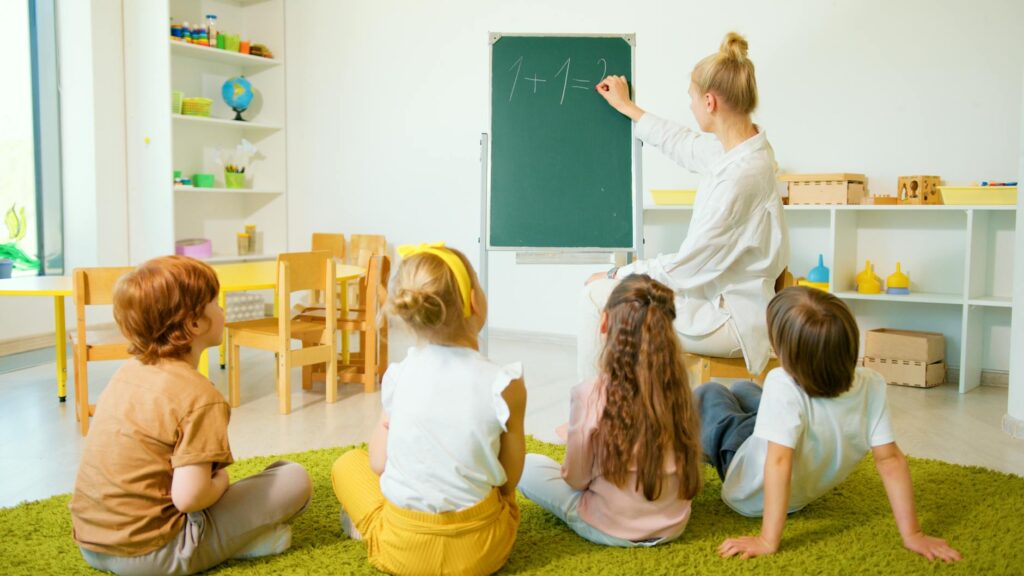
The physical layout and organisation of an elementary classroom significantly impact behaviour and engagement. A well-organised space minimises distractions and promotes a sense of calm and order, making it easier for pupils to focus on learning.
Consider the flow of movement: are pathways clear? Is furniture arranged to facilitate both whole-class instruction and small-group work? Ensure that resources are easily accessible to pupils and that there are clear systems for storing materials. A tidy classroom is often a calmer classroom.
Visual aids are also powerful organisational tools. This includes display boards showcasing pupil work, learning charts, and anchor charts that reinforce key concepts or behavioural expectations. A dedicated “calm corner” or “reflection space” can provide a safe haven for pupils who need a moment to regulate their emotions.
A practical insight: regularly involve pupils in maintaining the classroom’s organisation. Assigning jobs like “resource monitor” or “tidy-up captain” fosters a sense of responsibility and ownership over their learning space. However, be mindful of pupils with Special Educational Needs (SEND); some may require specific zones or sensory considerations within the overall organisation.
Building Strong Relationships and Communication
The most effective classroom management techniques for elementary pupils are built on a foundation of positive relationships. When pupils feel seen, heard, and respected by their teacher, they’re more likely to cooperate and engage positively.
Take time to get to know your pupils as individuals. Learn about their interests, families, and strengths, and greet them warmly at the door each day. Engage in informal conversations during breaks or transitions. These small interactions build rapport and trust.
Effective communication extends beyond the classroom walls. Regular, positive communication with parents and guardians is vital; sharing successes, insights into their child’s progress, and any emerging concerns can build a strong partnership. Consider weekly newsletters, brief emails, or informal chats after school.
A potential challenge is managing communication with a large number of families. Establishing a consistent communication channel and schedule (e.g., a weekly email update) can simplify this process. As of 2026, many schools utilise dedicated communication platforms like ClassDojo or ParentMail to facilitate this, providing a centralised hub for updates.
Differentiating Instruction and Engagement Strategies
Pupil engagement is intrinsically linked to effective classroom management. When pupils are actively involved and their learning needs are met, disruptive behaviours tend to decrease. Differentiation is key to ensuring all pupils remain engaged.
Understand that elementary pupils learn at different paces and in different ways. Offer a variety of activities that cater to visual, auditory, and kinesthetic learners. Provide options for how pupils can demonstrate their understanding, such as through drawing, writing, or oral presentations.
For pupils who are ahead, offer extension activities. For those who need more support, provide scaffolding, simplified instructions, or pre-teaching of vocabulary. Differentiating not only addresses academic needs but also behavioural ones; a pupil who is bored or overwhelmed is more likely to act out.
A unique insight: consider using “choice boards” or “learning menus” for certain tasks. Classroom management techniques for elementary allows pupils to select activities that appeal to them, fostering autonomy and increasing motivation, and it’s a powerful classroom management tool because it empowers pupils and reduces teacher-led redirection. However, it requires careful planning to ensure all learning objectives are still met.
Addressing Challenging Behaviour with Strategy
Despite the best preventative measures, challenging behaviours will occur. The approach to addressing them is a crucial part of elementary classroom management techniques.
When a behaviour issue arises, remain calm and consistent. Address the behaviour, not the child; sometimes, a quiet word or a non-verbal cue is sufficient. For more significant disruptions, a planned consequence, such as a time-out in a designated calm-down area or a conversation with the teacher, might be necessary.
Focus on teaching replacement behaviours. If a pupil is shouting out, work with them to practice raising their hand; if they are snatching toys, teach them to ask politely. This restorative approach, often supported by school-wide policies aligned with Department for Education (DfE) guidance, focuses on repairing harm and learning from mistakes.
It’s also essential to consider the underlying reasons for challenging behaviour. Is the pupil tired, hungry, struggling with a concept, or dealing with issues outside of school? Understanding these triggers can lead to more effective interventions. As reported by the National Association of Head Teachers (NAHT) in early 2026, early intervention and support for pupils with complex needs, including those with SEND, are paramount for sustained positive behaviour.
Common Mistakes in Elementary Classroom Management
- Inconsistency: Applying rules and consequences unevenly erodes trust and predictability.
- Focusing only on negative behaviour: Neglecting to praise and reinforce positive actions.
- Over-reliance on punishment: Failing to teach and model desired behaviours.
- Ignoring individual needs: Assuming all pupils respond to the same strategies.
- Poor communication with parents: Missing out on valuable insights and support partnerships.
Practical Tips for Elementary Teachers
- Greet pupils at the door daily to build rapport.
- Use proximity control simply standing near a pupil can often de-escalate minor issues.
- Incorporate movement breaks to help pupils expend energy constructively.
- Have a clear system for attention signals (e.g., hand claps, chimes).
- Celebrate small successes acknowledge effort and progress, not just perfect outcomes.
- Involve pupils in classroom jobs to foster responsibility.
Frequently Asked Questions
What are the most important classroom management techniques for elementary?
The most important techniques involve establishing clear rules and routines, using positive reinforcement consistently, creating an organised and engaging learning environment, building strong relationships with pupils and parents, and differentiating instruction to meet diverse needs.
How can I manage disruptive behaviour in an early years classroom?
For early years, focus on preventative strategies like engaging activities and clear visual cues. Address disruptions calmly, using redirection and teaching replacement behaviours. Building strong relationships is key; pupils are more likely to self-regulate if they feel secure and understood.
What is the role of positive reinforcement in elementary management?
Positive reinforcement is crucial for encouraging desired behaviours and building pupil self-esteem. By acknowledging and rewarding good conduct, teachers shape behaviour more effectively and foster a positive classroom atmosphere than through punishment alone.
How do I set effective classroom rules for primary school?
Set a few simple, positively phrased rules collaboratively with pupils. Display them prominently and refer to them often. Ensure consequences for breaking rules are clear, consistent, and age-appropriate, focusing on learning and restorative practices.
What if I have a mixed-ability class? How does that affect management?
Mixed-ability classes require differentiated instruction and varied engagement strategies. Management techniques should focus on providing support for those struggling and enrichment for those excelling, ensuring all pupils feel challenged and successful.
How important is parent communication in elementary classroom management?
Parent communication is vital. It builds a partnership, provides valuable insights into a child’s behaviour and needs, and ensures consistency between home and school, significantly supporting the teacher’s management efforts.
Conclusion: Cultivating a Thriving Learning Space
Implementing effective classroom management techniques for elementary pupils is an ongoing, dynamic process. It requires patience, consistency, and a genuine commitment to understanding and supporting each child. By prioritising clear expectations, positive reinforcement, strong relationships, and differentiated instruction, educators can cultivate a thriving learning space where all pupils feel safe, valued, and ready to learn.
Last reviewed: May 2026. Information current as of publication; pricing and product details may change.
Editorial Note: This article was researched and written by the Class Room Center editorial team. We fact-check our content and update it regularly. For questions or corrections, contact us. Knowing how to address classroom management techniques for elementary early makes the rest of your plan easier to keep on track.
Related read: Classroom Screens: Your 2026 Guide to the Best Display Solutions.


