Picture this: a Year 2 child, initially struggling with number bonds, suddenly lights up as they manipulate physical counters, seeing the sums come alive. Or a Year 5 student, usually quiet during history lessons, passionately debating the pros and cons of Roman life after examining replica artefacts. These aren’t just happy accidents; they’re the direct result of thoughtful, effective use of KS1 and KS2 teaching aids. (Source: gov.uk)
Last updated: April 22, 2026
Latest Update (April 2026)
Educational resources continue to evolve rapidly in 2026. Recent developments highlight a growing emphasis on digital literacy and responsible online engagement. For instance, Safer Internet Day 2026 resources from Tes provided valuable insights into integrating online safety alongside digital learning tools. Initiatives like National Poetry Day, with resources available from the National Literacy Trust, demonstrate a sustained effort to enrich the curriculum with engaging, cross-curricular activities. These events highlight the importance of adaptable teaching aids that support both traditional and digital learning pathways.
The past year has also seen a continued focus on making learning accessible and timely. Resources for specific events, such as Easter activities for EYFS and primary, as highlighted by Tes, show how timely teaching aids can boost engagement around national and cultural observances. Similarly, the BBC’s insights into ‘Live Lessons’ offer guidance on optimising digital broadcasts, a format that has become a staple for supplementing classroom instruction. As reported by Tes on March 16, 2026, outdoor learning ideas for primary schools are gaining traction, suggesting a shift towards integrating nature and physical activity into lesson plans, which can be effectively supported by relevant teaching aids like maps, bug observation kits, and weather monitoring tools.
For over 17 years, the mission to discover what truly works to spark curiosity and embed learning in primary classrooms has been central. Experimentation with everything from humble flashcards to interactive displays has revealed which resources genuinely make a difference. The educational landscape has shifted, with a greater emphasis on digital literacy, inclusive practices, and socio-emotional learning. Teaching aids have adapted, offering even more dynamic ways to engage students. As reported by the BBC on April 23, 2026, the integration of AI use with cloud computing is beginning to influence educational resource development, potentially offering personalised learning experiences and more sophisticated analytical tools for educators.
Here, we share practical tips for selecting, creating, and integrating teaching aids that don’t just fill space but actively transform lessons. We’ll explore specific examples for both Key Stage 1 and Key Stage 2, discuss common pitfalls, and ensure educators are equipped to make the most of every learning opportunity.
Why Teaching Aids Are Non-Negotiable in Primary Education
Simply presenting information to children is often insufficient. KS1 and KS2 teaching aids are fundamental tools that underpin effective primary education. They are essential for several key reasons:
- Bridging the Abstract with the Tangible: Children learn best by doing and seeing. Abstract concepts like fractions, time, or historical events can be difficult for primary students to grasp without something concrete to manipulate or visualise. Teaching aids provide this bridge, making complex ideas accessible.
- Building Active Learning and Participation: When a relevant teaching aid is introduced, such as counting blocks or a world map, engagement visibly increases. Children become active participants, asking questions, exploring, and collaborating.
- Catering to Diverse Learning Styles: Effective teaching aids cater to visual, kinesthetic, and auditory learners. A child who struggles with written instructions might excel when building a model, or one who finds listening challenging might thrive with a visual timeline.
- Building Digital Fluency Responsibly: In an increasingly digital world, primary education must equip children with foundational digital skills. Teaching aids now include educational apps, interactive whiteboards, and coding kits. These tools enhance traditional learning and prepare children for future challenges while teaching responsible digital citizenship.
Real-World Application: Multi-Sensory Phonics for KS1
Reports indicate that multi-sensory aids can significantly improve phonics acquisition as of 2026. For example, using magnetic letters, sand trays for writing sounds, and ‘sound bags’ filled with objects representing specific phonemes can dramatically improve blending skills. The tactile experience of tracing letters in sand or matching sounds to physical objects has been shown to be highly effective for early literacy development. According to independent educational reviews, the integration of such tactile and visual elements supports a deeper understanding of phonemic awareness and letter-sound correspondence.
My Go-To KS1 Teaching Aids (Ages 5-7)
For Key Stage 1, the focus is on foundational skills and hands-on exploration. Certain KS1 and KS2 teaching aids are indispensable for these younger learners:
- Manipulatives for Maths Mastery: Hands-on maths aids like unifix cubes, Numicon, Cuisenaire rods, counters, and base ten blocks are vital. They help children visualise number concepts, understand place value, and explore addition and subtraction concretely. These tools are frequently recommended by educational specialists for building a strong mathematical foundation.
- Phonics and Literacy Resources: Large-format phonics displays, sound mats, story sacks, and picture cards are highly beneficial. Story sacks, in particular, are excellent for bringing narratives to life, encouraging imaginative play, and developing vocabulary. As seen in BBC’s animated English series for KS1/KS2, visual and auditory learning aids play a significant role in comprehension and engagement.
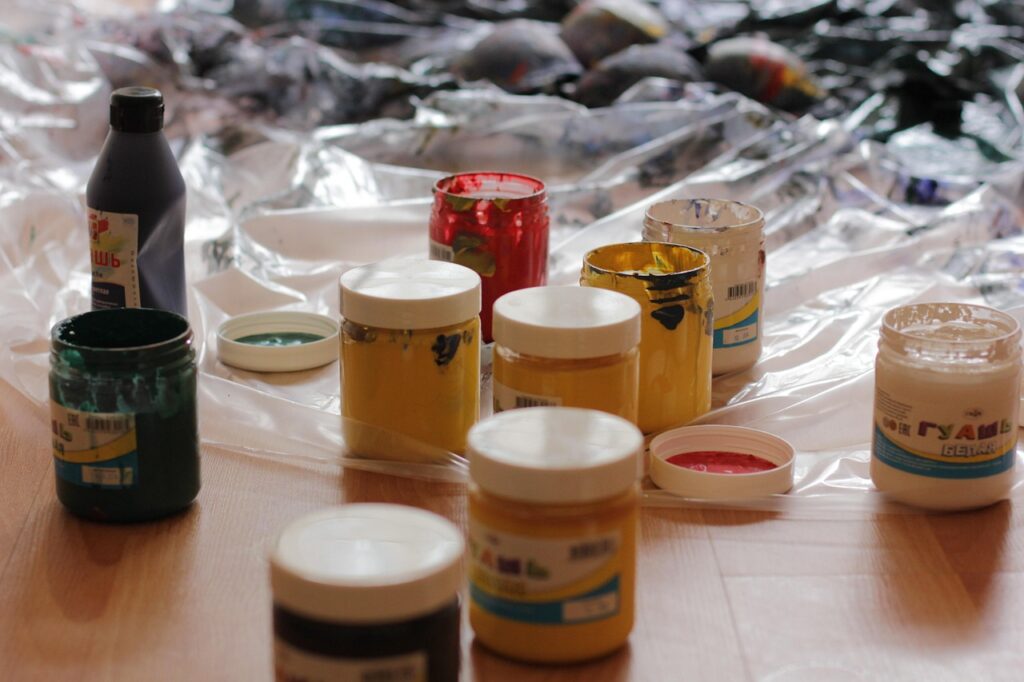
- Creative Arts and Imaginative Play Props: Dress-up clothes, puppet theatres, building blocks, and art supplies are essential. These aids build language development, problem-solving, and social skills through creative expression.
- Sensory Exploration Tools: Play-doh, water tables, and textured sensory bins allow for tactile learning and fine motor skill development. These are particularly valuable for younger children or those who benefit from sensory input.
Effective KS2 Teaching Aids (Ages 7-11)
As students progress to Key Stage 2, teaching aids shift to support more complex concepts and independent learning. The focus broadens to include critical thinking, research skills, and deeper subject exploration.
- Science and STEM Kits: From simple circuit kits and magnifying glasses to more advanced robotics or coding kits, these resources make abstract scientific principles tangible. They encourage experimentation and problem-solving. The BBC reported on April 23, 2026, how AI use cloud computing is beginning to influence educational technology, suggesting future STEM kits might incorporate more sophisticated data analysis tools.
- Historical Artefacts and Replicas: Bringing history to life through replica coins, pottery shards, maps, or even costume pieces allows students to connect with the past. This sensory engagement fosters a deeper understanding than textbooks alone can provide.
- Geography Resources: Large wall maps, globes, atlases, weather stations, and compasses are essential for developing spatial awareness and understanding global concepts. As noted by Tes on March 16, 2026, outdoor learning is gaining momentum, and these tools can be effectively used both inside and outside the classroom.
- Literacy and Numeracy Games: Board games, card games, and digital apps designed to reinforce grammar, spelling, punctuation, and mathematical operations provide engaging practice. These are invaluable for reinforcing concepts learned through direct instruction.
- Art and Design Supplies: A wider range of art materials, including clay, printmaking tools, and digital art software, supports creative expression and the development of specific artistic techniques.
Creating Your Own Teaching Aids: Budget-Friendly Brilliance
Not all effective teaching aids need to be purchased. Many can be created in-house, saving budget and allowing for customisation to specific lesson needs.
- Laminating and Printing: High-quality printouts of flashcards, timelines, vocabulary lists, and diagrams, when laminated, become durable and reusable resources.
- Recycled Materials: Cardboard boxes can become anything from Roman forts to alien landscapes. Plastic bottles can be transformed into models or measuring devices. Encourage students to participate in the creation process to deepen their engagement.
- Storytelling Props: Simple puppets made from socks or paper bags, or backdrops created from large paper sheets, can significantly enhance literacy lessons.
- Classroom Displays: Interactive displays that students contribute to, such as a ‘wonder wall’ for questions or a ‘learning journey’ timeline, transform the classroom environment into a dynamic teaching aid.
Integrating Teaching Aids for Maximum Impact
Having the best teaching aids is only half the battle; effective integration is key. Consider these strategies:
- Clear Learning Objectives: Ensure every teaching aid directly supports a specific learning objective. Ask yourself: How does this aid help students understand X concept or develop Y skill?
- Student-Centric Approach: Design activities around the teaching aids that encourage exploration, discovery, and collaboration. Move away from passive observation towards active manipulation and discussion.
- Variety and Rotation: Don’t rely on the same aids every day. Rotate resources to maintain novelty and cater to different aspects of a topic. Introduce new aids strategically to re-engage students.
- Linking to Real-World Contexts: Whenever possible, connect the use of teaching aids to real-world applications. For example, use maps and globes to discuss current events or use budgeting tools to simulate real-life financial decisions.
- Assessment Integration: Observe how students interact with and use the teaching aids. KS1 and KS2 teaching aids provides valuable insights into their understanding and can inform your assessment of their progress.
Common Pitfalls to Avoid
Even with the best intentions, educators can sometimes misuse or misunderstand the role of teaching aids. Be aware of these common issues:
- Over-Reliance: Using aids as a crutch rather than a supplement to clear explanation and instruction.
- Lack of Purpose: Introducing aids without a clear connection to the learning objective, leading to distraction rather than engagement.
- Poor Maintenance: Allowing resources to become worn, broken, or outdated, diminishing their effectiveness and educational value. As of April 2026, maintaining digital resources for cybersecurity and updates is as important as physical upkeep.
- Ignoring Student Needs: Not considering the diverse learning styles and needs within the classroom when selecting or creating aids.
- Insufficient Training: For digital tools, educators must be comfortable and proficient in their use. As reported by Tes, professional development around new educational technologies is essential for effective implementation.
The Evolving Role of Digital Teaching Aids
The digital revolution has profoundly impacted educational resources. Interactive whiteboards, educational apps, virtual reality (VR) and augmented reality (AR) experiences, and online learning platforms are now commonplace. These tools offer unprecedented opportunities for:
- Personalised Learning Paths: Adaptive software can tailor content and pace to individual student needs.
- Engaging Visualisations: Complex processes in science or abstract mathematical concepts can be visualised dynamically.
- Global Collaboration: Connecting classrooms across the world for joint projects and cultural exchange.
- Data Analytics: Tools that track student progress, providing educators with detailed insights for intervention. As the BBC reported on April 23, 2026, the use of AI with cloud computing is set to enhance these analytical capabilities.
However, responsible integration is paramount. Educators must guide students in developing critical digital literacy, understanding online safety, and discerning credible information. Resources from initiatives like Safer Internet Day 2026, as highlighted by Tes, are vital in this regard.
KS1 & KS2 Teaching Aids for Specific Subjects
Let’s look at subject-specific examples to illustrate the power of targeted teaching aids:
Mathematics
- KS1: Base ten blocks for place value, dice and spinners for probability, fraction walls, shape sorters.
- KS2: Geometric drafting tools (rulers, protractors), spreadsheets for data analysis, coordinate grids, money manipulatives for financial literacy.
English Language and Literacy
- KS1: Story sequencing cards, alphabet charts, phonics sound boxes, puppets for role-playing stories, word building kits.
- KS2: Thesaurus and dictionary skills practice books, graphic organisers for planning writing, debating cards, play scripts for performance.
Science
- KS1: Magnifying glasses, nature observation journals, simple weather charts, plant growth kits, magnets.
- KS2: Electrical circuit kits, model skeletons, microscopes, water testing kits, rock and fossil collections.
History & Geography
- KS1: Timelines with pictures, replica artefacts (e.g., Stone Age tools), simple world maps showing continents, local area maps.
- KS2: Detailed historical maps, primary source document facsimiles, 3D models of historical sites, geographical survey tools (compasses, clinometers), climate data charts.
Art & Design
- KS1: Textured materials for collage, large paint brushes and paper, playdough cutters, stencils.
- KS2: Printmaking tools (linoleum cutters, rollers), clay modelling tools, perspective drawing guides, digital art software tutorials.
Frequently Asked Questions
What are the most important KS1 teaching aids for early literacy?
For early literacy in KS1, the most impactful aids include phonics resources (sound mats, magnetic letters, phoneme frames), story sacks for comprehension and vocabulary, large alphabet charts, and picture cards for vocabulary development. Multi-sensory tools like sand trays for letter formation also prove highly effective.
How can I make KS2 history lessons more engaging with teaching aids?
Engage KS2 students in history by using replica artefacts that they can handle and examine, creating timelines with visual elements and student contributions, using historical maps to trace journeys or battles, and incorporating role-playing with simple costume pieces or scripts. Primary source document facsimiles, when age-appropriately presented, can also foster critical thinking.
Are digital teaching aids replacing traditional ones in 2026?
Not entirely. While digital teaching aids are increasingly sophisticated and offer unique benefits like interactivity and personalised learning, traditional aids remain vital. The most effective approach in 2026 often involves a blended model, integrating the strengths of both physical and digital resources to cater to diverse learning styles and objectives.
How do teaching aids support students with special educational needs (SEN)?
Teaching aids are crucial for SEN students. Manipulatives help those who struggle with abstract concepts. Visual aids like charts and diagrams support students with auditory processing difficulties. Sensory tools can be calming and aid focus for some. Digital tools can offer adjustable font sizes, text-to-speech functions, and alternative input methods, making learning more accessible.
What’s the role of outdoor learning aids in primary education as of 2026?
As outdoor learning gains traction, aids like magnifying glasses, bug observation kits, weather monitoring tools (thermometers, rain gauges), compasses, and nature identification guides become increasingly important. These resources connect classroom learning to the natural environment, promoting scientific inquiry and environmental awareness, as highlighted by Tes reports on March 16, 2026.
Conclusion
Effective KS1 and KS2 teaching aids are more than just classroom decorations; they are dynamic tools that ignite curiosity, solidify understanding, and cater to the diverse needs of young learners. By thoughtfully selecting, creating, and integrating resources—whether physical manipulatives, engaging digital platforms, or hands-on craft supplies—educators empower students to actively participate in their learning journey. As the educational landscape continues to evolve in 2026 with advancements in technology and a renewed focus on complete development, the strategic use of teaching aids remains a cornerstone of successful primary education, ensuring that every child has the opportunity to thrive.
Source: edX
Editorial Note: This article was researched and written by the Class Room Center editorial team. We fact-check our content and update it regularly. For questions or corrections, contact us. Knowing how to address KS1 and KS2 teaching aids early makes the rest of your plan easier to keep on track.