
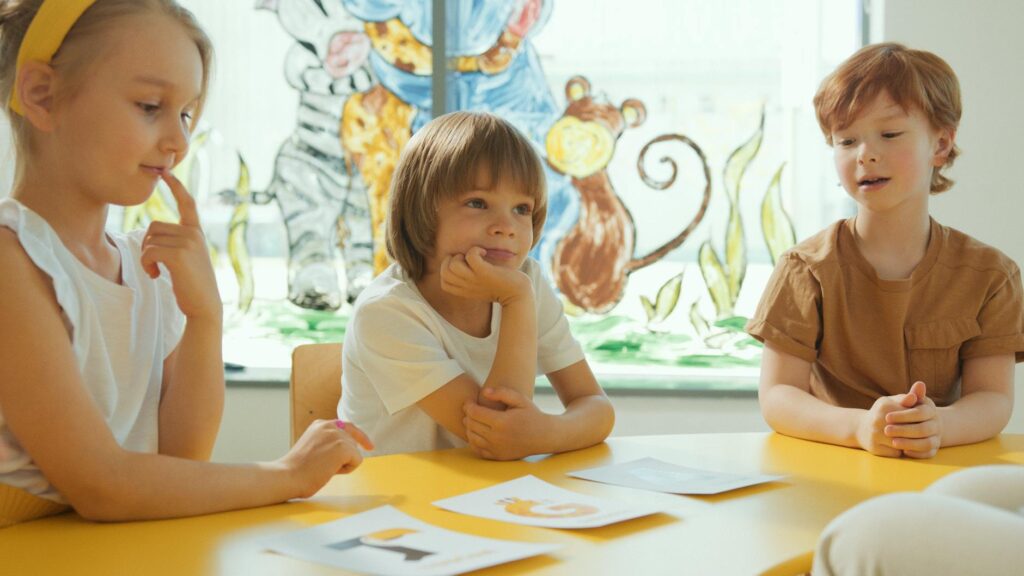
This guide covers everything about what is primary education. Primary education is the bedrock of a child’s academic journey, setting the stage for all future learning. It’s not just about ABCs and 123s; it’s about sparking curiosity, building foundational skills, and nurturing social growth during the most formative years. But what exactly defines this critical phase, and how has it evolved to meet the demands of the 21st century? Here’s what you need to know.
Last updated: April 26, 2026
The sheer importance of these early years often gets underestimated. We talk about university degrees and career paths, but the real groundwork is laid long before. Think of it like building a house: if the foundation isn’t solid, the whole structure is at risk. That’s precisely what primary education provides. It’s a period where children transition from informal learning at home to a structured environment, learning not just academic subjects but also how to interact with peers, follow instructions, and develop a sense of self within a community.
The world of education is always shifting, and primary education isn’t immune. Recent years have seen a significant push towards more personalized learning, integrating technology, and focusing on complete child development beyond just test scores. This article will break down what primary education truly entails, its recent shifts, and what parents and educators need to know.
Latest Update (April 2026)
As of April 2026, global education initiatives continue to emphasize the critical need for safe and inclusive learning environments. Organisations like UNESCO are actively promoting strategies for preventing and addressing violence in and around schools, recognising that a secure setting is paramount for effective primary education (UNESCO, March 2026). Significant policy shifts, such as India’s National Education Policy (NEP) 2020, continue to reshape early learning frameworks, focusing on foundational literacy and numeracy as a cornerstone for future academic success (orfonline.org, July 2025). These developments underscore a global commitment to strengthening the primary education phase.
Recent news highlights the volatility and challenges in the education sector. For instance, the Zuckerberg-backed school in the Bay Area faced significant layoffs and announced its closure as of April 2026, as reported by the San Francisco Chronicle and the New York Post. This event underscores the complex financial and operational realities facing educational institutions, even those with substantial backing. Additionally, the resignation of a principal from Bethalto East Primary School in April 2026, noted by RiverBender.com, points to the ongoing personnel movements within educational leadership. Concerns about educational integrity and safety were also raised by Human Rights Watch in April 2026, questioning whether an attack on an Iranian primary school constituted a war crime. Amidst these challenges, initiatives like the one discussed in the Dhaka Tribune in April 2026 continue to advocate for extending primary education, emphasizing its long-term benefits for future generations.
What is Primary Education Defined?
Primary education, often referred to as elementary school or primary school in various regions, is the first stage of formal, compulsory education. It generally caters to children from around ages 5 or 6 up to 10 or 11, though these age ranges can vary slightly by country and educational system. The core purpose of primary education is to provide children with essential foundational knowledge and skills that will serve as a springboard for their academic careers and life.
Think of it as the ‘building blocks’ phase. Children are introduced to fundamental concepts in language arts (reading, writing, speaking), mathematics (arithmetic, basic problem-solving), science (basic understanding of the natural world), and social studies (understanding their community and the world). Beyond academics, this stage is key for developing social skills like cooperation, sharing, empathy, and conflict resolution, often learned through interactions with peers and teachers. It’s also where children begin to develop discipline, responsibility, and a routine for learning. Many educational systems worldwide, including those guided by frameworks from organisations like UNESCO, recognise primary education as a fundamental human right and a critical component of sustainable development.
Key Stages and Learning Milestones in Primary Education
Primary education is typically divided into stages that reflect developmental milestones. While specific grade names and age cutoffs can differ internationally, the progression generally follows a pattern designed to build complexity gradually.
Key Stage 1 (Foundation / Early Years to Year 2)
This initial phase, often encompassing ages 4/5 to 6/7, focuses heavily on developing basic literacy and numeracy. Children learn to read and write simple sentences, understand basic arithmetic operations (addition, subtraction), and begin to explore the world around them through science and social studies topics. Social-emotional development is exceptionally important, with an emphasis on learning to work with others and manage emotions. Play-based learning is common here, making education engaging and accessible. This period is vital for fostering a positive attitude towards school and learning. Educators often utilise visual aids and interactive activities to make learning concrete and enjoyable for this age group.
Key Stage 2 (Years 3 to 6)
As children progress, typically from ages 7/8 to 10/11, the curriculum becomes more complex. Literacy skills are refined to include comprehension of longer texts and more sophisticated writing. Mathematical concepts expand to include multiplication, division, fractions, and more complex problem-solving. Science introduces more detailed topics about living things, materials, and forces.
Social studies dig deeper into history, geography, and civics. By the end of Key Stage 2, students are generally expected to have a solid grasp of core subjects and be prepared for the transition to secondary education. Recent performance data, such as the Cambridge and IGCSE results in public schools in regions like Bermuda, indicate ongoing efforts to maintain high standards across these crucial years (Royal Gazette | Bermuda, March 2026). Students at this stage often engage in group projects, which foster collaboration and communication skills vital for their future academic and professional lives.
It’s important to remember that every child develops at their own pace. While these are general milestones, educators and parents should focus on individual progress rather than strict adherence to a timeline. The goal is to build a love for learning, not just to meet arbitrary benchmarks. Assessment in this stage should be complete, encompassing not just academic achievement but also social and emotional development.
Recent Developments Shaping Primary Education
The field of primary education is dynamic, constantly adapting to new research, societal needs, and technological advancements. In recent years, several significant shifts have reshaped how and what children learn.
Integration of Technology
One of the most prominent developments is the increased integration of technology. Digital tools, interactive whiteboards, educational apps, and online learning platforms are becoming standard in many primary classrooms as of April 2026. These tools can personalize learning experiences, provide immediate feedback, and make complex subjects more accessible and engaging. For instance, adaptive learning software can adjust the difficulty of exercises based on a student’s performance, ensuring they are challenged but not overwhelmed. However, this integration also brings challenges, including ensuring equitable access to technology for all students and training educators to effectively use these new tools. Reports from educational technology conferences in early 2026 emphasize the need for a balanced approach, where technology enhances, rather than replaces, traditional teaching methods and essential human interaction.
Focus on Social-Emotional Learning (SEL)
There’s a growing recognition that academic success is intertwined with a child’s social and emotional well-being. Social-Emotional Learning (SEL) programs are increasingly being adopted in primary schools to help children develop self-awareness, self-management, social awareness, relationship skills, and responsible decision-making. These skills are vital for managing emotions, building positive relationships, and navigating the complexities of school and life. Research published in educational journals in late 2025 and early 2026 consistently shows a correlation between strong SEL skills and improved academic outcomes, as well as better overall mental health. Schools are implementing strategies like mindfulness exercises, collaborative projects, and conflict resolution training to foster these competencies.
Personalized and Differentiated Instruction
Understanding that students learn differently, educators are increasingly employing personalized and differentiated instruction. This approach tailors teaching methods, content, and assessment to meet the unique needs and learning styles of individual students. Instead of a one-size-fits-all model, teachers might offer various ways for students to learn a concept (e.g., through reading, listening, hands-on activities) and different ways to demonstrate their understanding (e.g., through writing, drawing, oral presentations). Data analytics from educational platforms, as analysed in 2026-2026, help teachers identify learning gaps and strengths more effectively, allowing for more targeted interventions. This is particularly important in diverse classrooms where students may have varying levels of prior knowledge and different learning paces.
Emphasis on Foundational Literacy and Numeracy
As highlighted by initiatives like India’s National Education Policy (NEP) 2020, there’s a renewed global focus on ensuring strong foundational literacy and numeracy skills in the early years. Studies from organisations like the World Bank in 2026 indicate that a lack of these fundamental skills is a significant barrier to future learning. Educational strategies now prioritise effective reading instruction, phonics, comprehension, and a solid understanding of mathematical concepts. This focus aims to equip all students with the essential tools needed to succeed in higher grades and beyond. Many countries are investing in teacher training programs and curriculum development to strengthen these core areas.
Inquiry-Based and Project-Based Learning
To foster critical thinking and problem-solving skills, many primary schools are adopting inquiry-based and project-based learning (PBL) approaches. Instead of passively receiving information, students actively explore questions and challenges, conduct research, and develop solutions. This method encourages curiosity, collaboration, and a deeper understanding of subjects. For example, a class might undertake a project to design a sustainable garden for the school, integrating science, math, and social studies. This hands-on approach makes learning relevant and memorable. Educators report that PBL significantly boosts student engagement and develops skills essential for the modern workforce.
The Role of Parents and Guardians
Parental involvement is a significant predictor of a child’s success in primary education. Active engagement from parents and guardians can profoundly impact a child’s attitude towards school, their academic performance, and their overall development. This involvement extends beyond helping with homework; it includes communicating with teachers, attending school events, and fostering a supportive learning environment at home.
Key aspects of parental involvement include:
- Communication: Regularly communicating with teachers about a child’s progress, challenges, and strengths. This two-way street ensures that parents and educators are aligned in supporting the child.
- Home Learning Environment: Creating a quiet space for homework, establishing a routine, limiting screen time, and encouraging reading for pleasure.
- School Engagement: Participating in parent-teacher conferences, school events, and volunteer opportunities when possible.
- Positive Reinforcement: Praising effort and progress, celebrating achievements, and encouraging a positive attitude towards learning.
Research consistently shows that children whose parents are actively involved in their education tend to have better attendance rates, higher grades, and improved social skills. As of April 2026, many schools are implementing more solid parent engagement programs, recognising this vital partnership.
Challenges in Primary Education
Despite advancements and a clear understanding of its importance, primary education faces ongoing challenges globally.
Funding and Resources
Adequate funding remains a persistent issue in many educational systems. Insufficient budgets can lead to overcrowded classrooms, outdated materials, and a lack of essential resources, impacting the quality of education. This disparity is often more pronounced between affluent and low-income districts, creating an uneven playing field for students. As reported by various educational bodies in 2026-2026, securing sustainable and equitable funding is a priority for many governments and educational organisations.
Teacher Shortages and Training
Attracting and retaining qualified primary school teachers is a challenge in many regions. Factors such as competitive salaries, demanding workloads, and a lack of professional development opportunities contribute to teacher shortages. Ensuring that teachers receive up-to-date training, particularly in areas like technology integration and SEL, is also critical for delivering high-quality education. The ongoing professional development of educators is paramount to keeping pace with evolving pedagogical methods.
Equity and Access
Ensuring equitable access to quality primary education for all children, regardless of their socioeconomic background, geographic location, or personal circumstances, remains a significant hurdle. This includes addressing barriers faced by children with disabilities, those from marginalized communities, and those in remote areas. Organisations like UNESCO continue to advocate for inclusive education policies and practices to bridge these gaps.
Impact of Global Events
Recent global events, including health crises and geopolitical conflicts, have also impacted primary education. As highlighted by Human Rights Watch in April 2026 regarding an attack on an Iranian primary school, the safety and security of students and educators are paramount concerns. These events can disrupt learning, affect student well-being, and strain educational resources. The resilience of educational systems in the face of such challenges is a key focus for policymakers and educators worldwide.
The Future of Primary Education
Looking ahead, primary education will likely continue to evolve. Trends suggest a greater emphasis on:
- Lifelong Learning Skills: Cultivating curiosity, adaptability, and critical thinking from an early age to prepare children for a rapidly changing world.
- Digital Literacy: Integrating digital citizenship and advanced technological skills into the curriculum.
- Global Citizenship: Fostering an understanding and appreciation of diverse cultures and global issues.
- Well-being Focus: Continued integration of mental health support and social-emotional development as core components of education.
The commitment to solid primary education is a commitment to a brighter future, ensuring that every child has the opportunity to reach their full potential.
Frequently Asked Questions
What age group does primary education typically cover?
Primary education generally serves children from around ages 5 or 6 up to 10 or 11. However, these age ranges can vary slightly depending on the country and its specific educational system.
Why is primary education considered so important?
Primary education is vital because it lays the foundation for all future learning. It equips children with essential academic skills, fosters social and emotional development, and helps them develop discipline and a positive attitude towards education, which are crucial for lifelong success.
How has technology changed primary education recently?
Technology has increasingly integrated into primary education as of April 2026, with digital tools, interactive platforms, and apps enhancing learning experiences. These tools can offer personalized learning paths and make subjects more engaging, though ensuring equitable access and effective teacher training remains key.
What is Social-Emotional Learning (SEL) and why is it emphasized?
Social-Emotional Learning (SEL) focuses on developing skills like self-awareness, self-management, social awareness, relationship skills, and responsible decision-making. It’s emphasized because these skills are crucial for academic success, overall well-being, and navigating social interactions effectively.
What can parents do to support their child’s primary education?
Parents can significantly support their child’s primary education by maintaining open communication with teachers, creating a conducive learning environment at home, encouraging reading and curiosity, and actively participating in school activities. Positive reinforcement of effort and progress is also highly beneficial.
Conclusion
Primary education serves as the indispensable foundation upon which all subsequent learning and personal development are built. It’s a period of intense growth, where children not only acquire fundamental academic skills in literacy, numeracy, and science but also learn invaluable social and emotional competencies. As of April 2026, the landscape of primary education continues to evolve, driven by technological integration, a stronger focus on social-emotional well-being, and a commitment to personalized learning. While challenges related to funding, resources, and equitable access persist, the global dedication to strengthening this critical phase remains unwavering. By fostering a love for learning and providing essential tools for success, primary education empowers children to become capable, confident, and engaged citizens ready to contribute to the world.
Source: edX
Editorial Note: This article was researched and written by the Class Room Centre editorial team. We fact-check our content and update it regularly. For questions or corrections, contact us. For readers asking “What is primary education”, the answer comes down to the specific factors covered above.


