
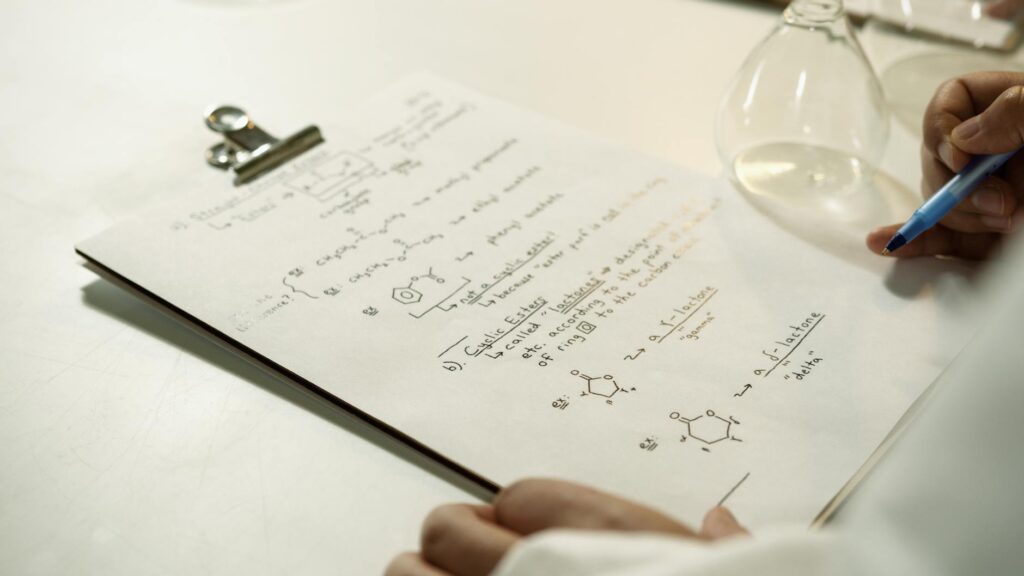
Mastering Stoichiometry Practice on a Budget
Last updated: April 30, 2026
Did you know that a single basic chemistry lab kit can cost upwards of $100? For students tackling the complexities of stoichiometry, the expense of practice materials and lab equipment can be a significant hurdle. But what if we told you that mastering stoichiometry practice doesn’t require a huge financial investment? This complete guide is designed to help you excel in chemical calculations, understand reactions, and prepare for exams without draining your wallet. We’ll explore cost-effective study methods, DIY lab alternatives, and smart resource management techniques.
Latest Update (April 2026)
As of April 2026, the landscape of online educational resources continues to expand, offering even more free and low-cost tools for stoichiometry practice. Many universities are enhancing their open educational resources (OER), making advanced problem sets and simulations more accessible than ever. Advancements in educational technology mean that interactive learning platforms are more sophisticated, providing real-time feedback and personalized learning paths at little to no cost. The emphasis on digital learning tools in 2026 ensures that students have ample opportunities to hone their stoichiometry skills without significant financial outlay.
What’s Stoichiometry and Why Does It Matter?
At its core, stoichiometry is the branch of chemistry that deals with the quantitative relationships between reactants and products in chemical reactions. It’s essentially the ‘accounting’ of chemistry. Understanding these relationships allows us to predict how much of a substance will be produced or consumed in a reaction. According to Britannica, the term “stoichiometry” was coined by German chemist Ernst P. F. Richter in 1792. This field is fundamental for chemists, chemical engineers, pharmacists, and even cooks who need to scale recipes accurately.
The ability to perform stoichiometry calculations is key for several reasons:
- Predicting yields of desired products.
- Determining the amount of reactants needed for a specific outcome.
- Identifying limiting reactants – the ingredients that run out first and stop a reaction.
- Optimising chemical processes for efficiency and cost-effectiveness.
The Fundamental Pillars of Stoichiometry Practice
Before we dive into cost-saving strategies, let’s quickly review the essential concepts you’ll encounter in stoichiometry practice. Here are the building blocks for all calculations:
The Mole Concept
The mole is the SI unit for the amount of substance. It’s a fundamental concept that links the microscopic world of atoms and molecules to the macroscopic world of grams and litres. One mole of any substance contains approximately 6.022 x 10^23 elementary entities (like atoms, molecules, or ions), a number known as Avogadro’s number. Practicing mole calculations is non-negotiable.
Molar Mass
Molar mass is the mass of one mole of a substance, typically expressed in grams per mole (g/mol). You can calculate it by summing the atomic masses of all atoms in a chemical formula, using values from the periodic table. For example, the molar mass of water (H₂O) is approximately 2(1.01 g/mol for H) + 16.00 g/mol for O = 18.02 g/mol.
Balancing Chemical Equations
Chemical equations must be balanced to obey the law of conservation of mass – which states that matter can’t be created or destroyed in a chemical reaction. Balancing involves adjusting the stoichiometric coefficients (the numbers in front of chemical formulas) so that the number of atoms of each element is the same on both the reactant and product sides. This skill is used constantly.
Mass-to-Mole and Mole-to-Mass Conversions
These conversions are the bread and butter of stoichiometry. You’ll use molar mass as a conversion factor to move between the mass of a substance (which you can measure) and the amount in moles (which relates to reaction ratios).
Limiting Reactants and Percent Yield
In real-world reactions, reactants are rarely mixed in perfect stoichiometric amounts. The limiting reactant is the one that gets completely consumed first, thereby limiting the amount of product formed. The theoretical yield is the maximum amount of product that can be formed based on the limiting reactant. Percent yield compares the actual amount of product obtained in an experiment to the theoretical yield, expressed as a percentage.
Cost-Effective Stoichiometry Practice Resources
Now, let’s talk about how to get your stoichiometry practice in without spending a fortune. The key is to be resourceful and smart about where you look for materials.
use Free Online Resources
The internet is a treasure trove of free educational content. Many reputable sites offer practice problems, explanations, and even interactive tools.
- Khan Academy: Offers a complete set of free video lessons and practice exercises covering all aspects of stoichiometry. Their explanations are clear and accessible.
- Chem LibreTexts: This is a fantastic, collaborative resource created by chemists and educators. It provides detailed explanations, examples, and practice problems for various chemistry topics, including stoichiometry. According to Chem LibreTexts, their mission is to provide open access educational resources.
- OpenStax: Another excellent provider of free, peer-reviewed textbooks and online learning resources for chemistry, including extensive stoichiometry sections.
- Online Chemistry Calculators: Many websites offer free calculators for molar mass, mole conversions, and even balancing equations. These are handy for checking your work quickly.
- University Websites: Many university chemistry departments make their course materials, including problem sets and lecture notes, publicly available online. A quick search can yield a wealth of information. For instance, MIT OpenCourseware often features complete chemistry materials.
Maximise Your Textbook’s Value
Your assigned textbook is likely one of the most valuable resources you have. Don’t just read it. Work through every example problem and end-of-chapter exercise. If you’re on a tight budget, consider purchasing a used textbook. Often, older editions contain nearly identical content and can be found for a fraction of the price. For example, core stoichiometry concepts in a 2026 edition are generally the same as in a 2026 edition.
Form Study Groups
Collaborating with classmates isn’t only a great way to learn but also a completely free one! Discussing problems, explaining concepts to each other, and working through challenging questions together can solidify your understanding. According to research published by the National Institutes of Health (NIH) (as of 2026, ongoing research supports this), collaborative learning can enhance problem-solving skills and improve academic performance.
Practice with Past Exams
If your instructor provides past exams, these are invaluable for understanding the types of questions you’ll face and the level of difficulty. Many instructors post these on course websites or make them available through the library. Working through past exams under timed conditions can significantly boost your confidence and preparedness.
use Digital Tools and Apps
web resources, numerous free or low-cost mobile apps exist for chemistry students. These can offer flashcards, quizzes, and even virtual labs. Search your device’s app store for “chemistry stoichiometry” or “mole calculator” to discover options. Some apps provide step-by-step solutions, helping you understand the process rather than just getting the answer.
DIY Stoichiometry Lab Alternatives
While formal lab equipment can be expensive, many stoichiometry concepts can be explored using household items. These DIY experiments not only save money but also reinforce the practical application of chemical principles.
The Baking Soda and Vinegar Reaction
A classic for a reason, the reaction between baking soda (sodium bicarbonate, NaHCO₃) and vinegar (acetic acid, CH₃COOH) is a simple way to explore stoichiometry. The balanced equation is: NaHCO₃(aq) + CH₃COOH(aq) → CH₃COONa(aq) + H₂O(l) + CO₂(g). By carefully measuring the amounts of baking soda and vinegar used, you can predict the amount of carbon dioxide gas produced. You can even attempt to collect and measure the gas, or simply observe the reaction’s vigor to infer relative reactant amounts.
Effervescent Tablets
Similar to baking soda and vinegar, effervescent tablets (like antacids or Alka-Seltzer) react with water to produce gas. You can investigate how the amount of tablet affects the rate of gas production or try to quantify the gas evolved. Stoichiometry practice provides a tangible way to think about reaction rates and limiting reactants.
Cooking and Baking
As mentioned, cooking is applied chemistry. Baking, in particular, relies heavily on precise ratios. When you follow a recipe, you are essentially performing stoichiometry. Scaling a recipe up or down requires understanding ratios and proportions, directly relating to stoichiometric calculations. For example, if a recipe calls for 2 cups of flour for 12 cookies, how much flour do you need for 36 cookies? This is a simple ratio problem that mirrors stoichiometric thinking.
Home Water Testing Kits
Water testing kits, often used for swimming pools or aquariums, can provide simple titration experiments. While not as precise as laboratory titrations, they allow you to explore concepts like concentration and reaction endpoints in a cost-effective manner. You can investigate the amount of a specific substance needed to cause a colour change, relating to the concept of equivalence points.
Advanced Stoichiometry Concepts for 2026 Students
As you progress in your chemistry studies, you’ll encounter more complex stoichiometric scenarios. Staying ahead means understanding these concepts early.
Gas Stoichiometry
When reactions involve gases, you can use the ideal gas law (PV=nRT) to relate the volume of gases to moles, allowing for stoichiometric calculations involving gaseous reactants or products. This is crucial in fields like atmospheric chemistry and industrial gas production. As of 2026, understanding gas laws is a standard part of introductory chemistry curricula.
Solution Stoichiometry
This involves calculations based on the concentrations of solutions. Often, you’ll use molarity (moles per litre) as a conversion factor. Titration experiments, where a solution of known concentration is used to determine the concentration of an unknown solution, are a prime example of solution stoichiometry in action. These are fundamental for analytical chemistry and quality control in industries.
Thermochemistry and Stoichiometry
Stoichiometry can be combined with thermochemistry to calculate the amount of heat released or absorbed during a reaction. By using enthalpy changes (ΔH) and mole ratios, you can determine the energy output of a reaction based on the amount of reactants consumed. This is vital for understanding energy production and efficiency.
Strategies for Effective Learning and Retention
Mastering stoichiometry isn’t just about crunching numbers; it’s about building a deep understanding. Here are strategies to enhance your learning and ensure long-term retention:
Visualize the Reactions
Try to picture the chemical reactions happening at the molecular level. Imagine molecules colliding, bonds breaking, and new bonds forming. This mental visualization can make abstract concepts more concrete.
Break Down Complex Problems
Don’t get overwhelmed by multi-step stoichiometry problems. Identify the knowns and unknowns, and break the problem down into smaller, manageable steps. Often, it’s a series of simple conversions strung together.
Teach Someone Else
Explaining a concept to another person is one of the most effective ways to solidify your own understanding. If you can teach stoichiometry to a classmate, you likely have a strong grasp of it yourself.
Use a Consistent Method
Develop a systematic approach to solving stoichiometry problems. This might involve drawing a flowchart or using a specific set of steps every time. Consistency reduces errors and builds confidence.
Connect to Real-World Applications
Whenever possible, try to relate stoichiometry problems to real-world scenarios. Think about industrial processes, environmental science, or even cooking. Understanding the relevance makes the subject matter more engaging.
Budget-Friendly Exam Preparation
Preparing for stoichiometry exams doesn’t require expensive study guides or tutoring. Your existing resources, combined with smart strategies, are sufficient.
- Review Notes Regularly: Consistent review prevents cramming and helps embed concepts.
- Target Weak Areas: Use practice problems to identify concepts you struggle with and focus your study efforts there.
- Simulate Exam Conditions: Practice solving problems under timed conditions to build speed and accuracy.
- Understand the ‘Why’: Don’t just memorize formulas. Understand the underlying principles of the mole concept and mass conservation.
Frequently Asked Questions
What is the most common mistake students make in stoichiometry?
One of the most frequent errors involves incorrect unit conversions or failing to use the correct mole ratio from a balanced chemical equation. Students also sometimes struggle with identifying the limiting reactant correctly.
How can I improve my mole-to-mole calculations?
Mole-to-mole calculations directly use the coefficients from a balanced chemical equation. Ensure your equation is balanced first. Then, set up a ratio using the coefficients of the substance you have (in moles) and the substance you want to find (in moles). For example, if you have A and want to find B, and the balanced equation shows 2A → 3B, the ratio is (3 moles B / 2 moles A).
Is it possible to master stoichiometry without advanced math skills?
Stoichiometry primarily requires proficiency in basic algebra, unit conversions, and understanding ratios. While calculus is not typically needed for introductory stoichiometry, a solid grasp of these fundamental mathematical concepts is essential.
How do stoichiometry calculations relate to chemical engineering in 2026?
Chemical engineers rely heavily on stoichiometry for designing and operating chemical processes. They use it to determine the quantities of raw materials needed, predict product yields, optimise reaction conditions for efficiency and safety, and manage waste streams. Accurate stoichiometric calculations are fundamental to the economic viability and environmental responsibility of chemical plants.
What are some emerging trends in stoichiometry education as of April 2026?
Emerging trends include increased use of computational tools for complex simulations, greater integration of data analysis from real-world experiments into coursework, and a focus on applying stoichiometry to interdisciplinary fields like green chemistry and biotechnology. Gamified learning platforms are also gaining traction to make practice more engaging.
Conclusion
Mastering stoichiometry is an achievable goal, even on a tight budget. By using free online resources, maximizing your textbook’s potential, collaborating with peers, and employing creative DIY alternatives for practical understanding, you can build a strong foundation in chemical calculations. Remember that consistent practice, a systematic approach, and a focus on understanding the underlying principles are your most powerful allies. With the wealth of accessible tools available in 2026, financial constraints need not be a barrier to excelling in this vital area of chemistry.
Source: edX
Editorial Note: This article was researched and written by the Class Room Centre editorial team. We fact-check our content and update it regularly. For questions or corrections, contact us. Knowing how to address stoichiometry practice early makes the rest of your plan easier to keep on track.


