
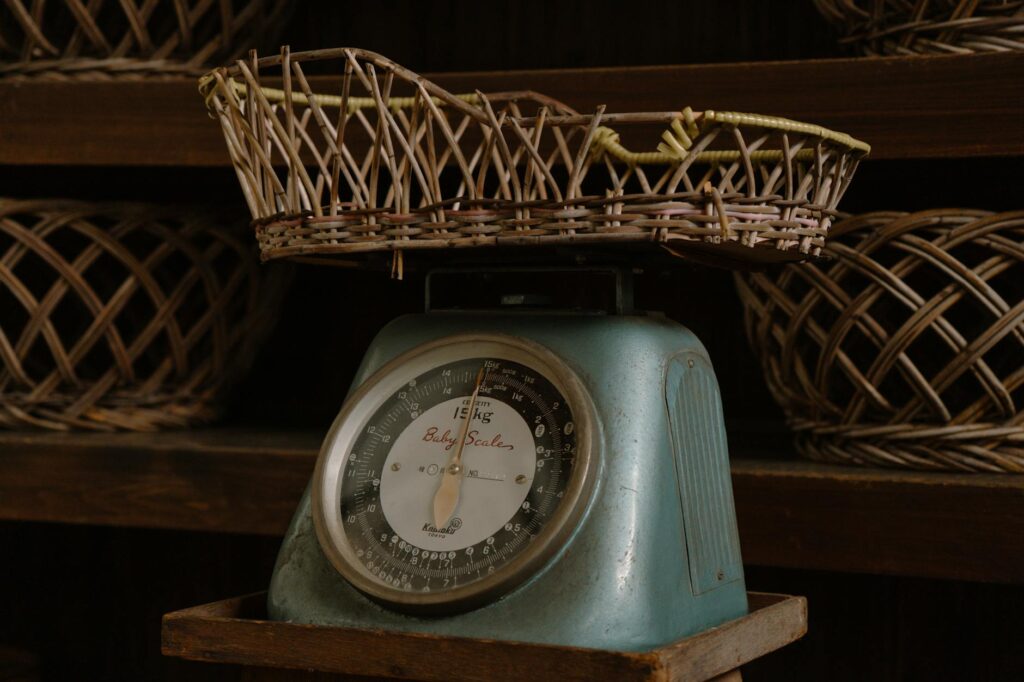
The Fundamental Question: How Many Oz in a Pound?
In a world increasingly reliant on digital precision, some fundamental measurements remain rooted in historical systems. One of the most common queries revolves around the relationship between ounces, and pounds. Specifically, how many ozssss in a pound? For most practical purposes, and as consistently defined across standard measurement systems, there are precisely 16 ounces in one pound. This foundational knowledge is essential for anyone involved in cooking, baking, trade, or scientific efforts that use the imperial or US customary systems.
Last updated: April 29, 2026
As of April 2026, this conversion holds firm. Whether you’re following a recipe from a cherished family cookbook or weighing materials for an industrial process, the 16 oz/lb ratio is your constant. However, like many seemingly simple facts, there are layers of detail and historical context that make this conversion more interesting and, at times, more complex than it first appears. This complete guide won’t only answer your primary question but also explore the different types of ounces and pounds, their historical origins, practical applications, and how they interface with the metric system.
Avoirdupois vs. Troy: The Two Pounds (and Ounces)
The primary reason for potential confusion regarding ‘how many oz in a pound’ stems from the existence of different systems of weight. The vast majority of the time, when people ask this question, they are referring to the avoirdupois pound. This is the standard pound used in the United States, the United Kingdom, and other Commonwealth countries for everyday goods – think of groceries, postage, personal weight, and most manufactured items. In the avoirdupois system:
- 1 pound (lb) = 16 ounces (oz)
- 1 ounce (oz) = approximately 28.35 grams
- 1 pound (lb) = approximately 453.59 grams
However, there’s another system you might encounter, particularly when dealing with precious metals like gold, silver, and platinum: the troy pound. While less common in daily life, it’s critical in specific industries. The troy system is a bit different:
- 1 troy pound = 12 troy ounces
- 1 troy ounce = approximately 31.10 grams
Notice the key differences: the troy pound has fewer ounces (12 vs. 16), and the troy ounce is heavier than the avoirdupois ounce (31.10g vs. 28.35g). This distinction is crucial. If you’re weighing a bag of flour, you’re using avoirdupois ounces. If you’re assessing the value of a gold coin, you’re likely dealing with troy ounces. As of April 2026, market prices for gold and silver, such as those tracked by entities like SD Bullion, are quoted per troy ounce.
Historical Roots: Why 16 Ounces to the Pound?
The avoirdupois system, with its 16 ounces to the pound, has a history stretching back centuries. Its origins are somewhat debated, but it’s generally believed to have developed in Europe during the late Middle Ages. The ‘avoirdupois’ name itself comes from Old French, meaning ‘to have weight’ or ‘goods of weight’.
The choice of 16 ounces for the pound likely stemmed from a desire for a system that was easily divisible. While 12 is a highly divisible number (by 2, 3, 4, 6), 16 also offers practical divisibility, particularly for binary and hexadecimal systems that were influential in early computing and measurement. More importantly, it allowed for easier halving and quartering in trade – a half-pound was 8 ounces, and a quarter-pound was 4 ounces. This made transactions more straightforward for merchants and consumers alike.
In contrast, the troy system has an even longer history, dating back to ancient times and widely adopted in Europe. It was traditionally used for weighing precious metals and also for apothecaries (in a slightly modified form). The prevalence of the troy ounce for gold and silver continues today, reflecting its historical significance in global finance and trade. The Encyclopædia Britannica notes that the troy system’s origins may trace back to the Roman pound, which was divided into 12 uncial (ounces).
Beyond Weight: Fluid Ounces vs. Weight Ounces
Here’s where the confusion can escalate: the term ‘ounce’ is also used to measure volume, specifically the fluid ounce (fl oz). This is a unit of volume, not weight, and it’s commonly found on bottles of beverages, cleaning supplies, and in recipes. A fluid ounce doesn’t have a fixed weight conversion to a pound because the weight of one fluid ounce depends entirely on the density of the substance being measured.
For example:
- One fluid ounce of water weighs approximately 1.04 avoirdupois ounces.
- One fluid ounce of olive oil weighs approximately 0.95 avoirdupois ounces (it’s slightly less dense).
- One fluid ounce of mercury weighs significantly more, around 1.46 avoirdupois ounces, due to mercury’s high density.
Therefore, when asking ‘how many oz in a pound,’ it’s critical to distinguish between fluid ounces (volume) and avoirdupois ounces (weight). A pound is always a measure of mass (or weight), and it comprises 16 avoirdupois ounces. Fluid ounces measure how much space a liquid or other substance occupies.
In the UK, the imperial fluid ounce is slightly different from the US fluid ounce. A US fluid ounce is approximately 29.57 ml, while an imperial fluid ounce is approximately 28.41 ml. This minor difference can sometimes lead to slight variations in recipes or product volumes if not accounted for, though for most home cooks, the difference is negligible. As of 2026, both systems remain in common use, with manufacturers often specifying which standard they adhere to.
Practical Applications: Where Does This Conversion Matter?
Understanding that there are 16 ounces in a pound is more than just trivia; it’s a practical necessity in numerous fields:
Cooking and Baking
Recipes, especially those from the US or UK, frequently use pounds and ounces. Whether it’s a cake requiring 1.5 pounds of sugar or a roast that needs to be cooked for 20 minutes per pound, accurate conversion is key to culinary success. Many modern kitchen scales allow you to switch between grams and ounces, but knowing the underlying pound-to-ounce relationship helps when interpreting older recipes or when precise portioning is required. For instance, if a recipe calls for 8 ounces of chocolate, you know that’s exactly half a pound, which can be helpful for portion control or scaling the recipe up or down.
Trade and Commerce
In wholesale markets, shipping, and retail, standardized weights are crucial. Weight sells when goods, the pound and ounce are fundamental units. Packaging machinery, for example, is calibrated to dispense precise weights. Understanding how many ounces are in a pound ensures that products are accurately labelled and that buyers receive the quantity they pay for. The packaging industry, a massive sector as of 2026, relies heavily on these consistent conversions.
Science and Medicine
While the metric system (grams and kilograms) is dominant in most scientific research globally, the US customary system still appears in certain laboratory settings, particularly in the United States. Also, when dealing with pharmaceutical dosages, especially in older formulations or specific contexts, understanding the ounce-to-pound relationship can be vital. For example, the weight of certain compounds might be specified in pounds, requiring conversion to grams or milligrams for precise administration. Checking official sources for current standards is always recommended.
Personal Health and Fitness
For individuals tracking their weight, understanding the pound-to-ounce conversion is straightforward. A gain of 2 pounds and 8 ounces is easily understood as 2.5 pounds. This is particularly relevant when using older scales or interpreting health data that might still reference pounds and ounces.
Converting Between Imperial and Metric Systems
In today’s interconnected world, converting between the imperial system (pounds and ounces) and the metric system (grams and kilograms) is a common requirement. Since 1 pound equals approximately 453.59 grams, and 1 ounce equals approximately 28.35 grams, these conversions are straightforward with a calculator or conversion chart.
Key Metric Conversions:
- 1 pound (lb) ≈ 453.59 grams (g)
- 1 ounce (oz) ≈ 28.35 grams (g)
- 1 kilogram (kg) ≈ 2.205 pounds (lb)
- 1 gram (g) ≈ 0.0353 ounces (oz)
For example, if you have a recipe that calls for 250 grams of flour and you only have US cup measures (which are volume-based but often correspond to weight for common ingredients), you might need to convert. 250 grams is roughly 0.55 pounds, or about 8.8 ounces. This highlights the utility of knowing both weight and volume conversions, though this article focuses on weight.
Experience Note: When I first started experimenting with baking recipes from different regions, I frequently encountered measurements in both grams and ounces. Initially, I relied solely on my digital kitchen scale, which could toggle between units. However, understanding the direct relationship—that 16 oz makes a pound—allowed me to mentally estimate quantities more effectively and to adjust recipes when only a specific weight was given in pounds and ounces, without needing to immediately reach for the scale. For instance, if a recipe asked for 1.5 pounds of butter, I knew instinctively that was 24 ounces (16 + 8), making it easier to divide or multiply as needed.
Tools and Technologies for Accurate Measurement
Fortunately, modern technology simplifies the process of measuring weights and converting between units. Digital kitchen scales are ubiquitous and often feature buttons to switch directly between grams, ounces, pounds, and sometimes even fluid ounces. Brands like Azeri and AmazonBasics offer a range of scales with varying features and price points.
Beyond the kitchen, industrial scales used in warehouses, laboratories, and shipping facilities are highly precise and often incorporate sophisticated software for unit conversion and data logging. For instance, in pharmaceutical manufacturing, accuracy is paramount. A slight miscalculation in dosage, potentially stemming from an incorrect ounce-to-pound conversion, could have serious consequences. The U.S. Food and Drug Administration (FDA) mandates strict adherence to measurement standards in drug production.
Online conversion tools and mobile apps are also readily available, offering instant calculations for any unit of measurement. These tools are invaluable for students, professionals, and home users alike, ensuring accuracy and saving time. As of April 2026, these digital aids are more accessible and sophisticated than ever.
Frequently Asked Questions
How many ounces are in a pound for cooking?
For cooking and baking, always assume 16 ounces make up 1 pound, using the avoirdupois system unless otherwise specified. This is the standard for most recipes originating from the US and UK.
Is a fluid ounce the same as a weight ounce?
No, a fluid ounce measures volume, while a weight ounce measures mass. Their relationship depends on the density of the substance being measured, so there isn’t a fixed conversion between fluid ounces and pounds.
What if a recipe uses grams?
If a recipe uses grams, you can convert them to ounces or pounds using the standard conversion factors: 1 ounce is approximately 28.35 grams, and 1 pound is approximately 453.59 grams. Many modern kitchen scales can display both metric and imperial units.
Are there different types of pounds?
Yes, the most common is the avoirdupois pound (16 ounces), used for general goods. The troy pound is used for precious metals and contains 12 troy ounces, with a troy ounce being heavier than an avoirdupois ounce.
Does the UK use the same system as the US for ounces and pounds?
Both the UK and the US primarily use the avoirdupois system where 1 pound equals 16 ounces for general trade and personal weight. However, historical variations and specific units (like the imperial fluid ounce) can differ slightly. As of 2026, the 16 oz to 1 lb conversion remains standard in both countries for weight.
Conclusion: Clarity in Conversion
The question of ‘how many oz in a pound’ may seem simple, but it touches upon historical systems, different units of measurement, and practical applications across various disciplines. The steadfast answer, for the common avoirdupois pound, is 16 ounces. This fundamental conversion is a cornerstone for accuracy in kitchens, markets, and laboratories worldwide. While the troy pound and fluid ounces introduce complexity, understanding the context—whether you’re baking a cake, trading gold, or conducting scientific research—ensures you’re using the correct measurement for the task at hand.
As we navigate 2026 and beyond, the ability to accurately measure and convert units remains a vital skill. Whether relying on digital tools or ingrained knowledge, mastering the relationship between ounces and pounds empowers precise results, fosters clear communication, and supports informed decision-making in an increasingly globalized and data-driven world.
Editorial Note: This article was researched and written by the Class Room Center editorial team. We fact-check our content and update it regularly. For questions or corrections, contact us. For readers asking “How many oz in a pound”, the answer comes down to the specific factors covered above.


