
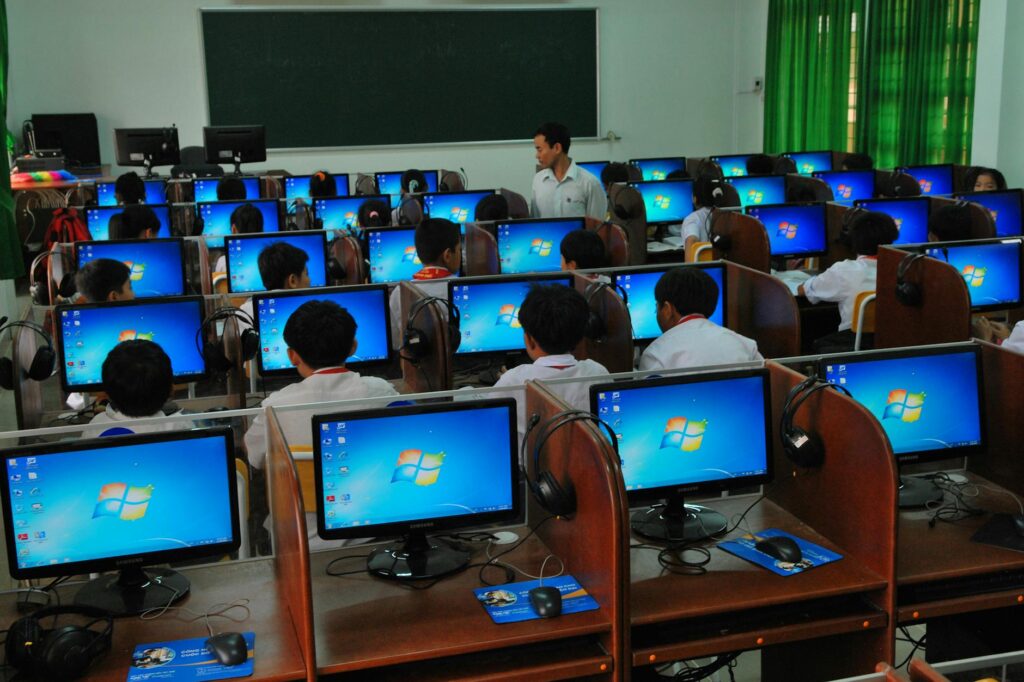
The Unseen Disruptor: Why Classroom Noise Monitors Are Crucial in 2026
Most teachers assume that managing classroom noise is simply a matter of voice modulation and stern looks. Yet, as of May 2026, the persistent hum of chatter, shuffling feet, and external disruptions continues to be one of the most significant, yet often overlooked, impediments to effective learning. In bustling UK primary and secondary schools, a dedicated classroom noise monitor offers a tangible, objective solution to this perennial challenge.
Last updated: May 5, 2026
Key Takeaways
- Classroom noise monitors provide objective feedback on sound levels, helping to regulate pupil behaviour and maintain focus.
- These devices are invaluable for creating an optimal auditory learning environment, reducing distractions for all pupils, including those with SEND.
- Choosing the right monitor involves considering factors like visual feedback, calibration, data logging, and integration with school systems.
- Effective implementation requires clear communication with pupils and consistent reinforcement of noise level expectations.
- While not a silver bullet, a classroom noise monitor is a powerful tool in a teacher’s behaviour management arsenal for 2026.
The first thing worth saying about classroom noise is that it’s not merely an annoyance; it’s a direct threat to educational outcomes. Excessive noise can impede comprehension, heighten stress levels, and negatively impact pupil engagement, particularly for children with auditory processing disorders or those who are neurodivergent. This guide explores the vital role of the classroom noise monitor in cultivating a more conducive learning atmosphere, examining how they function, what to look for when purchasing one for your UK school, and how to deploy them effectively in the 2026 academic year.
Understanding the Impact of Classroom Noise
Before delving into the technology, it’s critical to understand why controlling sound levels is so important. The ideal classroom sound environment, as recommended by various educational bodies, typically falls between 45-55 decibels (dB) for general instruction. This level is quiet enough for clear communication but not so silent as to feel stifling. According to research from the Education Endowment Foundation (EEF) (2023), excessive background noise can reduce reading comprehension by up to 10% in primary school pupils. This is a substantial deficit that can accumulate over a school year.
Consider a busy Year 4 classroom in Birmingham. During a group activity, the ambient noise might surge to 70-75 dB, comparable to a vacuum cleaner. At this level, spoken instructions can become inaudible, leading to confusion, off-task behaviour, and frustration for both pupils and the teacher. For pupils with Special Educational Needs and Disabilities (SEND), such as those with auditory sensitivities or ADHD, this level of noise can be overwhelming, causing significant distress and withdrawal from learning activities.
This is where a classroom noise monitor steps in. It transforms an abstract concept – ‘too loud’ – into a clear, visual, and sometimes auditory cue. By providing immediate feedback, it empowers pupils to self-regulate their own noise levels and encourages collective responsibility for maintaining a productive soundscape.
How Does a Classroom Noise Monitor Actually Work?
At its core, a classroom noise monitor is a sophisticated decibel meter designed for educational settings. It contains a microphone that picks up ambient sound. This sound is then processed to measure its intensity, typically in decibels (dB). The device interprets this measurement against pre-set thresholds, which are usually adjustable by the user.
Most modern classroom noise monitors utilise visual indicators. The most common setup involves a colour-coded light system. Typically, green signifies an acceptable noise level, yellow indicates a warning or rising noise, and red signals that the noise has exceeded the acceptable threshold. Some devices also incorporate audible alerts, though these are often configurable to prevent them from becoming another source of distraction.
For instance, a popular model might have settings where 45-55 dB keeps the light green. If the noise creeps up to 60 dB, it turns yellow. If it crosses 65 dB, it flashes red. This immediate visual feedback loop is incredibly effective. Pupils can see, often at a glance, when their collective noise level is becoming disruptive, prompting them to lower their voices without direct teacher intervention for every minor infraction.
Some advanced classroom noise monitors also offer data logging capabilities. This feature allows teachers or school administrators to track noise levels over time, identifying patterns in noise generation (e.g., during specific lessons, times of day, or activities). This data can be invaluable for understanding the acoustic challenges within a classroom or even across a school and for informing strategies for improvement. The Department for Education (DfE) is increasingly looking at environmental factors affecting learning, and such data could inform future guidance.
Types of Classroom Noise Monitors Available in 2026
The market offers a range of classroom noise monitors, each with slightly different features and approaches. Understanding these distinctions is key to selecting the right tool for your specific needs.
Visual Feedback Monitors
These are the most prevalent type. They rely on colour-changing lights or on-screen decibel readings. Examples include devices like the ‘Classroom Buddy’ or the ‘Noise Tracker’. They are intuitive and generally easy for pupils of all ages to understand. The visual cue acts as a constant, gentle reminder to manage volume.
A practical insight here: for younger pupils, a simple red-yellow-green light system is often more effective than a numerical decibel display, which might be less immediately comprehensible. The colour change is a universally understood signal for ‘caution’ or ‘stop’.
Auditory Feedback Monitors
Less common due to the risk of creating further noise, some monitors incorporate subtle sounds or chimes to indicate rising noise levels. These are typically designed to be less intrusive than a full alarm, serving as a gentle nudge. However, their effectiveness can be limited in already noisy environments.
Smart Classroom Noise Monitors with Data Logging
These are more sophisticated units that connect to Wi-Fi or a school network. They not only display real-time noise levels but also log data that can be accessed remotely via a web portal or app. Classroom noise monitor allows for detailed analysis of noise patterns throughout the day, week, or term.
For a school MAT (Multi-Academy Trust) looking to standardise classroom environments, these smart monitors offer valuable oversight. They can help identify classrooms consistently struggling with noise, enabling targeted support and professional development for staff. According to a report by the National Foundation for Educational Research (NFER) (2024), consistent environmental monitoring is key to sustainable improvements in school climate.
App-Based Solutions
For schools with limited budgets, smartphone apps can function as basic classroom decibel meters. While not as feature-rich or strong as dedicated hardware, they can provide a temporary or supplementary solution. Apps like ‘Decibel X’ or ‘Sound Meter’ can offer real-time readings, though calibration and placement can be issues.
A drawback to app-based solutions is that they require a teacher to consistently operate their phone, which can be distracting. Dedicated hardware is usually preferred for its unobtrusive, set-and-forget nature.
Key Features to consider When Buying a Classroom Noise Monitor
Selecting the right classroom noise monitor requires careful consideration of several factors to ensure it fits your school’s specific context and needs.
Visual Display and Customisation
The primary function is feedback. Look for clear, bright visual indicators that are easily visible from different parts of the classroom. The ability to customise the decibel thresholds for colour changes is crucial. What’s acceptable in a Year 1 classroom might be too loud for a Year 12 study hall. The flexibility to adjust these settings ensures the monitor remains relevant across different age groups and activities.
A monitor that allows you to set the ‘red’ threshold at 60 dB for quiet reading time but at 70 dB for energetic group work offers invaluable flexibility. This adaptability is key to its long-term utility.
Calibration and Accuracy
For reliable feedback, the device must be accurate. Reputable manufacturers will state the accuracy of their sensors, often within +/- 1 or 2 dB. Some higher-end models may offer manual calibration options, allowing you to fine-tune the readings against a known, calibrated sound source. While most teachers won’t need laboratory-grade accuracy, a reasonable level of precision ensures that the feedback is trustworthy.
Durability and Design
Classrooms can be dynamic environments. The monitor should be strong enough to withstand accidental knocks or curious fingers. Consider its size, weight, and mounting options – can it be easily placed on a shelf, wall-mounted, or even suspended from the ceiling? A tamper-proof design might be a consideration in some settings.
Power Source and Connectivity
Most classroom noise monitors are powered via mains electricity or USB. Battery-powered options offer flexibility but require regular battery changes. For smart devices, consider the Wi-Fi or Bluetooth connectivity requirements and ensure your school’s network can support them. Some devices may also offer audio output for integration with other classroom systems, such as smart boards or alert systems.
Data Logging and Reporting
If you need to track noise trends, data logging is essential. Look for devices that store data locally or transmit it wirelessly to a cloud platform. The ability to export this data for analysis or reporting to school leadership or governors can be a significant advantage. This feature is particularly useful for schools undergoing Ofsted inspections, where a well-managed learning environment is scrutinised.
Cost and Value for Money
Prices for classroom noise monitors vary widely, from basic visual indicators around £30-£70 to advanced data-logging units costing £150-£300 or more. When evaluating cost, consider not just the upfront price but also the device’s durability, features, and potential impact on pupil behaviour and learning. A more expensive, strong unit that lasts for many years and provides detailed insights might offer better long-term value than a cheaper, less reliable alternative.
Implementing Classroom Noise Monitors Effectively
Simply purchasing a classroom noise monitor is only the first step. Effective implementation is crucial for its success. Without a clear strategy, even the best device can become a forgotten gadget.
Involve the Pupils from Day One
Transparency is key. Introduce the device to your class, explaining what it’s, why you are using it, and what the different colours or signals mean. Frame it as a tool to help everyone learn better, not as a punitive measure. Consider having pupils help set the initial thresholds in a discussion about what constitutes a ‘good’ or ‘too loud’ learning soundscape for different activities. This fosters a sense of ownership and collaboration.
Example scenario: A Year 5 teacher explains, “This ‘Noise-O-Meter’ helps us see how loud our classroom is. When it’s green, it means we’re talking at a good volume for learning. If it turns yellow, it’s a gentle reminder to lower our voices. If it goes red, we all need to pause and bring the noise down. This helps everyone concentrate, especially on tricky maths problems.”
Set Clear Expectations and Consistent Rules
Establish clear rules for noise levels during different types of classroom activities. For example:
- Quiet work/reading: Aim for below 50 dB (Green).
- Group discussions: Aim for 50-60 dB (Green/Yellow).
- Energetic activities/presentations: Allow up to 65 dB (Yellow/Red flashing).
Consistently apply these rules. If the monitor turns red, follow through with pre-agreed consequences or reminders. This consistency reinforces the pupils’ understanding of acceptable noise behaviour.
Integrate with Behaviour Management Strategies
A classroom noise monitor should complement, not replace, existing behaviour management strategies. It can be used as a positive reinforcement tool. For example, a class that consistently keeps the monitor in the green zone for a full lesson could earn praise, a sticker, or a few extra minutes of free time. Conversely, it can serve as an objective trigger for a discussion about why noise levels escalated.
Regularly Review and Adjust Thresholds
The needs of a classroom change daily. What works for a noisy practical science lesson won’t work for a quiet reading session. Teachers should be empowered to adjust the decibel thresholds based on the activity. This adaptability ensures the monitor remains a helpful guide rather than an arbitrary enforcer.
Address Specific Needs
Be mindful of pupils with specific auditory needs. Some may require a quieter environment than the standard threshold allows, while others might need more explicit coaching on vocal volume. The monitor can be a starting point for conversations with parents, SEND coordinators, or educational psychologists about supporting these pupils.
Common Pitfalls to Avoid with Classroom Noise Monitors
Despite their benefits, poorly implemented noise monitors can become a source of frustration or be ignored.
Over-Reliance and Punishment
The monitor should be a pedagogical tool, not a disciplinary weapon. If it’s constantly used as a threat or punishment, pupils may develop negative associations with it, rendering it ineffective. The focus should be on teaching self-regulation and collective responsibility, not just on enforcing silence.
Inconsistent Application
If thresholds are changed arbitrarily, or if the rules are not consistently applied, pupils will quickly lose respect for the device and the expectations. Teachers must be committed to using it as intended, day in and day out.
Ignoring Data and Patterns
For monitors with data logging, failing to review the information is a missed opportunity. The data can reveal underlying issues, such as poor classroom layout, external noise sources, or specific teaching methods that inadvertently encourage noise. Analysing this data allows for proactive rather than reactive interventions.
Setting Unrealistic Expectations
Expecting absolute silence in a primary school classroom is unrealistic and counterproductive. Learning often involves collaboration, discussion, and active participation, all of which generate sound. The goal is managed noise, not no noise. Setting overly strict thresholds can lead to constant red lights, which can be demoralising for pupils and teachers alike.
The Classroom Noise Monitor in the Wider Educational Context
As of 2026, the drive towards creating more effective and supportive learning environments is stronger than ever. With a renewed focus on pupil well-being and engagement, tools that promote self-regulation and a positive classroom climate are invaluable. While not mandated by Ofsted, a well-managed noise level contributes to an environment that inspectors will view favourably, indicating good behaviour management and a focus on learning.
And, understanding classroom acoustics is becoming a more prominent part of educational research. Resources from organisations like the Chartered College of Teaching often highlight the importance of the physical learning environment, including sound. A classroom noise monitor is a practical, low-cost way for any school to begin addressing the auditory aspect of this environment, potentially reducing stress for teachers and improving focus for pupils.
For schools considering larger investments in soundproofing or acoustic treatments, a noise monitor can serve as an initial diagnostic tool. It helps quantify the problem before significant expenditure. For those looking at more advanced classroom technology, a smart noise monitor can sometimes integrate with learning management systems or environmental sensors, contributing to a ‘smart classroom’ ecosystem. Explore resources on Classroom Noise Monitor: Quieting the Chaos in 2026 for broader classroom technology integration.
Frequently Asked Questions
What is the primary purpose of a classroom noise monitor?
The main purpose is to provide objective, real-time feedback on ambient sound levels, helping teachers and pupils manage noise and maintain a focused learning environment.
Are classroom noise monitors expensive?
Prices vary, with basic visual models costing between £30-£70 and advanced data-logging units ranging from £150-£300. The value lies in their impact on behaviour and learning, not just the initial cost.
Can a classroom noise monitor be used for younger children?
Yes, particularly those with simple visual cues like colour-changing lights. These are easily understood by early years and primary pupils, promoting self-regulation from a young age.
How do you decide the right noise level for a classroom?
This depends on the activity. Quiet reading might require below 50 dB, while group work could tolerate up to 65 dB. Most monitors allow customisable thresholds to match different learning tasks.
Do schools legally require classroom noise monitors?
No, they are not legally mandated in the UK. However, they are highly recommended tools for effective classroom management and contributing to a positive learning environment, which aligns with Ofsted expectations.
Can I use a smartphone app as a classroom noise monitor?
Yes, basic decibel meter apps can offer temporary or supplementary noise monitoring. However, dedicated hardware is generally more strong, accurate, and less distracting for the teacher.
Conclusion: A Quieter Path to Better Learning
In the dynamic world of modern education, the subtle yet pervasive impact of classroom noise can’t be understated. As of May 2026, a classroom noise monitor stands as a simple yet profoundly effective tool for educators seeking to cultivate a more focused, productive, and less stressful learning environment. By providing objective feedback and fostering a shared responsibility for sound levels, these devices empower both teachers and pupils to manage auditory distractions proactively.
The actionable takeaway for educators and school leaders is to view a classroom noise monitor not as an optional gadget, but as a strategic investment in the quality of the learning experience. Carefully select a model that suits your school’s needs, implement it with clear communication and consistent rules, and unlock its potential to transform your classroom’s auditory environment.
Last reviewed: May 2026. Information current as of publication; pricing and product details may change.
Editorial Note: This article was researched and written by the Class Room Center editorial team. We fact-check our content and update it regularly. For questions or corrections, contact us.


