
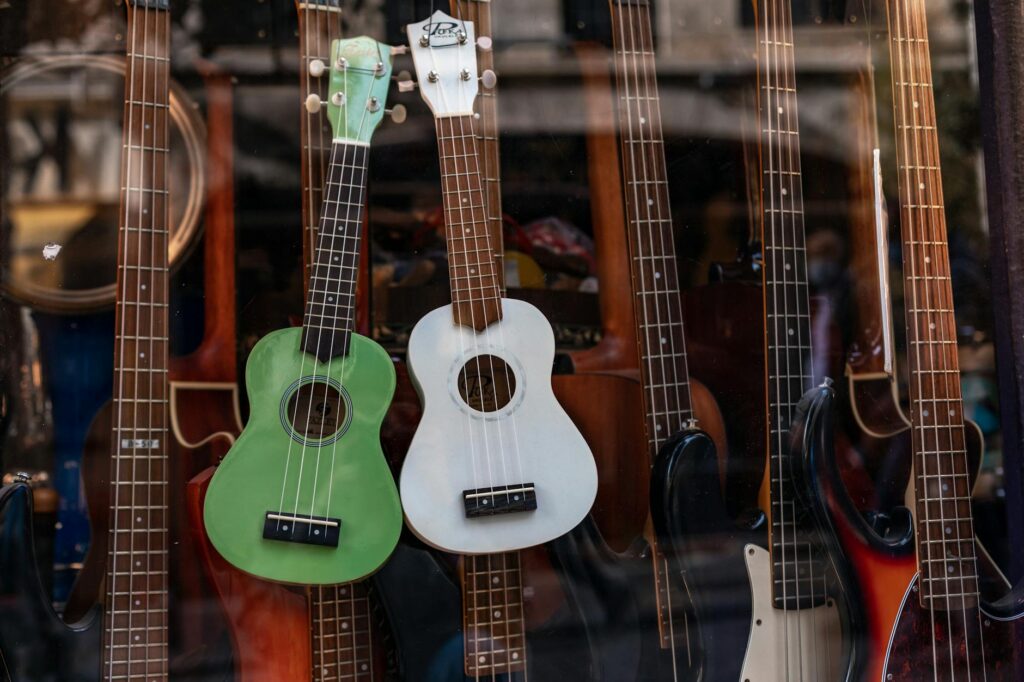
Ukulele History: From Hawaii to Your Hands (2026 Update)
A Tiny Instrument with a Big Story
Last updated: April 26, 2026
This guide covers everything about ukulele history. The cheerful strum of a ukulele can instantly transport you to a sunny beach or a cosy gathering. But this seemingly simple four-stringed instrument boasts a history far richer and more complex than you might imagine. The ukulele’s journey is a fascinating blend of migration, royal patronage, and cultural adaptation, transforming it from a niche import into a beloved global icon. Its story isn’t just about wood and strings; it’s about people, places, and the enduring power of music.
Latest Update (April 2026)
Recent developments continue to highlight the ukulele’s enduring appeal and its deep cultural connections. As reported by Hawaii News Now on March 31, 2024, a renewed focus on historical accuracy clarifies that while the ukulele is inextricably linked with Hawaii, its direct origins trace back to Portuguese immigrants and their instruments. This understanding is crucial for appreciating the instrument’s rich, multicultural heritage. The Honolulu Civil Beat noted on March 26, 2025, that significant collections of historical ukuleles are being preserved and shared by collectors, underscoring the instrument’s cultural value. Google Doodles celebrated the ukulele on May 1, 2025, further cementing its global recognition. While archival upgrades in Hawaii faced delays, as mentioned by the Honolulu Star-Advertiser on March 23, 2026, the spirit of the ukulele remains vibrant, with community events and educational initiatives continuing to thrive across the islands and worldwide.
and, the sebastopoltimes.com reported on April 22, 2026, that the charms of slack-key guitar are experiencing a resurgence, often alongside the ukulele, indicating a broader interest in Hawaiian musical traditions. This cross-pollination of genres highlights the ukulele’s continuing integration into diverse musical landscapes.
From Madeira to Honolulu: The Birthplace of the Ukulele
The ukulele’s origin story is a direct result of 19th-century Portuguese immigration to Hawaii. In the late 1870s, Portuguese labourers, primarily from Madeira, the Azores, and Cape Verde, arrived in Hawaii to work on the sugar plantations. They brought with them their musical traditions and, crucially, their instruments. Among these was the machete, a small, guitar-like instrument that would become the direct ancestor of the ukulele.
The key moment in ukulele history occurred in 1879 when the ship SS Ravenscrag arrived in Honolulu harbour, carrying approximately 400 Portuguese immigrants. Among them were skilled woodworkers and musicians, including Manuel Nunes, José do Espírito Santo, and Augusto Dias. These three men are widely credited with establishing the first ukulele workshops in Honolulu, adapting the machete to suit Hawaiian tastes and materials.
They began crafting instruments based on the machete, modifying its size, shape, and tuning. The machete typically had four courses of strings (two strings per course), but the Hawaiian adaptation favoured four single strings. The tuning also evolved, with the characteristic G-C-E-A (re-entrant) tuning becoming popular. This tuning — where the second-highest string is pitched higher than the highest string, gives the ukulele its bright, jangly sound and allows for a distinctive melodic style of playing. As of 2026, this re-entrant tuning remains the standard for most ukuleles.
The name ‘ukulele’ itself is a subject of much fascination. The most popular theory, often cited by historians, suggests it translates to ‘jumping flea’ in Hawaiian. This could refer to the players’ nimble fingers dancing across the fretboard, or perhaps it was inspired by the lively, energetic sound of the instrument. Another theory, as noted by Hawaii News Now, links it to the Hawaiian word ‘uku’ (gift) and ‘lele’ (to come), meaning ‘the gift that came here,’ referring to its arrival with the Portuguese immigrants. According to historical accounts, the instrument’s unique sound quickly captured the attention of the Hawaiian people.
Royal Endorsement and Early Popularity
The ukulele might have remained a niche instrument if not for the enthusiastic patronage of Hawaii’s monarchy. King David Kalākaua, a passionate supporter of Hawaiian culture and music, was captivated by the instrument. He learned to play it himself and incorporated it into royal gatherings and hula performances. This royal endorsement was instrumental in popularising the ukulele among the Hawaiian population, transforming it from an immigrant’s instrument into a symbol of Hawaiian identity. The University of Hawaii System has noted the ‘Ukulele Comeback’ and its cultural significance, tracing back to these foundational moments.
King Kalākaua’s reign from 1874 to 1891 was a golden age for the ukulele. He encouraged its use in traditional Hawaiian music and dance, helping to solidify its place in the culture. His influence extended beyond mere appreciation; he commissioned instruments and supported the luthiers who were building them. This period saw the ukulele become deeply intertwined with the hula and other Hawaiian art forms. The royal court’s embrace of the instrument, as documented by numerous historical accounts, provided a key boost to its acceptance and development.
The early luthiers, like Nunes, Santo, and Dias, continued to refine their craft. They experimented with different woods, such as koa, a native Hawaiian hardwood prized for its beautiful grain and resonant tone. Instruments made from koa became highly sought after and are still considered among the finest ukuleles ever produced. The quality and craftsmanship of these early instruments laid the foundation for the ukulele’s reputation. Today, vintage koa ukuleles from this era can fetch significant prices among collectors, a testament to their enduring quality.
The Ukulele’s Journey Beyond Hawaii
While the ukulele flourished in Hawaii, its journey was far from over. The islands’ growing popularity as a tourist destination in the early 20th century played a significant role in introducing the ukulele to the wider world. Visitors returning to the mainland United States and beyond brought back not only souvenirs but also a newfound appreciation for this charming instrument. The iconic imagery of Hawaii, often featuring ukuleles, further fueled this interest.
The Panama-Pacific International Exposition in San Francisco in 1915 is widely recognized as a major turning point for the ukulele’s popularity in the continental US. Hawaiian musicians and hula dancers performed at the exposition, showcasing the instrument and its unique sound to hundreds of thousands of attendees. This exposure sparked a ukulele craze that swept across America in the 1910s and 1920s. Music publishers began churning out ukulele arrangements of popular songs, and numerous ukulele instruction books became bestsellers.
Companies like C.F. Martin & Co. And Gibson began producing ukuleles, adapting their manufacturing processes to meet the burgeoning demand.
This era saw the ukulele become a staple in American households. Its affordability, portability, and relative ease of learning made it an accessible instrument for people of all ages and backgrounds. It was common to see families gathering to play the ukulele, and it became a popular accompaniment for singers. The ukulele’s bright sound was perfectly suited to the upbeat popular music of the Roaring Twenties, further cementing its place in the cultural zeitgeist.
The Ukulele in the Mid-20th Century and Beyond
The ukulele’s popularity saw fluctuations throughout the mid-20th century. While the initial craze subsided after the 1920s, the instrument never entirely disappeared. It maintained a steady presence, particularly within Hawaiian music and communities. During World War II, the ukulele served as a morale booster for soldiers, with many portable instruments accompanying them overseas. Its compact size made it an ideal companion for life on the move.
The post-war era saw a gradual resurgence of interest. Television played a role, with performers like Arthur Godfrey frequently seen playing the ukulele on his popular shows in the 1950s. This exposure reintroduced the instrument to a new generation of viewers. However, the dominant musical trends of rock and roll and folk music in the 1960s and 1970s somewhat overshadowed the ukulele, pushing it towards a more niche status once again.
Despite being less prominent in mainstream popular music during these decades, dedicated ukulele communities continued to thrive. Festivals and gatherings kept the tradition alive. The development of new materials and manufacturing techniques also contributed to the instrument’s evolution, leading to more durable and affordable options. As of 2026, manufacturers continue to innovate with sustainable wood sourcing and advanced bracing techniques to improve tone and playability.
The Modern Ukulele Renaissance
The late 20th and early 21st centuries have witnessed an unprecedented renaissance for the ukulele. Several factors have contributed to its widespread popularity today. The internet has been a major catalyst, providing unprecedented access to learning resources, tutorials, and communities. YouTube channels dedicated to ukulele lessons and performances have garnered millions of views, making it easier than ever for aspiring musicians to pick up the instrument.
Online ukulele forums and social media groups connect players from around the globe, fostering a sense of community and shared passion. This digital connectivity has democratized music education and performance, allowing enthusiasts to share their progress, learn from each other, and even collaborate remotely. As of April 2026, numerous online platforms offer interactive lessons and virtual jam sessions.
The rise of accessible, high-quality ukuleles at various price points has also been instrumental. While vintage koa ukuleles remain prized possessions, manufacturers now offer excellent beginner instruments for under $100, making the barrier to entry incredibly low. Brands like Kala, Lanikai, and Cordoba are recognized for producing reliable and well-regarded instruments across different budgets. Independent luthiers also continue to produce high-end, custom ukuleles for discerning players.
Contemporary musicians and influencers have also embraced the ukulele, integrating it into diverse musical genres. Artists like Vance Joy, Twenty One Pilots, and Train have featured ukuleles in their hit songs, exposing the instrument to massive global audiences. This cross-genre appeal has broadened the ukulele’s perception beyond its traditional association with Hawaiian music. The sebastopoltimes.com noted in April 2026 the continued blending of ukulele music with other genres, reflecting its versatility.
The ukulele’s journey from a niche immigrant instrument to a global phenomenon is a testament to its inherent charm, adaptability, and the universal appeal of music. Its history is a vibrant tapestry woven with threads of cultural exchange, royal patronage, and technological innovation. Today, the ukulele continues to bring joy and music to hands and hearts around the world.
Frequently Asked Questions
Who invented the ukulele?
The ukulele was not invented by a single person but evolved from the machete, a small stringed instrument brought to Hawaii by Portuguese immigrants in the late 1870s. Manuel Nunes, José do Espírito Santo, and Augusto Dias are credited with adapting the machete into the first ukuleles in Honolulu around 1879.
What does ‘ukulele’ mean?
The most common theory suggests ‘ukulele’ translates to ‘jumping flea’ in Hawaiian, possibly referring to the player’s lively finger movements or the instrument’s bright sound. Another theory suggests it means ‘the gift that came here,’ referring to its arrival with immigrants.
Why is the ukulele tuning unique?
The common G-C-E-A tuning, known as re-entrant tuning, is unique because the second-highest string is pitched higher than the highest string. Ukulele history gives the ukulele its characteristic bright, jangly tone and facilitates a distinct melodic playing style, which has been a hallmark since its early development.
What is the most sought-after ukulele wood?
Koa, a native Hawaiian hardwood, is highly sought after for its beautiful grain and rich, resonant tone. Ukuleles crafted from koa, especially vintage instruments from the early luthiers, are considered among the finest and are often valuable collector’s items as of 2026.
How has the internet impacted ukulele playing?
The internet has changed ukulele accessibility and learning. Online tutorials, forums, and social media communities provide unprecedented resources for beginners and experienced players alike. This digital connectivity allows for global collaboration and learning, making it easier than ever to learn and share ukulele music as of April 2026.
Conclusion
The ukulele’s history is a compelling narrative of cultural fusion and musical evolution. From its humble beginnings as an immigrant’s instrument in 19th-century Hawaii, it has blossomed into a globally cherished musical companion. Its journey, marked by royal favor, international exposure, and a significant modern renaissance fueled by digital connectivity and accessibility, continues to inspire musicians of all ages. The ukulele’s enduring charm lies in its simplicity, its joyful sound, and its remarkable ability to connect people across cultures and generations.
Source: edX
Related Articles
- AI in UK Classrooms: 5 Proven Teaching Strategies for 2026
- Free Printable Classroom Activities: A 2026 Guide
- Ounces to Cups: Your 2026 Kitchen Math Guide
Editorial Note: This article was researched and written by the Class Room Center editorial team. We fact-check our content and update it regularly. For questions or corrections, contact us. Knowing how to address ukulele history early makes the rest of your plan easier to keep on track.


