
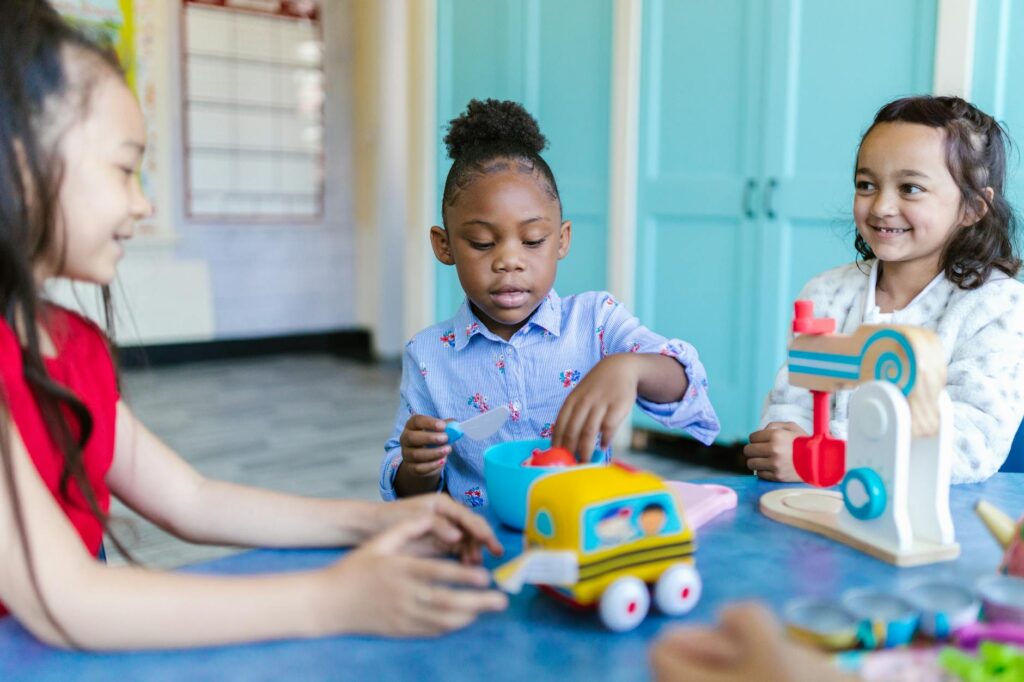
The first thing worth saying about classroom events games is that they are far more than just a break from the curriculum; they are powerful tools for fostering engagement, reinforcing learning, and building vital social skills. As of May 2026, educators across the UK are increasingly recognising the profound impact these carefully designed activities can have on pupil motivation and academic outcomes. Far from being mere time-fillers, well-executed classroom events games can transform a standard lesson into a memorable, impactful experience.
Last updated: May 5, 2026
Why does every classroom whiteboard ghost within six months? It’s a question many teachers grapple with, often pointing to the wear and tear from consistent use. This highlights a broader challenge: how to maintain engaging, dynamic learning environments that stand the test of time and pupil enthusiasm. This guide delves into the world of classroom events games, exploring their benefits, best practices, and a curated selection of ideas perfect for the 2026 academic year.
Key Takeaways
- Classroom events games are essential for boosting pupil engagement and reinforcing learning in 2026.
- Effective games cater to different learning styles and support curriculum objectives.
- Planning, clear instructions, and positive reinforcement are crucial for successful implementation.
- A blend of digital and physical games offers diverse engagement opportunities for all pupils.
- Team-building and problem-solving are key benefits derived from well-structured classroom events games.
The Power of Play in Modern Education
In an era where attention spans can be fleeting and digital distractions are ever-present, the role of play in education has never been more critical. Classroom events games, when thoughtfully integrated, tap into pupils’ natural inclination towards play, making learning feel less like a chore and more like an adventure. This approach is particularly effective in the UK’s diverse educational settings, from EYFS through to Key Stage 5, supporting the varied developmental needs of pupils.
The benefits extend beyond mere enjoyment. Research consistently shows that active participation in games can significantly improve retention of information. According to the Education Endowment Foundation (EEF) (2025), approaches that promote active learning, such as gamified lessons, can yield substantial improvements in academic attainment, particularly for disadvantaged pupils who might benefit from the structured, engaging nature of these activities. These games help consolidate knowledge and develop critical thinking skills.
Enhancing Learning Through Engagement
The core of any successful lesson lies in pupil engagement, and games are a potent catalyst for this. When pupils are actively involved, their curiosity is piqued, and they become more receptive to new information. This heightened engagement is particularly valuable for complex subjects or topics that might otherwise seem dry or abstract. For instance, a history lesson on the Roman Empire can be brought to life with a ‘Roman Toga Design Challenge’ or a ‘Build a Roman Aqueduct’ engineering game.
This interactive approach helps pupils connect with the material on a deeper level, moving beyond rote memorisation to genuine understanding. Such strategies align perfectly with the National Curriculum’s emphasis on developing well-rounded individuals with critical thinking and problem-solving abilities. For example, a science class could use a ‘Build-a-Molecule’ game using craft materials to understand chemical bonds.
Developing Essential Soft Skills
Beyond academic content, classroom events games are excellent vehicles for developing crucial soft skills. Teamwork, communication, problem-solving, resilience, and leadership are all naturally practised and honed through collaborative games. In a 3v3 basketball game, for example, pupils learn to strategise, communicate plays, and support each other – skills directly transferable to group projects and future workplaces.
Ofsted and the Department increasingly recogniss these ’21st-century skills’ for Education (DfE) as vital components of a complete education. Games provide a safe, low-stakes environment for pupils to experiment with these skills, learn from mistakes, and celebrate collective success. A ‘Classroom Escape Room’ designed to solve curriculum-related puzzles is a prime example, requiring pupils to communicate, delegate tasks, and think critically together.
Types of Classroom Events Games for 2026
The world of classroom events games is diverse, catering to every subject, age group, and resource availability. As of May 2026, the integration of digital tools has opened up new avenues, but traditional, low-tech games remain just as effective. Understanding the different types allows educators to select the most appropriate games for their specific objectives.
Active & Physical Games
These games get pupils moving, which is essential for maintaining energy levels and focus, especially for younger children. They can be adapted for various spaces, from a small classroom to the school hall or playing fields. Examples include charades based on vocabulary words, ‘Simon Says’ for following instructions, or even relay races with academic tasks.
A practical application could be a ‘Maths Scavenger Hunt’ where pupils solve problems to find clues leading to the next location. This not only reinforces mathematical concepts but also encourages physical activity and collaborative problem-solving. The key is to ensure the physical aspect enhances, rather than distracts from, the learning objective.
Quiet & Tabletop Games
Not all engaging games require pupils to run around. Board games, card games, puzzles, and strategy games can be highly effective for developing critical thinking, planning, and social interaction in a calmer setting. Many educational board games are available, or teachers can create their own tailored to specific topics.
For instance, a ‘Historical Timeline Card Game’ where pupils arrange event cards in chronological order can be an excellent way to learn about historical periods. This type of game promotes strategic thinking and discussion among pupils as they debate the correct sequence. This is also ideal for quieter moments or for pupils who may find high-energy games overwhelming.
Digital & Online Games
The rise of educational technology has brought a wealth of digital classroom events games. Interactive whiteboards, tablets, and computers can host quizzes, simulations, virtual escape rooms, and collaborative online platforms. These tools offer immediate feedback, can track progress, and often provide engaging multimedia content.
Platforms like Kahoot!, Quizizz, and Blooket offer dynamic ways to review material, while more complex simulations can allow pupils to explore scientific concepts or historical events in a virtual environment. A 2026 trend is the use of AI-powered educational games that adapt difficulty based on individual pupil performance, offering a truly personalised learning experience. However, it’s important to ensure equitable access and manage screen time effectively.
Creative & Role-Playing Games
These games encourage imagination, communication, and empathy. Activities like ‘Show and Tell’ for younger pupils, mock trials for older students, or improvisational role-playing scenarios can bring subjects to life. They allow pupils to explore different perspectives and develop their expressive abilities.
A Year 9 English class, for example, might engage in a ‘Character Debate’ where pupils embody characters from a novel and argue their motivations and actions. This deepens their understanding of character development and literary themes. Similarly, a ‘Build Your Own Business’ simulation game can teach entrepreneurial skills through practical application.
Structuring Successful Classroom Events Games
The success of any classroom event game hinges on careful planning and execution. Simply introducing a game without a clear purpose or structure can lead to chaos rather than learning. Educators need to consider several key elements to ensure the game serves its educational goals effectively.
Defining Clear Learning Objectives
Before selecting or designing a game, it’s crucial to identify what pupils should learn or practice. Are you aiming to reinforce vocabulary, improve problem-solving skills, develop teamwork, or assess understanding of a specific concept? The game’s design and mechanics should directly support these objectives.
For example, if the objective is to improve recall of scientific terms, a matching game or a vocabulary quiz using a platform like Quizizz would be appropriate. If the goal is to foster collaborative problem-solving, an escape room challenge would be more suitable. The learning outcome must be the guiding principle.
Providing Clear Instructions & Rules
Ambiguity in instructions is a common pitfall that can derail a game. Instructions should be concise, clear, and delivered in a way that all pupils can understand, regardless of their learning style. Demonstrations or a brief practice round can be invaluable, especially for complex games or younger pupils.
Consider using visual aids or written instructions alongside verbal explanations. Ensure pupils understand not only how to play but also the objective of the game and how it relates to their learning. For instance, when introducing a ‘Marketplace Simulation’ game, clearly outline the roles, the currency, the available products, and the winning conditions.
Facilitating & Monitoring Progress
The teacher’s role during a game is not passive. It involves monitoring progress, offering guidance where needed, managing behaviour, and subtly assessing understanding. Teachers can circulate, ask probing questions, and encourage participation, ensuring no pupil is left behind or disengaged.
This facilitation is crucial for identifying misconceptions or areas where pupils are struggling. For instance, during a ‘Debate Club’ game, the teacher might step in to ensure fair turn-taking, prompt deeper arguments, or clarify points of contention. Effective monitoring allows for timely intervention and adjustment of the game’s pace or rules if necessary.
Debriefing & Reflection
Perhaps the most critical, yet often overlooked, step is the debrief. After the game concludes, dedicate time for pupils to reflect on what they learned, how they worked together, and what challenges they encountered. This reflection phase consolidates the learning and makes the connection between the game and the curriculum explicit.
Ask questions like: ‘What strategies did your team use?’ ‘What was the most challenging part?’ ‘How does this game relate to [specific curriculum topic]?’ A post-game discussion allows pupils to articulate their understanding and the skills they practised. This meta-cognitive step transforms a fun activity into a powerful learning experience. According to the Chartered College of Teaching (2024), reflection is a cornerstone of effective pedagogical practice.
Classroom Events Games: Real-World Examples & Use Cases
To illustrate the practical application of classroom events games, let’s explore a few examples tailored for different age groups and subjects within the UK curriculum.
Example 1: Primary School Science – ‘The Great Ecosystem Challenge’
Age Group: Year 3-5 (Ages 7-10)
Objective: To understand the interconnectedness of living things within an ecosystem.
Game Type: Active, Collaborative
How it works: Pupils are divided into groups, each representing a component of a specific ecosystem (e.g., a forest: trees, insects, birds, mammals, decomposers). Each group receives cards detailing their role, needs (e.g., water, food), and what they provide to others. They then physically move around a designated area (classroom or playground), forming connections by holding hands or linking arms when they fulfil a need for another group (e.g., a bird group linking with a tree group if they eat its fruit). Challenges can be introduced, such as a drought (less water available) or invasive species, requiring groups to adapt.
Learning Outcome: Pupils visually and kinesthetically understand food chains, predator-prey relationships, and the impact of environmental changes. This active approach aids memory retention and conceptual understanding.
Example 2: Secondary School History – ‘World War II Rationing Challenge’
Age Group: Year 9-10 (Ages 13-15)
Objective: To understand the impact of rationing on daily life during World War II and practice resource management.
Game Type: Tabletop, Simulation
How it works: Pupils work in family units (groups). Each family receives a limited weekly ‘ration book’ (tokens or cards representing food types) and a budget. They must visit different ‘shops’ (stations around the classroom) to ‘buy’ their weekly essentials. Some items might be scarce or unavailable due to ‘wartime shortages’, and pupils might have to make difficult choices or trade with other families. Teachers introduce ‘events’ like bombings (reducing available goods) or government directives (changing ration allowances).
Learning Outcome: This game immerses pupils in the challenges faced by civilians during WWII, fostering empathy and an understanding of economic and social history. It also develops negotiation and strategic planning skills.
Example 3: Secondary School Maths – ‘Algebraic Expression Builders’
Age Group: Year 7-8 (Ages 11-13)
Objective: To practice simplifying and manipulating algebraic expressions.
Game Type: Digital or Physical
How it works: Pupils are given a set of ‘variable blocks’ (e.g., x, y, z) and ‘constant blocks’ (numbers). Using a digital whiteboard or physical cards, they must combine these blocks according to specific rules (e.g., you can only combine like terms) to build or simplify given algebraic expressions. A competitive element can be added by timing teams or awarding points for correct and simplified expressions. For a more advanced version, introduce negative signs or exponents.
Learning Outcome: This gamified approach makes the abstract concepts of algebra more tangible and interactive, improving fluency and confidence in algebraic manipulation. According to a 2025 study by the National Centre for Excellence in the Teaching of Mathematics (NCETM), such tactile or visual methods significantly boost understanding for pupils with varying mathematical aptitudes.
Choosing the Right Classroom Event Game
With a vast array of options, selecting the most suitable game requires careful consideration. The ‘right’ game is one that aligns perfectly with your educational goals, your pupils’ needs, and your available resources.
Matching Games to Curriculum Goals
Every game should have a clear pedagogical purpose. Avoid games that are purely for entertainment without any educational value. Consider how the game directly supports or reinforces specific learning objectives from the National Curriculum or your school’s specific schemes of work. For example, a ‘Periodic Table Bingo’ game is excellent for chemistry revision, directly linking fun to curriculum content.
Where possible, link games to upcoming topics or areas pupils find challenging. This can serve as an engaging introduction to a new subject or a strong review session before assessments. For instance, a ‘Literary Devices Charades’ game can prepare pupils for analysing poetry or prose.
Considering Age Appropriateness & Differentiation
Games must be tailored to the developmental stage and abilities of your pupils. A game that’s engaging for Year 4 pupils might be too simplistic for Year 10s, or too complex for younger children. Always consider the cognitive load, complexity of rules, and themes involved.
Differentiation is key. Can the game be adapted for pupils with SEND? Can it be made more challenging for advanced learners? For example, a ‘Build a City’ game for geography could have different complexity levels: simple block-building for younger pupils, requiring specific topographical features for older ones, and modified tasks for pupils with fine motor skill challenges.
Resource Availability & Time Constraints
Be realistic about the resources available. Do you have access to technology, art supplies, or outdoor space? Can the game be run with minimal preparation time? Many highly effective games require little more than paper, pens, and creativity.
Low-cost or no-cost games are often the most accessible. A simple ‘Two Truths and a Lie’ can be used to practise descriptive language or factual recall. If time is limited, opt for quick, engaging games that can be completed within a single lesson or as a warm-up/cool-down activity. Conversely, more involved ‘escape rooms’ or simulations might require dedicated class time or even an after-school club.
Promoting Inclusivity & Equity
it’s vital that all pupils feel included and able to participate fully. Consider potential barriers: language differences, physical limitations, cultural sensitivities, or differing levels of confidence. Games should be designed to celebrate diversity rather than highlight differences.
Ensure that digital games are accessible to all pupils, considering home access to devices and internet if any part of the game is intended to be played remotely. For physical games, adapt rules to ensure participation for all mobility levels. Offering a variety of game types throughout the year can cater to different preferences and ensure equitable engagement.
Common Mistakes to Avoid with Classroom Events Games
Even the best intentions can lead to less-than-ideal outcomes if common pitfalls are not avoided. Being aware of these can save time, frustration, and ensure games contribute positively to the learning environment.
Over-Reliance on Games as a Substitute for Teaching
Games should supplement, not replace, direct instruction and strong teaching. While highly engaging, they are most effective when used strategically to reinforce concepts already introduced or to provide practice. Relying solely on games can lead to superficial learning without deep understanding.
Ensure that the game’s learning objectives are clear and that a debrief session solidifies the connection to the broader curriculum. Simply playing a game without this pedagogical framework risks turning valuable learning time into unstructured playtime.
Lack of Clear Purpose or Objectives
Introducing a game ‘because it’s fun’ is not enough. If pupils (or the teacher) don’t understand why they are playing, or what they are supposed to learn, the game’s impact will be minimal. This lack of clarity can lead to disengagement or pupils playing the game without truly internalising the learning.
Always articulate the game’s purpose and desired outcomes before starting. Connect it explicitly to the lesson’s topic. For example, before a ‘Vocabulary Scrabble’ game, state: “Today we’re playing Scrabble to practise using our new topic vocabulary words correctly, focusing on spelling and context.”
Poor Classroom Management During Games
High-energy games, in particular, can sometimes lead to over-excitement and disruptive behaviour if not managed effectively. This can be detrimental to the learning atmosphere and the game’s intended purpose.
Establish clear behavioural expectations before the game begins. Use established classroom management techniques to maintain order, such as clear signals for attention, designated quiet areas, and pre-agreed consequences for off-task behaviour. The teacher must remain in control of the learning environment throughout.
Neglecting the Debrief and Reflection Phase
As mentioned, the debrief is vital for cementing learning. Skipping this step means missing a crucial opportunity to consolidate knowledge, discuss strategies, and transfer learning to other contexts. The game becomes an isolated event rather than an integrated part of the learning process.
Allocate sufficient time for reflection. Guide the discussion with targeted questions. Encourage pupils to share their insights and challenges. This phase is where the ‘aha!’ moments often occur, transforming a fun activity into a deeply educational one.
Tips for Maximising the Impact of Classroom Events Games
To ensure your classroom events games are not just fun but also highly effective learning tools, consider these expert tips:
Rotate Game Types and Formats
Keep pupils engaged long-term by varying the kinds of games you use. Alternate between active and quiet games, digital and analogue activities, individual challenges and team-based events. This caters to different learning preferences and prevents monotony.
A diverse approach ensures that all pupils have opportunities to shine and engage with material in ways that suit them best. For instance, follow a complex simulation with a quick-fire quiz game to cater to different energy levels and processing speeds.
Involve Pupils in Game Design
Empowering pupils to design their own games or modify existing ones can significantly boost their engagement and ownership. This activity also reinforces their understanding of the subject matter, as they must consider learning objectives, rules, and challenges.
For example, ask older pupils to design a history-themed escape room for younger pupils, or have them create a science-based board game. This not only reinforces their learning but also develops valuable creativity and planning skills. As of 2026, many educational technology platforms are incorporating pupil-led game creation tools.
Integrate Games with Assessment
Classroom events games can provide valuable insights into pupil understanding. Observe participation, listen to discussions, and analyse outcomes to gauge comprehension and skill development. Some digital games also offer built-in assessment features that track individual progress.
Use this information to inform future teaching and identify areas where pupils may need additional support. A well-designed game can be as effective an assessment tool as a traditional test, offering a more dynamic and engaging measure of learning.
Foster a Positive and Supportive Atmosphere
Emphasise effort, participation, and learning from mistakes over winning. Create a culture where it’s safe to try new things, make errors, and learn from them. Celebrate collective achievements and resilient efforts, not just individual victories.
This positive reinforcement encourages all pupils to engage fully, knowing that their effort is valued. It aligns with the EEF’s guidance on metacognition and self-regulated learning, which highlights the importance of a supportive environment for developing these skills.
Frequently Asked Questions
What are the main benefits of using classroom events games?
Classroom events games significantly boost pupil engagement, improve knowledge retention, and help develop crucial soft skills like teamwork, problem-solving, and communication. They make learning more enjoyable and memorable.
How can I ensure classroom events games are inclusive for all pupils?
Adapt game rules for different abilities, offer a variety of game types, ensure clear instructions, and foster a supportive atmosphere where effort is valued over winning. Consider SEND needs and provide differentiated tasks.
What is the difference between a classroom event game and a regular lesson activity?
While both aim to teach, classroom events games are typically more structured, goal-oriented, and often involve a competitive or collaborative element designed for deeper engagement and reinforcement, often with a specific event-like feel.
How much time should I allocate for classroom events games?
Time allocation varies greatly depending on the game’s complexity and learning objectives. Games can range from a 5-minute warm-up activity to a full-lesson simulation or project, with a crucial debriefing period following.
Are digital classroom events games better than traditional ones?
Neither is inherently better; they offer different strengths. Digital games can provide advanced features and immediate feedback, while traditional games foster direct social interaction and require fewer resources, catering to diverse needs and environments.
How do classroom events games align with the UK National Curriculum?
Many games can be directly tailored to specific curriculum objectives, reinforcing knowledge and skills in subjects like maths, science, history, and English through interactive and engaging formats that promote active learning.
Conclusion
As we Handle the evolving educational world of 2026, classroom events games stand out as indispensable tools for creating dynamic, engaging, and effective learning environments. They offer a powerful means to capture pupils’ attention, deepen their understanding, and cultivate essential life skills. By thoughtfully selecting, planning, and facilitating these games, educators can transform their classrooms into vibrant hubs of active learning and discovery.
Actionable takeaway: Select one curriculum topic you’ll be covering next week and design a simple, low-resource classroom event game to reinforce a key concept during your lessons.
Last reviewed: May 2026. Information current as of publication; pricing and product details may change.
Editorial Note: This article was researched and written by the Class Room Center editorial team. We fact-check our content and update it regularly. For questions or corrections, contact us.


