
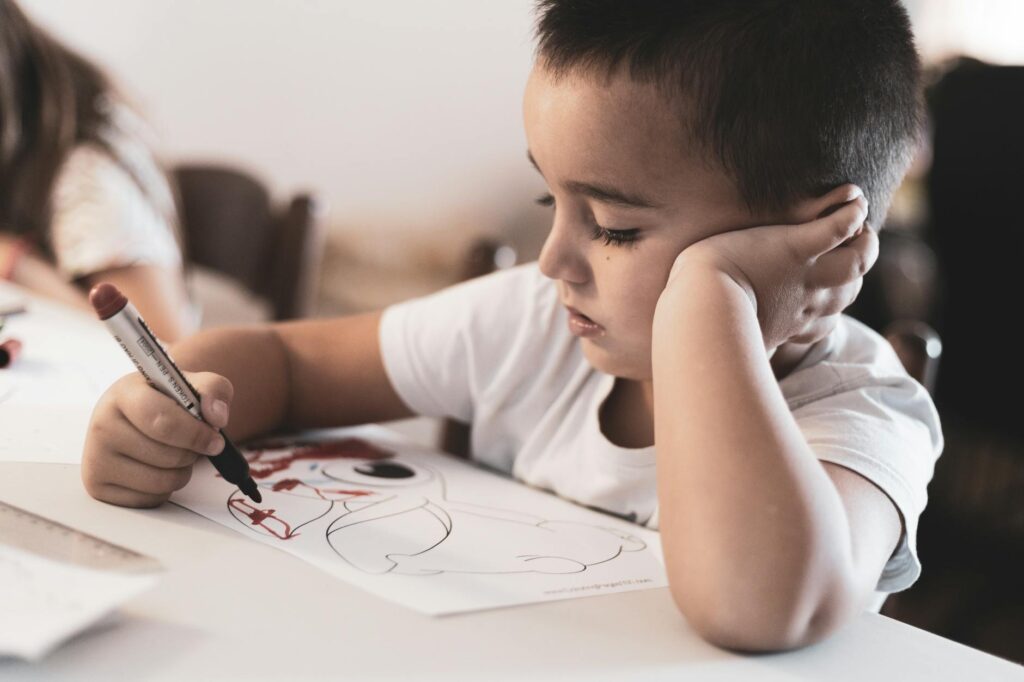
This guide covers everything about Drawing in the Classroom: A 2026 Guide for UK Educators. The simple act of drawing in the classroom is far more than a pastime; it’s a fundamental tool for cognitive development, creative expression, and deeper learning. As of May 2026, educators across the UK are increasingly recognising its vital role in a complete curriculum. Far from being just for art lessons, drawing can be woven into virtually every subject, enhancing understanding and engagement for pupils of all ages.
Last updated: May 5, 2026
Most teachers spend twice the budget they need to on art supplies. Here’s how to maximise impact with minimal spend.
Key Takeaways
- Drawing enhances cognitive skills, including problem-solving and critical thinking.
- It’s a powerful tool for developing fine motor skills and visual literacy.
- Drawing can be integrated across the National Curriculum to deepen understanding in subjects like maths, science, and history.
- Effective classroom drawing requires minimal resources and adaptable strategies for various age groups.
- Encouraging drawing fosters self-expression and boosts pupil confidence and engagement.
The complex Benefits of Drawing in Education
Drawing in the classroom isn’t just about creating pretty pictures. It’s a complex cognitive process that ignites multiple areas of a pupil’s development. From the earliest years in EYFS to the demands of GCSE preparation, drawing offers tangible benefits.
Firstly, it’s a direct conduit for developing fine motor skills. The precise movements required to hold a pencil, control its pressure, and shape lines are crucial for handwriting, using tools, and general dexterity. According to the Education Endowment Foundation (EEF) (2025), early development of fine motor skills is strongly correlated with later academic success, particularly in literacy and numeracy.
Beyond physical skills, drawing cultivates visual literacy. In an increasingly image-saturated world, the ability to interpret, analyse, and create visual information is paramount. Pupils learn to observe details, understand spatial relationships, and convey complex ideas through visual means. This skill is invaluable not just in art but in decoding diagrams, interpreting charts, and understanding visual communication in all its forms.
Integrating Drawing Across the National Curriculum
The true power of drawing in the classroom lies in its versatility. It’s not confined to the art studio; it can serve as a dynamic learning aid across subjects.
In mathematics, pupils can draw geometric shapes, illustrate fractions, or create visual representations of data sets. A Year 4 teacher in Leeds might ask pupils to draw their interpretation of a complex word problem, requiring them to visualise the scenario and then represent it visually, aiding comprehension and problem-solving. This approach helps demystify abstract concepts and makes maths more accessible.
History lessons can be brought to life through drawing. Pupils can sketch historical artefacts, create timelines with visual elements, or draw scenes depicting historical events based on research. Imagine Year 7 pupils drawing a Roman villa based on archaeological descriptions, or Year 9s sketching a Victorian street scene to understand social conditions. This visual engagement offers a different dimension to historical study.
Science lessons also benefit immensely. Pupils can draw diagrams of cells, illustrate the water cycle, sketch plant and animal life cycles, or visually represent experimental results. A Year 6 pupil drawing the layers of the Earth, labelling each with key characteristics, demonstrates understanding in a way that a simple list might not. The Department for Education (DfE) (2026) guidance on STEM education increasingly highlights the importance of visual learning methods to improve retention and understanding.
A geography lesson on volcanic eruptions could involve pupils drawing cross-sections of a volcano, labelling the magma chamber, conduit, and crater, thereby reinforcing scientific terminology and processes visually.
Fostering Creativity and Self-Expression
Beyond academic subjects, drawing is intrinsically linked to a pupil’s emotional and personal development. It provides a non-verbal outlet for thoughts, feelings, and imagination, which is particularly vital for children who may struggle to articulate themselves verbally.
Encouraging free drawing, without the pressure of a specific outcome, allows pupils to explore their inner world. This creative freedom can boost confidence and self-esteem. When a pupil sees their ideas take shape on paper, it validates their imagination and encourages them to take creative risks in other areas of their learning.
For pupils with Special Educational Needs and Disabilities (SEND), drawing can be an exceptionally powerful communication tool. It offers a way to express complex emotions, anxieties, or preferences when verbal communication is challenging. Teachers can use drawing activities to gauge a pupil’s emotional state or their understanding of social situations.
Use Case: A pupil in a Year 2 class experiencing anxiety might draw a picture of a ‘worry monster’ and then discuss their feelings by pointing to different parts of the drawing, providing the teacher with crucial insight into their emotional well-being.
Practical Strategies for Drawing in the Classroom
Implementing effective drawing activities doesn’t require extensive resources or a specialist art teacher. With thoughtful planning, any educator can integrate drawing successfully.
Start Simple: Begin with readily available materials: pencils, crayons, chalk, and plain paper. Even whiteboards can be used for quick sketches and diagrams. These basic tools are highly effective for developing fundamental drawing skills.
Scaffolding Learning: For specific learning objectives, provide simple scaffolds. This could include outline templates for diagrams, partially drawn scenes for historical reenactments, or grids for graph plotting. This support helps pupils focus on the learning content rather than the technical execution of the drawing.
Differentiated Instruction: Recognise that pupils will have varying levels of drawing ability and confidence. Offer choices where possible: some might prefer detailed illustration, others simple line drawings. Ensure tasks are challenging but achievable for all.
Focus on Process, Not Just Product: Emphasise the effort, observation, and thinking that goes into a drawing, rather than solely judging the final aesthetic. Praise for effort, experimentation, and idea generation is more beneficial for long-term development than focusing only on the finished artwork.
Materials and Resources for Classroom Drawing
While drawing can be done with minimal resources, having a few key items can significantly enhance the experience and educational value.
Pencils: Standard HB pencils are versatile. For older pupils or more detailed work, consider graphite pencils in varying hardness (e.g., 2B for shading, 2H for fine lines).
Paper: All-purpose drawing paper is ideal, but even copier paper works for quick sketches. Consider larger formats like flip chart paper for group work or A3 pads for more detailed individual projects.
Colour Mediums: Crayons are excellent for younger children due to their ease of use and durability. Coloured pencils offer more control for older pupils, while pastels can provide vibrant colour and blending opportunities.
Whiteboards & Markers: A staple in most classrooms, whiteboards are excellent for quick visual explanations, brainstorming, and collaborative drawing. Dry-wipe markers in various colours are essential.
Digital Tools: As of 2026, interactive whiteboards and tablets offer new avenues. Drawing apps can provide infinite canvases, undo functions, and a range of digital brushes, appealing to digitally native pupils. However, ensure equitable access and don’t let technology overshadow the fundamental benefits of traditional drawing.
Cost-Saving Tip: Schools can often secure bulk discounts on art supplies through local suppliers or educational purchasing consortia. Explore options for recycled paper or donations from community art centres.
A Year 5 science teacher could use an interactive whiteboard with a drawing app to collaboratively sketch the process of photosynthesis, with pupils contributing labels and annotations in real-time.
Addressing Common Challenges in Classroom Drawing
Despite its benefits, implementing drawing activities can present challenges. Anticipating these allows for proactive solutions.
Challenge: Lack of Confidence/Fear of Making Mistakes
Many pupils, especially older ones, fear their drawings aren’t ‘good enough.’ This can stifle creativity. The solution is to consistently emphasise process over product. Frame tasks as exploration and learning, not performance. Use prompts like ‘draw your idea of…’ or ‘sketch what you observe,’ rather than ‘draw a perfect…’
Challenge: Mess and Material Management
Art supplies can create mess, and managing them can be time-consuming. Implement clear routines for distributing and collecting materials. Use aprons or old shirts for painting/colouring activities. For younger pupils, pre-portioning materials into trays or containers can simplify distribution and cleanup.
Challenge: Time Constraints within a Packed Timetable
Fitting in drawing can seem difficult within a packed curriculum. The key is integration, not addition. Short, focused drawing activities can be used as warm-ups, brain breaks, or as part of a larger lesson, as demonstrated in the curriculum integration section.
Challenge: Ensuring Inclusivity for All Learners
Not all pupils have the same physical ability or prior experience with drawing. Provide varied tools and techniques. For pupils with physical challenges, explore adaptive grips, larger drawing surfaces, or digital drawing tools. For those with less confidence, pair them with more skilled peers for collaborative projects.
Drawing for Enhanced Visual Literacy and Critical Thinking
Visual literacy is the ability to interpret, negotiate, and make meaning from information presented in the form of an image. Drawing is a direct pathway to developing this crucial skill.
When pupils are asked to draw something – a scene, an object, a process – they must first observe it carefully. They analyse its components, spatial relationships, and key features. This act of deconstruction and reconstruction strengthens their observational skills and their capacity for critical analysis. For instance, asking pupils to sketch a complex machine, like a bicycle, requires them to break it down into its constituent parts and understand how they connect.
And, drawing encourages visual problem-solving. If a pupil is trying to represent a 3D object on a 2D surface, they must grapple with perspective, shading, and proportion. This process mirrors the problem-solving required in many STEM fields. The EEF (2024) has noted that visual-spatial reasoning skills are increasingly important for success in technical careers.
In a physics class, pupils could sketch the trajectory of a projectile, using their drawings to hypothesise about launch angles and distances, thereby visualising abstract physical principles.
Drawing as a Tool for Assessment
Drawing can serve as an informal yet insightful assessment tool for teachers. It offers a window into a pupil’s understanding that might not be captured by traditional written tests or verbal responses.
By analysing a pupil’s drawing, a teacher can gauge their grasp of concepts, their attention to detail, and their ability to synthesise information. For example, a drawing of a historical battle scene might reveal not only the pupil’s understanding of the event’s key elements but also their interpretation of the mood and atmosphere.
This visual assessment is particularly valuable in the early years and Key Stage 1, where children are still developing their literacy skills. A drawing can communicate understanding long before a child can write a detailed explanation. It allows for a more inclusive assessment of learning.
Famous Artists and Their Classroom Inspiration
While not all pupils will become professional artists, understanding the works of famous artists can inspire and inform classroom drawing activities. Discussing artists who used drawing as a primary medium can highlight its power and versatility.
Consider Leonardo da Vinci, whose detailed anatomical sketches and observational drawings demonstrate the intersection of art and science. His notebooks are a testament to the power of drawing as a tool for exploration and understanding. Pupils could be inspired to create their own ‘observation journals’ of the natural world around their school.
Modern illustrators and graphic novelists also offer relatable inspiration. Many students are familiar with the work of artists like Quentin Blake, whose fluid, expressive style has brought countless children’s books to life. His work demonstrates how simple lines can convey character and emotion effectively. Teachers could set challenges based on Blake’s style, encouraging pupils to create their own characters.
Use Case: A Year 7 class studying portraits could analyse the techniques used by artists like Picasso or Modigliani. They could then experiment with different approaches to drawing portraits, focusing on shape, form, and expression rather than strict realism.
Expert Tips for Maximising Drawing in the Classroom
Drawing in the classroom is an area where simple, expert-driven strategies can yield significant results. Here are some tips to elevate your practice:
Curate Your Resources Wisely: You don’t need expensive art supplies. High-quality pencils and a good range of crayons or coloured pencils are often sufficient. For older pupils, a few sheets of cartridge paper and basic ink pens can open up new possibilities. According to a 2025 survey by TES, the average UK primary school spends between £150-£300 annually on art supplies for a class of 30, but effective planning can stretch this further.
Encourage Sketching Over ‘Finished’ Art: For learning purposes, the process of sketching is often more valuable than producing a polished final piece. Encourage quick sketches to capture ideas, observations, or moments. This reduces pressure and promotes a more experimental mindset.
Demonstrate Techniques Simply: When introducing a new drawing technique – be it shading, perspective, or texture – demonstrate it clearly and concisely on the board or a visualiser. Break down complex processes into manageable steps.
Connect Drawing to Real-World Applications: Show pupils how drawing is used outside the classroom – in product design, architecture, animation, scientific illustration, fashion, and journalism. This can provide context and motivation.
Provide Constructive Feedback: Offer specific, actionable feedback. Instead of ‘nice drawing,’ try ‘I like how you’ve used shading to show the light source,’ or ‘Your lines here clearly show the movement of the water.’ This guidance helps pupils improve.
Unique Insight: A practice I’ve seen successfully implemented in schools is the ‘Drawing a Day’ challenge. Pupils spend just five minutes each day drawing a single object from their environment or a prompt. Over time, this builds confidence, observational skills, and a visual vocabulary without demanding significant lesson time.
Frequently Asked Questions
What are the main benefits of drawing in the classroom?
Drawing enhances fine motor skills, visual literacy, creativity, and self-expression. It also aids comprehension across subjects like maths, science, and history by making abstract concepts tangible and observable.
How can I encourage pupils who are afraid to draw?
Focus on the process, not the product. Use non-judgmental prompts, offer simple templates, encourage collaborative drawing, and celebrate effort and experimentation over perfection. Start with very basic shapes or observation tasks.
What are the essential materials for drawing in a classroom setting?
Essential materials include pencils (HB, coloured), paper (copier or drawing pads), crayons, and whiteboard markers. For older pupils, consider graphite pencils of varying hardness and different paper textures.
Can drawing be used to assess learning in subjects other than art?
Absolutely. Drawing can visualise understanding of scientific processes, historical events, mathematical concepts, or geographical features. Analysing these drawings provides insight into a pupil’s grasp of subject matter.
How much time should be dedicated to drawing activities in class?
Drawing doesn’t require extensive time. Short, focused activities of 5-15 minutes, integrated into lessons or used as warm-ups, can be highly effective. Consistency is more important than duration.
Are digital drawing tools beneficial for classroom use?
Digital tools on tablets or interactive whiteboards can offer unique benefits like undo functions and varied brushes, appealing to digital-native pupils. However, they should complement, not replace, traditional drawing methods.
Conclusion
Drawing in the classroom is a versatile, powerful pedagogical tool that extends far beyond traditional art lessons. By integrating drawing activities strategically, educators can foster creativity, deepen understanding across the curriculum, and support the complete development of their pupils. Embrace the power of the pencil, and watch your pupils’ learning flourish.
Last reviewed: May 2026. Information current as of publication; pricing and product details may change.
Related read: 2026's Top Classroom Events Games: Engaging Fun for Every Pupil
Source: Britannica
Related Articles
- Hochre Explained: Definition, Methods, and Use in 2026
- Classroom 6x Unblocked: The 2026 Educator's Essential Guide
- 2026 Classroom Door Decorating Ideas: Inspire & Engage
Editorial Note: This article was researched and written by the Class Room Center editorial team. We fact-check our content and update it regularly. For questions or corrections, contact us. Knowing how to address Drawing in the Classroom: A 2026 Guide for UK Educators early makes the rest of your plan easier to keep on track.


