
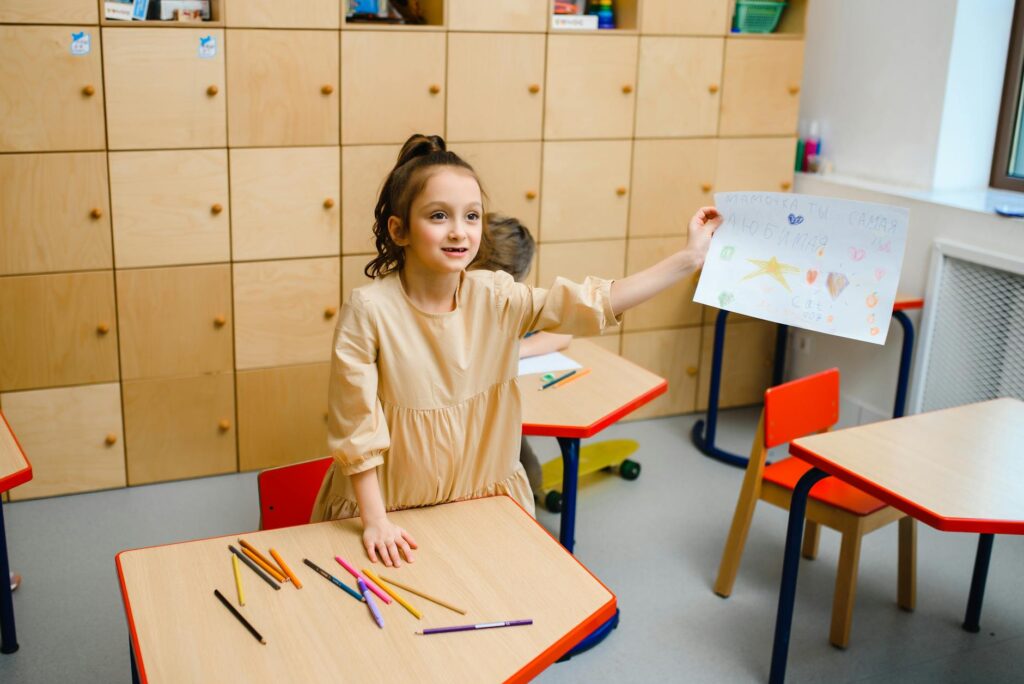
Why Classroom Drawing Matters More Than Ever in 2026
The first thing worth saying about classroom drawing is that its value extends far beyond the art lesson. As of May 2026, educators are increasingly recognising drawing not just as a creative outlet, but as a fundamental tool for cognitive development, problem-solving, and deeper comprehension across the curriculum.
Last updated: May 5, 2026
Key Takeaways
- Classroom drawing enhances understanding of complex subjects by making them visual.
- It significantly boosts pupil engagement and participation across all age groups.
- Developing drawing skills supports fine motor development and visual literacy from an early age.
- A variety of accessible materials can facilitate effective classroom drawing activities.
- Teachers can integrate drawing into subjects like science, history, and maths to reinforce learning.
For years, drawing in schools was often relegated to designated art periods. However, current pedagogical approaches, influenced by research from bodies like the Education Endowment Foundation (EEF), highlight the power of multimodal learning. This means incorporating diverse sensory inputs, and visual representation through drawing is a prime example. A standard art lesson might focus on technique, but integrating drawing into maths, science, or history lessons transforms it into a powerful learning aid. This guide will explore the complex benefits and practical applications of classroom drawing for educators in 2026.
The Cognitive and Developmental Advantages of Drawing
Drawing isn’t just about making pretty pictures; it’s a profound cognitive exercise. When pupils draw, they engage multiple brain areas simultaneously. They must observe, interpret, translate three-dimensional reality into two-dimensional representation, and often, articulate abstract concepts visually.
This process directly supports the development of fine motor skills. The intricate movements required to hold a pencil, control its pressure, and create detailed lines are crucial for handwriting proficiency and dexterity. According to the National Child Development Study, early development of fine motor skills correlates with later academic success. For younger children in Key Stage 1, these skills are foundational for learning to write and manipulate objects.
Beyond motor skills, drawing cultivates visual literacy. In an era saturated with digital imagery, the ability to critically interpret and create visual information is paramount. Classroom drawing activities teach pupils to ‘read’ images, understand perspective, composition, and the communicative power of visual elements. This is particularly relevant as interactive whiteboards and digital displays become standard in classrooms, requiring pupils to process information presented visually.
Observational Drawing: Learning to See
A cornerstone of effective drawing is observational drawing – the practice of sketching what one sees directly. This technique trains pupils to look closely, notice details, and accurately represent forms, textures, and spatial relationships. It’s a skill that sharpens perception.
At Carleton College, for instance, observational drawing is integrated into various disciplines, teaching students to ‘see’ more deeply, a skill transferable to scientific observation or historical analysis. When pupils in a Year 5 science class draw a plant, they notice leaf veins, petal structures, and root systems they might otherwise overlook. This active observation leads to a more profound understanding of botany than simply reading a textbook description.
The challenge for educators is often encouraging pupils to look beyond the obvious. A practical insight for teachers is to break down complex objects into simpler shapes initially. Instead of asking a pupil to draw a whole apple, ask them to draw its basic spherical form, then add the stem, indentation, and any surface variations. This step-by-step approach makes observational drawing less intimidating.
Integrating Drawing Across the Curriculum
The true power of classroom drawing lies in its versatility. It can be seamlessly woven into almost any subject, enriching the learning experience and catering to diverse learning styles.
Science and Nature Studies
Science is inherently visual. Drawing allows pupils to document experiments, illustrate biological processes, and represent scientific phenomena. A Year 7 biology class could sketch cell structures, circulatory systems, or the life cycle of a butterfly. This active creation process embeds the knowledge far more effectively than passive note-taking.
For instance, a pupil drawing a diagram of photosynthesis must understand the inputs (sunlight, CO2, water) and outputs (oxygen, glucose) and their relationships. They might use colour to represent different elements or arrows to show movement. This visual storytelling solidifies abstract scientific concepts.
A practical tip for science teachers is to provide labelled diagrams as reference points, but encourage pupils to create their own interpretations. This helps them internalise the information while allowing for individual expression. For younger pupils, drawing animals and their habitats can foster a connection with the natural world.
Mathematics and Geometry
Many educators overlook drawing’s potential in mathematics. Yet, it’s an excellent tool for visualising abstract concepts like geometry, fractions, and data representation.
When teaching about 2D shapes, pupils can draw squares, triangles, and circles, labelling their properties. Exploring symmetry can involve drawing symmetrical patterns or completing half of a shape. Fractions can be illustrated by dividing drawn shapes (circles, rectangles) into equal parts.
Mind mapping and sketching can also aid in problem-solving. Instead of just writing out a word problem, pupils can draw a visual representation of the scenario, identifying the key quantities and relationships. This visual approach can unlock understanding for pupils who struggle with purely textual information. As of 2026, resources for teaching maths through drawing are becoming more prevalent, with many teachers sharing successful strategies online.
History and Social Studies
History comes alive when pupils can visualise it. Drawing can be used to create timelines, maps of ancient civilisations, or character sketches of historical figures. This makes the past more tangible and relatable.
For example, a Year 9 history class studying Roman Britain could draw a map showing key settlements, roads, and Hadrian’s Wall. They might also sketch artefacts, Roman soldiers’ armour, or a typical villa layout. This activity requires pupils to research and synthesise information visually.
Storyboarding historical events, from the signing of the Magna Carta to the Industrial Revolution, can help pupils understand cause and effect and narrative flow. This process encourages critical thinking about how events unfolded and the perspectives of those involved. This is a valuable skill for developing historical empathy.
Literacy and Storytelling
Drawing and storytelling are intrinsically linked. Pupils can draw characters from a story they’ve read, create their own comic strips, or illustrate key scenes. This activity enhances comprehension and encourages creative writing.
A common classroom drawing activity is to have pupils illustrate a scene from a book. This requires them to interpret the text, visualise the setting and characters, and then translate that vision onto paper. They might focus on capturing a specific mood or emotion described in the text.
For younger children, drawing can be a precursor to writing. They might draw a picture of their day and then verbally describe it, with the teacher transcribing their words. This builds confidence and connects the visual and linguistic aspects of communication. These techniques support the development of narrative skills essential for GCSE English Literature and Language.
Materials and Resources for Classroom Drawing
Effective classroom drawing doesn’t require an extensive budget. A range of affordable and accessible materials can facilitate engaging activities.
Essential Drawing Tools
The most fundamental tools are pencils and paper. Graphite pencils in varying hardness (e.g., HB, 2B) offer a good range for sketching and shading. For younger pupils, thicker pencils or crayons are easier to grip.
Coloured pencils, pastels, felt-tip pens, and chalk provide variety in colour and texture. Water-based paints are also excellent for younger age groups due to their ease of use and cleanup. For older pupils, charcoal or ink pens can offer more expressive possibilities.
Beyond standard paper, consider using larger formats like flip chart paper for group activities or sketchbooks for individual projects. Even recycled paper or the blank sides of old worksheets can be used, promoting sustainability.
Utilising Digital Tools
As of 2026, digital drawing tools are increasingly integrated into classroom settings. Interactive whiteboards, tablets with styluses, and dedicated drawing software offer new avenues for creativity and instruction.
These tools allow for easy editing, layering, and access to a vast array of colours and brushes. They can be particularly useful for demonstrating techniques, creating digital storyboards, or even for pupils with fine motor challenges who might find traditional tools difficult. Many educational platforms now offer drawing and annotation features.
However, it’s important to balance digital with traditional methods. The tactile experience of drawing on paper offers unique sensory feedback and can foster different kinds of creative thinking. A good approach is to use digital tools to supplement, not entirely replace, physical drawing.
Finding Inspiration and Prompts
A common hurdle for teachers is generating fresh, engaging drawing prompts. The key is to make them relevant to the curriculum or age group.
Consider prompts like: ‘Draw your ideal classroom of the future,’ ‘Illustrate the main character from the book we just read,’ ‘Sketch a map of your journey to school,’ or ‘Design a new gadget that solves a common problem.’ For younger pupils, simple prompts like ‘Draw your favourite animal’ or ‘What does happiness look like?’ work well.
Teachers can also use visual aids like photographs, objects from nature, or even abstract shapes as starting points. Encouraging pupils to draw from imagination, memory, or observation provides diverse stimuli. A useful tip from experienced educators is to create a ‘drawing prompt jar’ where pupils can pick a challenge when they have free time.
| Drawing Material | Pros | Cons | Typical Cost (GBP) | Best For |
|---|---|---|---|---|
| Graphite Pencils (HB, 2B) | Versatile, erasable, good for detail | Can smudge, limited colour | £3-£10 (set of 12) | Sketching, shading, technical drawing |
| Coloured Pencils | Wide range of colours, good control | Can be waxy, blending can be tricky | £5-£15 (set of 24) | Illustrations, detailed colour work |
| Felt-Tip Pens | Vibrant colours, bold lines | Can bleed through paper, can dry out | £4-£12 (set of 12) | Cartoons, bold outlines, younger pupils |
| Crayons | Easy to grip, bright colours, inexpensive | Limited detail, can be messy | £2-£8 (box of 24) | Early years, large area colouring |
| Chalk Pastels | Soft, blendable, vibrant | Messy, requires fixative, fragile | £6-£20 (set of 12-36) | Expressive art, blending techniques |
Addressing Challenges in Classroom Drawing
While the benefits are clear, implementing drawing activities can present challenges for teachers and pupils.
Overcoming Reluctance and ‘I Can’t Draw’ Syndrome
Many pupils express a fear of drawing, often rooted in a belief that they lack artistic talent. This ‘I can’t draw’ syndrome can be a significant barrier to participation.
The key is to shift the focus from artistic perfection to the process of expression and learning. Emphasise that drawing is a skill that develops with practice, not just innate talent. Start with simple, structured activities where success is almost guaranteed, such as drawing basic shapes or tracing outlines. Providing opportunities for collaborative drawing can also reduce individual pressure.
A practical insight is to celebrate effort and creativity over technical skill, especially in younger years. Praising a pupil for their ‘interesting interpretation’ or ‘great use of colour’ can be more encouraging than focusing on anatomical accuracy. As of May 2026, many educational psychologists advocate for this process-oriented approach.
Ensuring Inclusivity and Accessibility
Classroom drawing activities must be accessible to all pupils, including those with special educational needs and disabilities (SEND) or different learning styles.
For pupils with fine motor difficulties, consider thicker pencils, adaptive grips, or assistive technology like drawing apps on tablets. For those with visual impairments, tactile drawing materials like clay or raised-line drawing boards can be beneficial. Providing verbal instructions alongside visual demonstrations is also crucial.
The National Curriculum for England, across Key Stages 1 to 3, emphasises that art and design should be accessible and inclusive. Teachers must differentiate tasks to meet the needs of all learners. This might involve simplifying complex drawings, providing pre-drawn templates, or allowing pupils to dictate their ideas for a peer or assistant to draw.
Managing Time and Resources
Integrating drawing into a packed timetable can seem daunting. Classroom management during creative activities requires careful planning.
Teachers can incorporate short, focused drawing exercises (e.g., 5-10 minutes) as warm-ups or revision tools. For instance, a quick sketch of a historical event at the start of a lesson or a diagram of a science concept before a quiz.
Managing materials efficiently is also key. Pre-portioning supplies, establishing clear routines for distribution and collection, and encouraging pupils to tidy up promptly can minimise disruption. Consider using multi-purpose materials that can serve various drawing needs. For instance, a good set of coloured pencils can be used for detailed work as well as bolder colouring.
Tips for Effective Classroom Drawing Instruction
To maximise the impact of drawing activities, teachers can adopt several best practices.
Model and Demonstrate
One of the most effective teaching strategies is to model the drawing process yourself. Think aloud as you draw, explaining your choices, techniques, and problem-solving approaches. This demystifies the process for pupils and provides concrete examples.
Using an overhead projector, document camera, or simply drawing on a large piece of paper where all pupils can see allows them to follow your steps. Demonstrate different techniques, like shading, cross-hatching, or creating texture. Show how to break down complex objects into simple shapes.
This hands-on demonstration provides a visual anchor for pupils, helping them understand how to translate ideas from their minds onto paper. It’s a practice supported by evidence in educational psychology, underscoring the importance of explicit instruction.
Foster a Supportive Environment
Create a classroom atmosphere where experimentation and mistakes are seen as learning opportunities. Encourage pupils to share their drawings and offer constructive feedback to one another.
Avoid comparing pupils’ work directly, as this can be discouraging. Instead, focus on individual progress and effort. Display a variety of artwork, celebrating different styles and approaches. This helps pupils realise there isn’t one ‘right’ way to draw.
A supportive environment encourages risk-taking. Pupils will be more willing to try new techniques or tackle more challenging subjects if they feel safe and valued. According to research from the Chartered College of Teaching, positive classroom culture is a significant factor in pupil attainment.
Encourage Variety and Experimentation
Don’t limit drawing to just pencils and paper. Introduce a range of materials and techniques to keep pupils engaged and expose them to different artistic possibilities.
Experiment with different surfaces (e.g., cardboard, fabric scraps), drawing tools (e.g., sticks, sponges), and subject matter. Challenge pupils to draw with their non-dominant hand, or to create a drawing using only lines, or only dots. This type of playful experimentation can spark creativity and build resilience.
For instance, a lesson could involve drawing with pastels to explore colour blending, followed by a session with fine-liners to focus on detail. This variety ensures that drawing remains a dynamic and exciting part of the curriculum.
Frequently Asked Questions
What are the main benefits of drawing in the classroom?
Classroom drawing enhances cognitive skills like observation and problem-solving, develops fine motor control crucial for writing, and boosts visual literacy. It also increases pupil engagement and aids comprehension across subjects by making abstract concepts tangible and relatable.
How can I encourage pupils who say they ‘can’t draw’?
Shift focus from talent to process. Use simple, structured prompts, celebrate effort over perfection, and provide positive reinforcement. Collaborative drawing and step-by-step demonstrations can also make drawing feel less intimidating and more accessible to reluctant drawers.
What are the best materials for classroom drawing on a budget?
Basic graphite pencils, a variety of coloured pencils or crayons, and ample paper (including recycled options) are highly effective and affordable. Felt-tip pens and chalk pastels offer more vibrant options for a small additional cost.
Can drawing be used in subjects other than art?
Absolutely. Drawing is highly adaptable for science (diagrams, observations), maths (geometry, data), history (timelines, maps), and literacy (storyboarding, character illustration), significantly enhancing understanding and retention in these areas.
How do I manage drawing activities in a busy classroom timetable?
Integrate short, focused drawing exercises (5-10 minutes) as lesson warm-ups or revision tools. Prepare materials in advance and establish clear routines for distribution and cleanup to minimise time loss and disruption.
Are digital drawing tools useful in the classroom?
Yes, digital tools on tablets or interactive whiteboards offer dynamic features for demonstration, editing, and creative expression. However, they should complement, not replace, traditional drawing methods to ensure a balance of sensory experiences.
Conclusion
Classroom drawing is a versatile, powerful pedagogical tool that, as of 2026, deserves a central place in modern education. By integrating visual expression across subjects, educators can unlock deeper comprehension, foster essential developmental skills, and significantly enhance pupil engagement. The key is to provide a supportive environment, offer varied prompts and materials, and celebrate the creative journey.
Actionable Takeaway: Choose one subject area you teach and plan a simple drawing activity for next week to explore its potential for visual learning and engagement.
Last reviewed: May 2026. Information current as of publication; pricing and product details may change.
Editorial Note: This article was researched and written by the Class Room Center editorial team. We fact-check our content and update it regularly. For questions or corrections, contact us.


