
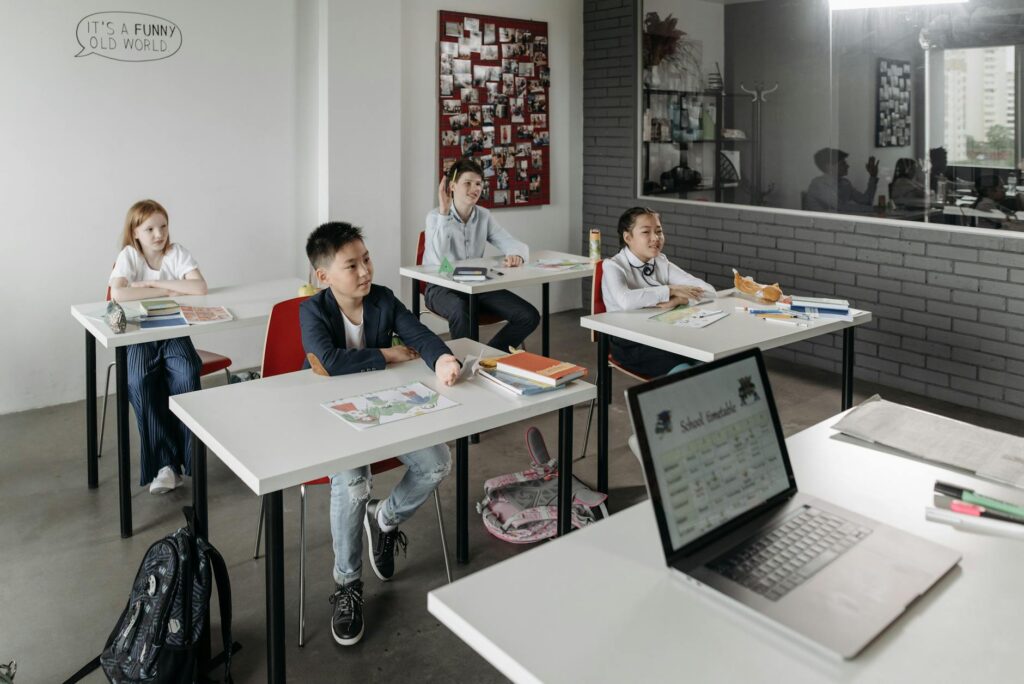
Transforming Learning Spaces: The Power of Classroom Centres in 2026
This guide covers everything about classroom centers. This guide covers everything about classroom centres. Classroom centres are thoughtfully designed areas within a learning space, each dedicated to a specific subject, skill, or type of activity. As of May 2026, their role in fostering student engagement, supporting differentiated instruction, and creating dynamic educational environments is more critical than ever.
Last updated: May 1, 2026
- Classroom centres in 2026 are specialised zones that promote active learning and cater to diverse student needs.
- Effective centres boost student engagement, encourage independent learning, and support differentiated instruction.
- Designing successful centres involves careful planning of space, materials, and clear learning objectives.
- Recent trends highlight flexible, multi-purpose centres adaptable to various subjects and age groups.
- Integrating technology thoughtfully within centres enhances their educational value.
Beyond mere decoration, these zones act as hubs for exploration, collaboration, and hands-on learning, significantly impacting how students interact with material and develop crucial skills. By strategically organising the classroom into distinct areas, educators can create a more stimulating and effective learning experience.
What Exactly Are Classroom Centres?
At their core, classroom centres, often referred to as learning stations or activity centres, are designated physical spaces within a classroom. Each centre is equipped with specific materials and tasks focused on a particular learning objective, skill development, or subject area.
Think of them as mini-learning environments within the larger classroom. For instance, a reading centre might feature comfortable seating, a diverse library of books, and perhaps audio recordings, while a math centre could be stocked with manipulatives, problem-solving games, and worksheets.
The primary goal is to provide students with structured opportunities for exploration, practice, and discovery in a way that aligns with their individual learning styles and pace. This approach moves away from a one-size-fits-all model towards a more personalized and engaging educational journey.
The Evolving world of Educational Spaces in 2026
The concept of classroom centres isn’t new, but its implementation and design have evolved significantly. As of May 2026, educators are increasingly focusing on creating flexible, adaptable learning environments that can serve multiple purposes.
Recent trends, such as the push for blended learning and project-based education, mean that centres are often designed to be multi-functional. A science centre might also incorporate elements of art or technology, allowing for cross-curricular exploration. This adaptability is key to meeting the diverse needs of today’s learners.
Also, there’s a growing emphasis on student-led learning. Centres are curated to empower students to take ownership of their learning, make choices about their activities, and engage in deeper inquiry. The physical layout itself is seen as a pedagogical tool, guiding student behaviour and learning pathways.
Why Are Classroom Centres So Effective? Key Benefits
The pedagogical benefits of well-structured classroom centres are substantial and well-documented. They serve as powerful tools for enhancing student engagement and facilitating deeper learning.
One of the most significant advantages is increased student engagement. When students have choice and control over their learning activities within a structured environment, their motivation and interest naturally increase. This hands-on approach makes learning more tangible and enjoyable.
Centres also excel at supporting differentiated instruction. Educators can tailor the complexity of tasks, the types of materials, and the level of support offered at each centre to meet the unique needs of individual students or small groups. This ensures that all students are appropriately challenged and supported, regardless of their starting point.
Plus, centres promote independence and self-regulation. Students learn to manage their time, select appropriate activities, and work collaboratively, developing essential life skills alongside academic ones.
Types of Classroom Centres to consider
The variety of classroom centres you can implement is vast, limited only by your curriculum, available space, and imagination. However, certain types are foundational for many educational settings.
Literacy Centres: These are crucial for developing reading, writing, and language skills. Examples include a reading corner with diverse books and comfy seating, a writing station with paper, pencils, and prompts, a listening centre with audiobooks, or a word work centre focusing on phonics and spelling.
Math Centres: Designed to build mathematical understanding and fluency. Activities here might involve using manipulatives like blocks or counters, playing math games, solving puzzles, or completing targeted worksheets. A measurement centre or a data analysis station could also be included.
Science & Discovery Centres: These centres encourage exploration and scientific inquiry. They can house experiments, nature exploration kits, sensory bins, building materials for engineering challenges, or technology for virtual exploration. According to NASA (2023), hands-on STEM activities significantly improve retention.
Art & Creative Centres: Fostering creativity and fine motor skills. This could be a drawing and painting station, a clay or play-dough area, a collage creation space, or a dramatic play centre for imaginative role-playing.
Technology Centres: Integrating digital tools for learning. This might include computers for research, tablets for educational apps, a coding station, or even a green screen for multimedia projects. As of May 2026, interactive whiteboards are also increasingly integrated into centre design.
Sensory Centres: Particularly valuable for early childhood and special education, these centres engage students through touch, sight, sound, and smell. Examples include sand tables, water play areas, textured bins, or quiet spaces with calming sensory tools.
Designing Effective Classroom Centres: Practical Steps
Creating successful classroom centres requires thoughtful planning and strategic execution. It’s about more than just placing tables and chairs; it’s about designing intentional learning experiences.
1. Define Learning Objectives: Before setting up any centre, clearly identify the learning goals you want to achieve. What specific skills or knowledge should students gain from this centre? Align activities and materials directly with these objectives.
2. Consider Your Space: Assess the available physical space in your classroom. Think about traffic flow, potential noise levels, and how to visually define each centre. Use furniture, rugs, or even tape on the floor to delineate boundaries.
3. Select Appropriate Materials: Gather high-quality, age-appropriate, and engaging materials for each centre. Ensure there are enough materials for the intended number of students and that they are easily accessible and organised.
4. Plan for Organisation and Management: How will materials be stored? How will students transition between centres? Establish clear routines and expectations for using and cleaning up each centre. Labeling bins and shelves is crucial.
5. Incorporate Choice and Flexibility: Offer students choices within each centre whenever possible. Design centres that can be adapted for different skill levels or used for multiple subject areas to maximise their utility.
6. Integrate Technology Wisely: If incorporating technology, ensure it serves a clear pedagogical purpose and is integrated smoothly. Provide clear instructions and support for students using digital tools.
7. Rotate and Refresh: Keep centres engaging by rotating materials, themes, or activities periodically. This prevents boredom and introduces new learning opportunities.
Setting Up Classroom Learning Centres: A Step-by-Step Guide
Implementing centres can feel daunting, but a structured approach makes it manageable. This process guides you through the creation and rollout of effective learning centres in your classroom.
- Curriculum Alignment: Review your curriculum and identify key concepts, skills, and standards that can be addressed through centres. Prioritise areas where hands-on learning or differentiated practice would be most beneficial.
- Centre Selection: Choose 3–5 centres to start with, based on your curriculum priorities and student needs. Don’t try to do too many at once. Common starting points include literacy, math, and a creative or science centre.
- Material Gathering: Source or create the necessary materials for each selected centre. Look for a mix of consumable (paper, pencils) and non-consumable (manipulatives, books) items. Check school resources or consider low-cost DIY options. For example, a local library often provides free book sets for classroom use.
- Space Design: Map out your classroom layout. Decide where each centre will be located, considering natural light, proximity to storage, and minimizing disruptions between high-activity and quiet centres. Use visual cues like rugs or coloured tape.
- Establish Routines & Expectations: Teach students how to use each centre, including how to select activities, manage materials, work with peers, and clean up. Practice these routines explicitly before independent use.
- Introduce Centres to Students: Dedicate time to introducing each centre, explaining its purpose, demonstrating activities, and setting clear guidelines. Allow students to explore the centres under supervision.
- Monitor and Adjust: Observe students’ engagement and learning at each centre. Gather feedback and be prepared to adjust materials, activities, or expectations based on student progress and needs.
- Rotation Schedule: Determine how students will move between centres. This could be teacher-directed, student-selected, or a timed rotation system. Ensure equitable access to all centres.
Real-World Examples of Classroom Centres in Action
Seeing classroom centres in practice brings the concept to life. These examples showcase how educators implement them across different grade levels and subjects.
Example 1: First Grade Literacy & Math Integration
In a bustling first-grade classroom, Ms. Anya created five key centres. Her “Storytellers’ Nook” featured a variety of fiction and non-fiction books, puppets for retelling stories, and a magnetic whiteboard for creating story maps. Adjacent was the “Word Wizards” centre, equipped with letter tiles, sight word flashcards, and writing journals for practicing spelling and sentence construction.
Across the room, the “Math Manipulative Zone” offered unifix cubes, base-ten blocks, dice, and various counting games, all organised in clearly labeled bins. The “Problem Solvers’ Corner” presented math task cards with increasing difficulty, encouraging students to apply their knowledge. Finally, a “Creative Creators” centre rotated weekly, focusing on art-based activities related to the current unit, like building animal habitats after a science lesson on ecosystems.
According to observations from the National Association for the Education of Young Children (NAEYC, 2023), such integrated centres significantly improve children’s ability to make connections between different subject areas.
Example 2: Middle School Science Inquiry Station
Mr. Chen’s seventh-grade science class used a flexible “Inquiry Station” designed to support project-based learning. Instead of fixed activities, this centre was a resource hub. It contained microscopes, slides, various science reference books, access to online scientific databases, and a collection of common lab equipment like beakers and graduated cylinders.
Students working on their chosen science projects could use this station to gather data, conduct research, or perform experiments. For a unit on ecology, the station might feature soil testing kits and magnifying glasses. For a unit on physics, it could include simple circuits and materials for building ramps. This centre fostered student-led investigation and allowed for personalized scientific exploration.
The use of such flexible inquiry spaces aligns with recommendations for promoting scientific literacy, as highlighted by the National Science Teaching Association (NSTA) (2024), emphasizing student-driven exploration.
Common Mistakes and How to Avoid Them
While beneficial, classroom centres can sometimes fall short if not implemented thoughtfully. Awareness of common pitfalls can help educators create more effective learning environments.
Mistake: Overcrowding Centres. Placing too many students in one centre at a time leads to chaos and reduced learning. Students may not get enough time with materials, and supervision becomes difficult.
Solution: Clearly define the capacity for each centre (e.g., “Max 4 students”). Use visual cues or a sign-up system to manage flow. Consider having multiple small centres for the same skill rather than one large one.
Mistake: Unclear Instructions or Objectives. Students don’t know what to do or why they are doing it, leading to disengagement or off-task behaviour.
Solution: Post clear, concise instructions (written and/or visual) at each centre. Ensure students understand the learning goal for each activity. Model the tasks explicitly during the introduction phase.
Mistake: Poor Material Organisation. Materials are scattered, broken, or insufficient, making it hard for students to find what they need or use them effectively.
Solution: Invest time in organising materials with clear labels and designated storage. Check materials regularly for damage and replenish as needed. Keep the number of available materials manageable for easy cleanup.
Mistake: Lack of Rotation or Refreshment. Centres become stale and boring after a few weeks, leading to decreased student interest.
Solution: Plan a schedule for rotating activities, themes, or even entire centres. Introduce new materials or challenges periodically to maintain excitement and re-engage students.
Mistake: Centres Not Aligned with Curriculum. Activities feel like “busy work” and don’t contribute to overall learning goals.
Solution: Always link centre activities directly to specific curriculum standards and learning objectives. Regularly review whether centres are effectively reinforcing classroom instruction.
Expert Tips for Maximizing Classroom Centre Impact
Beyond the basics, experienced educators employ strategies to ensure their classroom centres are not just functional, but truly transformative.
Embrace Student Voice in Design: As of May 2026, a key insight is involving students in the setup and refinement of centres. Ask them what materials they need, what themes interest them, or how the space could be improved. This fosters ownership and ensures relevance. For instance, a student-led survey could reveal a desire for more building materials in the STEM centre.
Create “Choice Boards” or “I Can” Charts: Within centres, provide structured choice. A “choice board” might offer 3-4 different activities students can complete at the writing centre, all targeting different writing skills. An “I Can” chart clearly lists what students should be able to do after engaging with the centre’s activities.
Use Centres for Formative Assessment: Observe students closely while they work in centres. Note their strategies, their understanding, and any misconceptions. Classroom centres provides invaluable real-time data for adjusting instruction. For example, observing a student struggle with multiplication facts at a math centre can inform your next small group lesson.
Integrate Movement and Collaboration: Not all centres need to be quiet or solitary. Design centres that encourage movement (e.g., a gross motor skills centre) or require collaboration (e.g., a group project design centre). This caters to different learning styles and social needs.
The “Loose Parts” Approach: Embrace open-ended materials – “loose parts” – that can be used in multiple ways. Think bottle caps, cardboard tubes, natural items like sticks and stones, fabric scraps. These encourage creativity and problem-solving far beyond pre-packaged kits. According to Community Playthings, this approach has been a cornerstone of effective early childhood education for decades.
Connect Centres to Whole-Group Instruction: Ensure centres reinforce and extend concepts taught during whole-group lessons. For example, if you’ve introduced fractions, the math centre should offer activities specifically practicing fraction concepts. This creates a cohesive learning experience.
Frequently Asked Questions
What is the main purpose of classroom centres?
The main purpose of classroom centres is to provide students with structured opportunities for hands-on learning, skill practice, and exploration in specific subject areas or skill domains, fostering engagement and supporting differentiated instruction.
How many centres should a classroom have?
The ideal number of centres varies based on grade level, class size, and available space. Typically, 3-5 well-managed centres are effective for elementary grades, allowing for focused activities without overwhelming students.
Are classroom centres suitable for all grade levels?
Yes, classroom centres can be adapted for all grade levels, from preschool through secondary school. The complexity of activities, materials, and expectations simply needs to be adjusted to suit the students’ developmental stage and academic needs.
How do I manage student transitions between centres?
Effective management involves clear routines, visual cues (like timers or signal lights), and explicit teaching of transition procedures. Students should understand when and how to move, clean up, and start the next activity.
What is the difference between centres and stations?
The terms “centres” and “stations” are often used interchangeably. Both refer to designated areas for specific activities. “Centres” sometimes implies a broader range of activities within a theme, while “stations” might suggest more discrete, sequential tasks.
How can I measure the effectiveness of my classroom centres?
Effectiveness can be measured through student engagement levels, observation of skill application during centre work, formative assessments related to centre tasks, and student self-reflections on their learning experiences.
Creating Dynamic Learning Hubs
Classroom centres are powerful tools for creating active, engaging, and personalized learning environments. By thoughtfully designing and implementing these specialised zones, educators can significantly enhance student motivation, understanding, and skill development.
Actionable Takeaway: Choose one subject area this week and design or refine one centre focusing on student choice and hands-on exploration.
Editorial Note: This article was researched and written by the Class Room Centre editorial team. We fact-check our content and update it regularly. For questions or corrections, contact us.
Related read: Classroom 6x Unblocked: The 2026 Educator's Essential Guide. Knowing how to address classroom centers early makes the rest of your plan easier to keep on track.


