
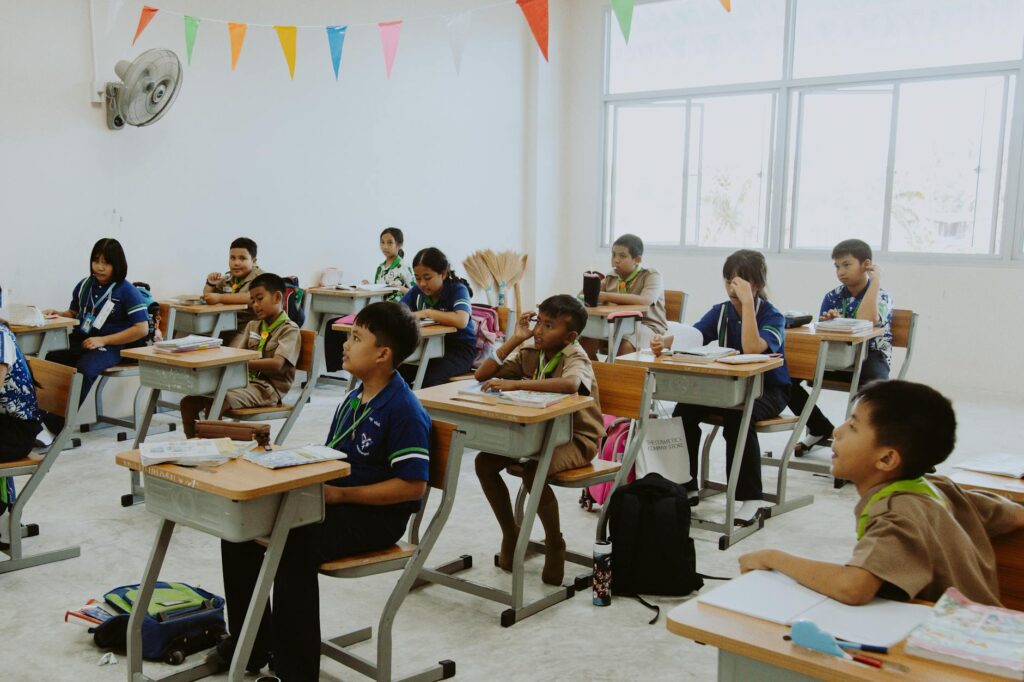
This guide covers everything about preschool classroom rules. As of April 2026, the emphasis in early childhood education continues to be on complete development, where social and emotional learning (SEL) is paramount. Effective classroom rules are a primary tool for supporting this. They help children learn to share, cooperate, manage their impulses, and resolve conflicts peacefully, laying the groundwork for future academic and social success. This guide offers practical strategies for developing and implementing preschool classroom rules that truly benefit young students.
Last updated: May 1, 2026
Preschool classroom rules: The Foundational Pillars of Preschool Rules
At their core, preschool classroom rules address three key areas: safety, respect, and responsibility. These aren’t arbitrary commands but are rooted in developmental needs and the practicalities of a busy learning space.
Safety First: Rules like “Walk inside” or “Keep toys on the floor” protect children from accidents. They ensure that the classroom’s a secure place where exploration can happen without undue risk.
Respect for Self and Others: This category includes rules about gentle hands, using quiet voices when others are listening, and sharing materials. It teaches children empathy and how to interact positively within a group setting.
Responsibility for Actions and Belongings: Rules such as “Clean up your area” or “Put toys away after playing” help children develop a sense of ownership and accountability for their environment and actions.
Crafting Age-Appropriate Preschool Expectations
What works for a three-year-old will differ significantly from what works for a five-year-old. Understanding developmental milestones is key to setting realistic and effective preschool expectations.
For 3-Year-Olds: Focus on simple, concrete rules related to immediate needs and safety. Think “Share the blocks,” “Sit on the rug,” and “Use kind hands.” Their attention spans are short, so rules need to be few and frequently reinforced.
For 4-Year-Olds: They can begin to grasp slightly more abstract concepts like taking turns and listening to the teacher. Rules might expand to include “Wait for your turn,” “Listen when someone is talking,” and “Help tidy up.” They can also start to understand simple consequences.
For 5-Year-Olds: This age group can handle more complex rules and understand the reasons behind them, and they can participate more actively in discussions about rules and consequences, leading to greater buy-in. Examples include “Follow directions the first time,” “Respect other people’s space,” and “Use your words to solve problems.” According to the National Association for the Education of Young Children (NAEYC) (2023), children at this age are developing more sophisticated social reasoning skills.
Involving Children in Setting Classroom Rules
When children have a hand in creating the rules, they are far more likely to understand and follow them. This collaborative approach fosters a sense of ownership and community within the classroom.
Brainstorming Session: Start with a discussion about what makes the classroom a happy and safe place for everyone. Ask open-ended questions like, “What do we need to do so everyone can play and learn safely?” or “How can we be good friends to each other?”
Visual Representation: Once rules are agreed upon, represent them visually. This is especially important for young children who are still developing their reading skills. Draw simple pictures or use photographs of children demonstrating the desired behaviour.
For the rule “Gentle hands,” you could draw a picture of a child holding a toy softly, or perhaps a hand with a heart on it. For “Walking feet,” a picture of children walking calmly.
Visual Aids: Making Rules Understandable
For preschoolers, abstract concepts are best understood through concrete, visual representations. Visual aids are indispensable tools for reinforcing preschool classroom rules.
Rule Posters: Create colorful posters with simple icons or drawings for each rule. Place these in prominent locations around the classroom where children can easily see them.
Picture Cues: Use individual picture cards for specific routines or expected behaviours. These can be helpful for children who need extra reminders or for transitioning between activities.
Social Stories: Develop short, illustrated stories that describe specific situations and the expected behaviours. For instance, a story about sharing might depict a child wanting a toy, waiting patiently, and then taking turns.
The CDC (Centers for Disease Control and Prevention) (2023) highlights the importance of visual supports in educational settings for children, particularly those with developmental differences, to enhance comprehension and engagement.
Positive Reinforcement Strategies
Focusing on positive behaviours is far more effective than constantly correcting negative ones. Positive reinforcement encourages children to repeat desired actions.
Verbal Praise: Offer specific and genuine praise. Instead of “Good job,” say “I love how you shared the blue crayon with Maya. That was very kind!”
Sticker Charts or Token Systems: For some children, a simple reward system can be motivating. Awarding stickers for following rules or completing tasks can encourage continued good behaviour. Be mindful that these systems work best when they are temporary and support the development of intrinsic motivation, as recommended by many early childhood education experts.
Classroom Charts: Create a chart where the class can earn a collective reward, like extra playtime or a special story, when everyone works together to follow the rules.
A teacher might say, “We earned five ‘star points’ today for cleaning up our learning centres! That means we get to choose a special book at story time.” This celebrates collective effort and positive behaviour.
Implementing Consequences Effectively
While positive reinforcement builds good habits, having clear, consistent, and age-appropriate consequences for rule-breaking is also essential. Consequences should be viewed as learning opportunities, not punishments.
Time-Out or Calm-Down Corner: A designated space where a child can go to regain composure when feeling overwhelmed or upset can be very effective. It’s not a punitive measure but a chance to reset. Ensure the space is safe, comfortable, and easily supervised.
Loss of Privilege: If a child misuses a toy or disrupts an activity, a temporary loss of that privilege can be a logical consequence. For example, if a child throws blocks, they might lose access to blocks for a short period.
Restitution: For minor conflicts, encourage children to make amends. This could involve apologizing, helping to fix something they broke, or sharing something they wouldn’t share before.
If a child scribbles on a table, a consequence could be helping to wipe the table clean. This directly relates the action to a restorative task.
Trustworthiness Signal: According to research published by the American Psychological Association (2022), consistent and fair consequences are more effective than inconsistent or harsh ones in shaping behaviour. The key’s predictability.
Managing Common Preschool Behaviour Challenges
Even with clear rules and positive strategies, challenges will arise. Understanding common issues and having a plan can make all the difference.
Transitions: Moving from one activity to another can be difficult for preschoolers. Use clear verbal cues, visual timers, and transition songs to signal changes and ease the shift.
Sharing Conflicts: This is a developmental stage. Teach specific phrases like “Can I have a turn when you’re done?” and facilitate turn-taking. Role-playing can be very effective here.
Aggression (hitting, biting): Address these incidents immediately. Ensure the safety of all children involved. Focus on teaching alternative behaviours, such as using words or asking for help. As noted by the National Association of School Psychologists (2023), early intervention and teaching self-regulation skills are critical.
Lack of Focus: Break down tasks into smaller steps, provide hands-on activities, and minimise distractions. Frequent movement breaks can also help. Think about the learning environment itself is it overstimulating?
Parent-Teacher Communication About Rules
Consistent expectations between home and school are vital for a child’s success. Open communication with parents ensures everyone is on the same page regarding preschool classroom rules.
Share the Rules: Provide parents with a simple list of classroom rules and expectations at the beginning of the school year. Explain the rationale behind them and how they support learning and development.
Regular Updates: Use newsletters, parent-teacher conferences, or brief daily notes to share how a child is progressing with following rules. Highlight both successes and areas needing support.
Collaborative Problem-Solving: If a child is consistently struggling with specific behaviours, work with parents to develop a unified approach. They may have insights into what works at home, and you can share strategies that are effective in the classroom.
A teacher might share with a parent, “Leo has been doing a wonderful job of using his walking feet in the classroom. At home, you could reinforce this by praising him when he walks instead of running indoors.”
Authoritative Reference: According to a report by the U.S. Department of Education (2021), strong home-school partnerships are a critical factor in student success, especially in early learning environments.
Expert Tips for Maintaining a Rule-Following Classroom
Beyond the core strategies, several nuanced approaches can significantly enhance rule adherence and create a more harmonious preschool environment. These often come from hands-on experience.
Model the Behaviour: Children are keen observers. You must consistently model the behaviours you expect; if you want them to use gentle hands, ensure your own interactions are gentle. If you want them to clean up, show them how you tidy your own space.
Be Predictable: Young children thrive on routine and predictability. Having a consistent daily schedule and applying rules consistently helps children feel secure and understand what to expect.
Focus on the “Why”: As children mature, especially by age five, explaining the reasoning behind a rule can increase their understanding and compliance. “We need to walk inside so no one gets hurt” is more impactful than just “Walk inside.” (This is a key differentiator often missing in basic rule lists.)
Celebrate Small Victories: Acknowledge and celebrate even small steps towards following rules. This positive attention can be highly motivating and reinforce desired behaviours.
Flexibility with Firmness: While consistency is vital, understand that children are individuals. There may be times when a minor adjustment or a different approach is needed for a particular child or situation. The key is to remain firm on core principles of safety and respect.
Unique Insight: Consider creating a “Classroom Rule Review” session once a month. This isn’t about re-teaching but about briefly revisiting the rules as a group, perhaps through a song or game. It keeps them top-of-mind and reinforces the collective commitment to them, preventing them from becoming stale or forgotten.
Frequently Asked Questions
What are the most important preschool classroom rules?
The most crucial preschool classroom rules typically revolve around safety (e.g., “Walk inside”), respect for others (e.g., “Use gentle hands”), and responsibility (e.g., “Clean up your space”). These pillars support a structured, nurturing, and effective learning environment for young children.
How many rules should a preschool classroom have?
Preschool classrooms should aim for a small, manageable number of rules, ideally between three to five core principles. This number is easier for young children to understand, remember, and follow consistently, preventing overwhelm.
How do you enforce preschool classroom rules?
Enforcement involves consistent, calm application of positive reinforcement for desired behaviours and logical, age-appropriate consequences for rule-breaking. Regularly referencing visual aids and involving children in the process also aids adherence.
Should preschoolers help create classroom rules?
Yes, involving preschoolers in creating classroom rules significantly enhances their understanding and willingness to follow them. Collaborative brainstorming fosters a sense of ownership and community, making rules feel like shared agreements rather than imposed mandates.
What are good consequences for preschoolers breaking rules?
Effective consequences include a brief time-out in a calm-down corner, temporary loss of a privilege (like a toy), or a task related to making amends (restitution). The goal is to teach and guide, not punish.
How can visual aids help with preschool rules?
Visual aids like picture posters or social stories make abstract rules concrete and understandable for preschoolers. They serve as constant, accessible reminders of expected behaviours, especially for children who are visual learners or need extra support.
Finally
Implementing effective preschool classroom rules in 2026 is an ongoing process that requires intention, consistency, and a deep understanding of child development. By focusing on safety, respect, and responsibility, involving children in the creation process, utilising visual aids, and employing positive reinforcement alongside logical consequences, educators can cultivate a classroom environment where young learners thrive. This structured yet nurturing approach empowers children with essential life skills, setting them on a path for academic and social success.
Actionable Takeaway: Start by creating or revising one core visual rule poster this week, involving your students in the brainstorming process, and consistently refer to it daily.
Source: edX
Editorial Note: This article was researched and written by the Class Room Centre editorial team. We fact-check our content and update it regularly. For questions or corrections, contact us. Knowing how to address preschool classroom rules early makes the rest of your plan easier to keep on track.


