
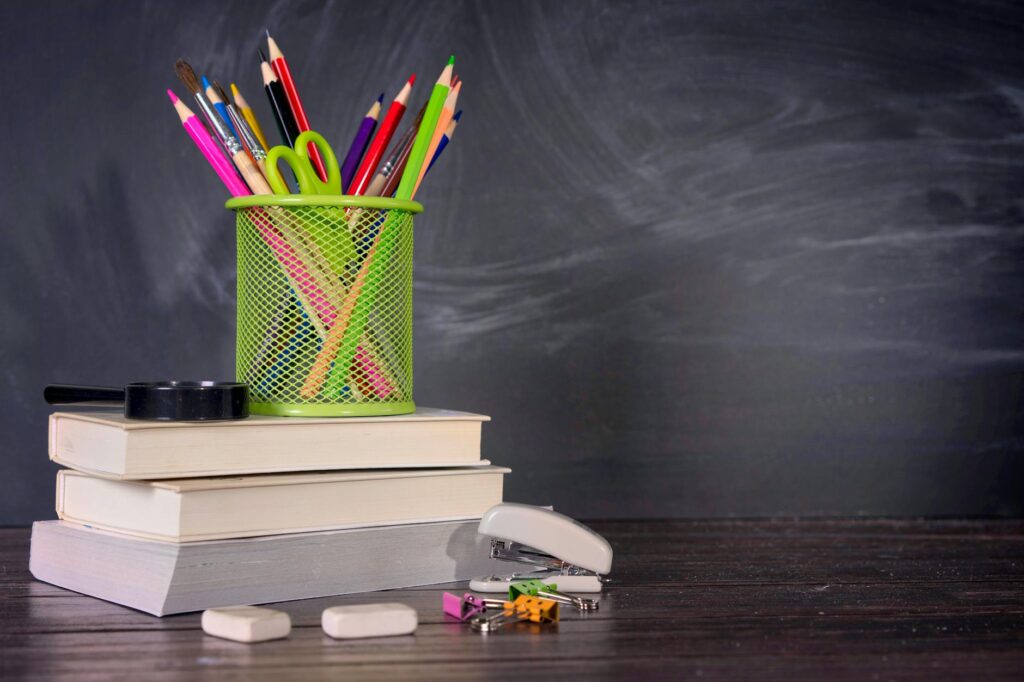
This guide covers everything about classroom items in spanish. Equipping a classroom, whether for teaching Spanish or fostering a bilingual environment, requires a strong understanding of essential items. As of April 2026, the demand for effective bilingual educational tools continues to grow, making a complete Spanish vocabulary for classroom items more critical than ever. Knowing these terms isn’t just about listing objects; it’s about creating an inclusive, functional, and culturally rich learning space.
Last updated: May 1, 2026
- Mastering Spanish names for common classroom items enhances bilingual learning environments.
- Essential Spanish vocabulary includes furniture, writing tools, art supplies, and organizational items.
- Proper pronunciation and context are key for effective communication in a Spanish-speaking classroom.
- Budget-conscious educators can find cost-effective Spanish learning resources and supplies.
Why Mastering Spanish Classroom Vocabulary Matters
Understanding classroom items in Spanish is fundamental for any educator aiming to create an inclusive and effective learning environment, especially in bilingual settings. It bridges communication gaps, allowing students to ask for what they need and teachers to give clear instructions. This linguistic foundation supports academic progress and fosters a sense of belonging for Spanish-speaking students.
For instance, a teacher pointing to a silla (chair) when a student needs to sit down is far more direct than using gestures alone. This immediate clarity reduces confusion and allows for more focused instruction. Also, incorporating Spanish terms for everyday objects normalizes the language, making it feel less like a foreign subject and more like an integral part of the classroom culture.
Insight: Beyond simple identification, using Spanish terms for classroom items can be a powerful tool for early language acquisition. Repeated exposure in a practical context helps students internalize new vocabulary naturally.
Core Furniture and Fixtures in Spanish
Every classroom is built around fundamental pieces of furniture. Knowing their Spanish equivalents ensures you can accurately refer to and manage the physical space. These items form the backbone of any learning environment, providing structure and functionality.
Key Spanish terms include:
- La mesa (the table): Often used for group work or individual desks.
- La silla (the chair): Essential seating for students and teachers.
- El escritorio (the desk): Typically a teacher’s primary workspace.
- La pizarra (the blackboard/whiteboard): The central visual aid for instruction.
- El estante (the shelf/shelving unit): Used for storing books and materials.
- El armario (the cupboard/closet): For larger storage needs.
- La ventana (the window): Provides light and ventilation.
- La puerta (the door): The entry and exit point.
Example: A teacher might say, “Por favour, coloquen los libros en el estante azul.” (Please place the books on the blue shelf.) This sentence uses multiple Spanish classroom items in a practical instruction.
Insight: When setting up a new classroom or reorganizing, using Spanish labels on furniture can be an excellent visual aid for students learning the vocabulary, reinforcing the connection between the object and its name.
Writing and Drawing Tools: Essential Spanish Vocabulary
The tools students and teachers use for writing, drawing, and illustrating are central to daily learning activities. Having the Spanish names for these items facilitates communication about supplies, assignments, and creative projects.
Common writing and drawing implements include:
- El lápiz (the pencil): Fundamental for writing and drawing.
- La pluma (the pen): For more permanent writing.
- El bolígrafo (the ballpoint pen): A very common type of pen.
- El crayón (the crayon): For colorful drawings.
- El marcador (the marker): Used for writing on whiteboards or paper.
- La tiza (the chalk): Traditionally used on blackboards.
- El borrador (the eraser): For correcting pencil marks.
- El sacapuntas (the pencil sharpener): Keeps pencils functional.
Use Case: A student might ask, “¿Puedo tener un lápiz, por favour?” (Can I have a pencil, please?) or a teacher might instruct, “Usen los marcadores para dibujar en el papel.” (Use the markers to draw on the paper.)
Insight: Differentiating between bolígrafo (ballpoint pen) and pluma (pen, often referring to fountain pens or just general pens) can be nuanced. For most classroom contexts, bolígrafo is the most practical term for everyday pens.
Art and Craft Supplies in Spanish
Creative expression is vital in the classroom, and a wide array of art and craft supplies supports this. Knowing the Spanish names for these materials enhances art instruction and allows students to articulate their creative needs.
Essential art supplies include:
- El papel (the paper): The primary surface for drawing and writing.
- La pintura (the paint): For various artistic applications.
- El pincel (the paintbrush): Used to apply paint.
- Las tijeras (the scissors): For cutting paper and other materials.
- El pegamento (the glue): For sticking items together.
- La arcilla (the clay): For sculpting and modelling.
- Las hojas de colores (coloured sheets of paper): For crafts and projects.
- La cartulina (cardstock): Thicker paper for projects.
Example: “Necesitamos más pegamento para el proyecto de arte.” (We need more glue for the art project.) This sentence highlights the need for a specific supply.
Insight: While pintura is general paint, specific types exist like pintura de acuarela (watercolor paint) or pintura acrílica (acrylic paint). For a general classroom list, pintura is sufficient.
Organizational and Classroom Management Tools in Spanish
Effective classroom management relies on good organisation. Spanish terms for organizational tools help teachers maintain order and students understand where to place or find items. This also ties into broader concepts like classroom economy systems, where organisation is key.
Key organizational items include:
- La carpeta (the folder): For organising papers.
- El archivador (the binder): Holds hole-punched papers.
- La caja (the box): For storing various supplies.
- El cesto (the basket): Often used for holding items like crayons or pencils.
- El calendario (the calendar): To track dates and events.
- El reloj (the clock): To keep track of time.
- La papelera (the wastebasket/trash can): For disposing of waste.
Use Case: A teacher might say, “Guarden sus trabajos en su carpeta.” (Put your work in your folder.) This directs students to use an organizational tool.
Insight: The term papelera can refer to a wastebasket or a place for paper (like a stationery shop). In a classroom context, it unambiguously means trash can.
Technology and Digital Learning Tools in Spanish
As of April 2026, technology is an indispensable part of many classrooms. Understanding the Spanish terms for these devices supports their integration into lessons and troubleshooting.
Common tech items include:
- La computadora (the computer): For research, writing, and digital activities.
- La tableta (the tablet): Portable digital device for learning apps and content.
- El proyector (the projector): For displaying digital content on a screen or wall.
- La pantalla (the screen): The display surface for projectors or a smart board.
- Los auriculares (the headphones): For individual audio listening.
- El ratón (the mouse): Computer input device.
- El teclado (the keyboard): Computer input device.
Example: “Necesitamos conectar el proyector a la computadora para la presentación.” (We need to connect the projector to the computer for the presentation.)
Insight: In some Spanish-speaking regions, ‘computadora’ might be replaced by ‘ordenador’ (especially in Spain). However, ‘computadora’ is widely understood across Latin America and is generally the safer bet for broad comprehension.
Reading Materials and Books in Spanish
Books and reading materials are cornerstones of literacy development. Knowing how to refer to them in Spanish is crucial for library management and reading instruction.
Key terms include:
- El libro (the book): The primary reading material.
- El cuento (the story/short story): For younger learners or specific literature.
- La novela (the novel): Longer fictional works.
- El diccionario (the dictionary): For looking up word meanings.
- La revista (the magazine): Periodical publications.
- El periódico (the newspaper): Daily or weekly news publication.
Use Case: “¿Puedes leer este cuento en voz alta?” (Can you read this story aloud?) This involves students directly with reading materials.
Insight: While ‘libro’ is general, ‘biblioteca’ refers to the library itself, an essential space that houses many books. Understanding this distinction is vital for classroom organisation.
Common Mistakes When Using Spanish Classroom Item Vocabulary
Even with a good list, errors can occur. Mispronunciation, using the wrong gendered article, or confusing similar-sounding words are common pitfalls.
- Mistake: Gender Agreement. Spanish nouns have gender (masculine/feminine). Using ‘el’ with a feminine noun or ‘la’ with a masculine noun leads to grammatical errors. For example, it’s la mesa (feminine) and el lápiz (masculine).
- Solution: Memorize gender with the noun. Use flashcards or apps that pair the article with the noun. Practice using them in sentences.
- Mistake: False Cognates or Similar Words. Words might sound similar to English but have different meanings. For example, ‘ropa‘ (clothing) sounds like ‘rope’, but means something entirely different.
- Solution: Context is key. When learning new words, always confirm their meaning and context. Use bilingual dictionaries or resources that provide example sentences.
- Mistake: Over-reliance on direct translation. Some English phrases don’t translate directly. For instance, ‘wastebasket’ is papelera, not a literal translation like ‘cesta de basura’.
- Solution: Focus on learning established Spanish terms for classroom objects rather than trying to construct them word-for-word from English.
Insight: A common error is forgetting the plural forms. For example, ‘pencil’ is lápiz, but ‘pencils’ is lápices. The same applies to tiza/tizas (chalk/chalks) or silla/sillas (chair/chairs).
Budget-Friendly Ways to Acquire Spanish Classroom Items
As of April 2026, educators are constantly seeking ways to optimise budgets without compromising quality. Acquiring Spanish classroom items doesn’t have to be expensive. Strategic purchasing and resourcefulness can stretch educational funds considerably.
- Use Digital Resources: Many online platforms offer free or low-cost printable labels, vocabulary lists, and even digital learning games in Spanish. Websites like Teachers Pay Teachers often have budget-friendly bundles.
- DIY Labels: Print simple labels in Spanish for existing furniture and supplies. This is a cost-effective way to introduce vocabulary.
- Bulk Purchasing: For consumable items like paper, pencils, or markers, buying in bulk from educational suppliers or even wholesale clubs can significantly reduce per-unit costs.
- Community Partnerships: Explore local community centres or cultural organisations that might offer donations or discounts on educational materials for bilingual classrooms.
- Second-Hand Stores and Online Marketplaces: Gently used furniture, organizational bins, and even books can often be found at a fraction of the original cost on platforms like eBay, Facebook Marketplace, or local thrift stores. Always check for condition and safety.
- Grant Applications: Many educational foundations and government programs offer grants specifically for bilingual education or classroom supplies. Researching and applying for these can provide substantial funding. According to the U.S. Department of Education (2025), grants for English Learner support continue to be a priority.
Example: A teacher could create a “Spanish Classroom Corner” by repurposing old shelves, painting them, and labeling them with terms like estante de libros (book shelf) and caja de crayones (crayon box), using only donated or recycled materials.
Insight: When purchasing items specifically for Spanish learning (like bilingual books or flashcards), compare prices across major retailers, educational supply stores, and even direct from publishers if buying in large quantities. Small savings per item add up.
Tips for Integrating Spanish Classroom Items into Daily Learning
Simply having the items and their Spanish names isn’t enough; effective integration is key. Making the vocabulary active and relevant ensures students learn and retain the terms.
- Label Everything: Go beyond furniture. Label individual supplies like lápices, tijeras, pegamento, and even sections of the classroom like la zona de lectura (the reading corner).
- Use Commands and Questions: Regularly use Spanish commands and questions that involve classroom items. “¿Dónde está el borrador?” (Where is the eraser?), “Pasa las tijeras.” (Pass the scissors.), “Saca un libro.” (Take out a book.)
- Role-Playing Activities: Set up scenarios where students need to ask for specific items in Spanish. This could be a “store” where they “buy” supplies or a “lost and found” scenario.
- Visual Aids and Games: Use flashcards, matching games, or Bingo with pictures of classroom items and their Spanish names. This makes learning interactive and fun.
- Storytelling: Incorporate classroom items into simple stories or dialogues. Classroom items in spanish provides context and makes the vocabulary memorable.
- Consistent Reinforcement: Use the Spanish terms consistently. Avoid defaulting to English unless absolutely necessary for clarity. The more students hear and use the terms, the more natural they become.
Example: During a science lesson, a teacher might ask students to gather their vasos de precipitados (beakers) and tubos de ensayo (test tubes), reinforcing scientific vocabulary alongside everyday classroom terms.
Insight: For very young learners, pairing the spoken Spanish word with a visual cue (like pointing to the object or a picture) is crucial. As they progress, you can gradually remove the visual support.
Frequently Asked Questions
What are the most common classroom items in Spanish?
The most common classroom items in Spanish include furniture like la mesa (table) and la silla (chair), writing tools such as el lápiz (pencil) and el bolígrafo (pen), and essential supplies like el papel (paper) and las tijeras (scissors). These form the basic vocabulary for any educational setting.
How do I teach Spanish classroom vocabulary effectively to young children?
Teach young children using a multi-sensory approach: label items, use songs and rhymes, play matching games, and incorporate movement. Focus on high-frequency items and use them consistently in context during daily activities and instructions.
What is the Spanish word for whiteboard?
The most common Spanish word for whiteboard is la pizarra blanca. However, la pizarra can refer to either a blackboard (traditionally black) or a whiteboard (often white), so context is important. In many classrooms today, pizarra is used for whiteboards.
Are there regional differences in Spanish classroom item names?
Yes, there can be regional differences. For example, ‘computer’ is computadora in most of Latin America but ordenador in Spain. Similarly, terms for specific school supplies might vary slightly. However, core terms are widely understood across most Spanish-speaking regions.
How can I find affordable classroom items in Spanish?
You can find affordable items by utilising free online printables for labels, buying general supplies in bulk, and repurposing existing materials. Explore secondhand marketplaces and investigate educational grants for bilingual programs. Check the official sources for current grant availability as of 2026.
What Spanish terms are essential for classroom management?
Essential Spanish terms for classroom management include organizational tools like la carpeta (folder), el archivador (binder), and storage items such as la caja (box) or el cesto (basket). Also crucial are timekeeping items like el calendario (calendar) and el reloj (clock).
Conclusion
Mastering classroom items in Spanish is an achievable goal that significantly enhances bilingual education. By integrating these terms consistently into daily routines and activities, educators can foster a more inclusive, communicative, and effective learning environment for all students. Start by labeling five key items in your classroom today.
Editorial Note: This article was researched and written by the Class Room Centre editorial team. We fact-check our content and update it regularly. For questions or corrections, contact us. Knowing how to address classroom items in spanish early makes the rest of your plan easier to keep on track.


