
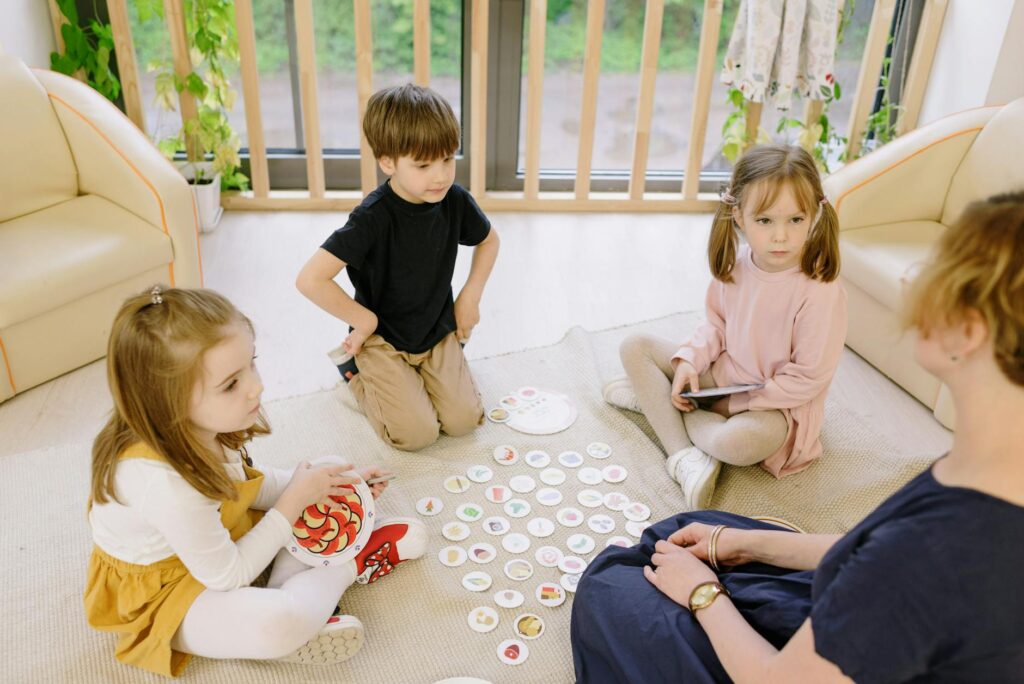
This guide covers everything about 6x classroom games. The first thing worth saying about effective teaching in 2026 is that engagement is paramount. As educators in the UK navigate an ever-evolving landscape, finding ways to capture and maintain pupils‘ attention is crucial. Traditional methods, while valuable, can sometimes fall short. This is where the strategic integration of classroom games comes into play. Beyond mere entertainment, well-designed games can transform learning, foster critical thinking, and enhance social skills.
Last updated: May 5, 2026
This guide explores six distinct types of classroom games, offering practical insights and actionable strategies for teachers across Key Stages 1-5. We’ll explore how these games can be adapted for various subjects and age groups, ensuring that learning remains dynamic and effective throughout the academic year.
Key Takeaways
- Strategic use of classroom games can significantly boost pupil engagement and comprehension in 2026.
- Six distinct game types are explored, adaptable for various subjects and age groups, from EYFS to A-Level.
- Games can foster critical thinking, teamwork, and positive classroom behaviour.
- Low-prep and digital options are available to suit busy teaching schedules and modern learning environments.
- Effective implementation requires clear objectives, appropriate adaptation, and mindful debriefing.
The ‘Information Scavenger Hunt’ Game
This game transforms passive information recall into an active, investigative pursuit. Pupils work individually or in small teams to find specific answers, facts, or keywords hidden within provided texts, worksheets, or even digital resources. The objective is not just to find the information but to locate it efficiently and accurately.
For instance, a Year 8 history class studying the Tudor period could be given a handout detailing key monarchs and their reigns. The scavenger hunt might ask them to find the birth year of Anne Boleyn, the number of years Henry VIII reigned, or the name of his first wife. The first team to correctly answer all questions wins, or points are awarded for speed and accuracy.
The real value here lies in developing research skills and text comprehension. Pupils learn to skim, scan, and identify relevant information under a gentle time pressure, mirroring real-world research scenarios. It also encourages collaboration, as team members might divide tasks or cross-reference findings.
Pros
- Enhances reading comprehension and information retrieval skills.
- Promotes teamwork and communication.
- Adaptable to any subject matter with readily available text resources.
- Can be easily differentiated for various learning needs by adjusting question difficulty.
Cons
- Requires careful preparation of source materials to ensure clarity and accuracy.
- Can become repetitive if used too frequently without variation.
- Some pupils might struggle with the independent research aspect without initial guidance.
‘Concept Charades’ for Deeper Understanding
Concept Charades takes the familiar game of charades and applies it to abstract ideas, vocabulary, or processes, rather than just objects or actions. This game is excellent for consolidating understanding of new terms or complex concepts across subjects like science, literature, or even abstract mathematical principles.
Imagine a Year 5 science lesson on ecosystems. Pupils could act out terms like ‘photosynthesis’, ‘predator’, ‘herbivore’, ‘decomposer’, or ‘symbiosis’. One pupil draws a term and must convey its meaning through mime and action, without speaking. Their teammates guess the concept. The challenge is in representing abstract or complex ideas non-verbally.
This activity compels pupils to think critically about the core meaning of a concept. To act it out effectively, they must break it down into its essential components and express them creatively. It also develops their ability to interpret non-verbal cues and think outside the box, often leading to memorable learning experiences.
Pros
- Boosts understanding of abstract concepts and vocabulary.
- Enhances non-verbal communication and creative expression.
- Encourages critical thinking to decipher meanings.
- Highly engaging and memorable, aiding long-term retention.
Cons
- Some abstract concepts can be very challenging to act out without speech.
- May require a controlled environment to prevent excessive noise or disruption.
- Differentiation for pupils with mobility issues needs careful consideration.
‘Escape the Classroom’ Challenges (Themed Breakouts)
Themed breakout challenges, often called ‘escape rooms’ in a classroom setting, are immersive problem-solving activities. Pupils are presented with a narrative scenario and a series of puzzles that, when solved, unlock clues leading to a final solution or ‘escape’. These puzzles can be integrated into curriculum content, making learning an adventure.
A popular example is a ‘Medieval Castle’ breakout. Pupils might need to decipher a coded message using a Caesar cipher (maths/literacy), solve a riddle about a historical figure (history), identify correct medieval artefacts from images (art/history), and unlock a box containing a ‘treasure’ (a certificate or fun prize). Each solved puzzle provides a piece of the final code or a key to the next stage.
These challenges foster a powerful sense of collaboration, as teams must work together, pooling their knowledge and problem-solving skills. They also build resilience, as pupils encounter and overcome obstacles. The narrative element makes the learning context highly engaging, and the sense of accomplishment upon ‘escaping’ is a significant motivator.
Pros
- Highly engaging and provides a strong sense of achievement.
- Develops critical thinking, problem-solving, and teamwork skills.
- Integrates multiple subject areas seamlessly.
- Offers a memorable and exciting learning experience.
Cons
- Requires significant planning and resource preparation.
- Can be time-consuming to set up and run effectively.
- Needs careful management to ensure all pupils are involved and supported.
‘Debate Dash’ for Argumentation Skills
Debate Dash is a fast-paced activity designed to hone pupils’ argumentation, critical thinking, and public speaking skills. It involves presenting a proposition or question, dividing the class into ‘for’ and ‘against’ sides, and giving them a very short time to prepare their arguments before a rapid-fire debate.
For instance, in a Year 10 citizenship or ethics class, a proposition like “Social media does more harm than good” could be presented. Teams are given just 5-10 minutes to brainstorm and assign speaking roles. Then, each side presents a brief opening statement, followed by short rebuttal periods and a concluding summary. Voting can occur after the debate.
This game teaches pupils to think on their feet, structure coherent arguments, anticipate counter-arguments, and articulate their points persuasively. It also exposes them to different perspectives, fostering intellectual flexibility and respect for opposing views. The quick format ensures high energy and participation, even from shy pupils who might prefer shorter speaking turns.
Pros
- Develops strong argumentation and persuasive communication skills.
- Encourages critical thinking and consideration of multiple viewpoints.
- Improves confidence in public speaking.
- High energy and rapid pace can increase participation.
Cons
- Requires a teacher adept at managing rapid debate and time constraints.
- Some pupils may feel pressured by the speed and public speaking element.
- Ensuring balanced participation across all team members can be challenging.
‘Build It, Explain It’ Collaborative Construction
This game focuses on collaborative problem-solving and clear communication. Pupils work in pairs or small groups, with one group (the ‘builders’) receiving instructions to construct something (e.g., a model from Lego bricks, a drawing, a simple structure from craft materials), while the other group (the ‘explainer’ or ‘communicator’) has the original instructions but can’t see what the builders are doing.
A practical application could be in a Year 7 design and technology class. One group has an instruction booklet for building a specific type of bridge with K’nex. The other group, who only has the finished bridge model and the original instructions, must verbally guide the builders through the construction process. The builders can only ask clarifying questions, not see the instructions.
This activity is superb for developing precise verbal instruction skills and active listening. The ‘builders’ must clearly articulate what they need, while the ‘explainers’ must translate abstract instructions into clear, actionable directions. It highlights the importance of clear communication in any practical or technical task and fosters mutual reliance within groups.
Pros
- Enhances communication, listening, and instruction-giving skills.
- Promotes problem-solving and collaborative effort.
- Builds understanding of spatial reasoning and following instructions.
- Applicable across many subjects, from STEM to art and design.
Cons
- Requires specific materials for construction (e.g., Lego, craft supplies).
- Frustration can arise if communication breaks down.
- Needs careful pairing or grouping to ensure balanced participation.
‘Digital Escape Rooms’ and Online Puzzles
As technology continues to integrate into classrooms, digital versions of games offer new avenues for engagement. Digital escape rooms, online quizzes with gamified elements, or collaborative puzzle platforms can replicate the benefits of physical games with added flexibility and accessibility, especially relevant for blended or remote learning scenarios in 2026.
Platforms like Genially, Google Forms with quiz features, or dedicated educational game sites (e.g., Kahoot!, Quizizz for quick checks, or more complex virtual escape room builders) allow teachers to create interactive experiences. A Year 9 science class might use a digital escape room focused on genetics, where solving interactive problems about DNA sequences unlocks the next puzzle. Another example could be using online collaborative whiteboards for a ‘mystery image’ game, where pupils reveal parts of an image by answering questions correctly.
These tools can offer immediate feedback, track progress automatically, and cater to different learning styles through multimedia. They are also highly scalable, suitable for individual work, pair activities, or whole-class participation. For pupils accustomed to digital environments, these games offer a familiar and engaging way to learn.
Pros
- Highly accessible and can be used for remote or blended learning.
- Offers immediate feedback and automated progress tracking.
- Engaging for digital-native pupils.
- Variety of platforms allows for diverse game types and subject integration.
Cons
- Requires reliable access to devices and internet connectivity for all pupils.
- Some platforms may have subscription costs.
- Over-reliance on digital tools can detract from essential offline skills.
How to Implement Classroom Games Effectively
Simply introducing a game isn’t enough; effective implementation is key to maximising learning outcomes. This involves careful planning, thoughtful adaptation, and a structured debriefing process.
- Define Clear Learning Objectives: Before selecting or designing a game, ask: What specific knowledge, skill, or understanding do I want pupils to gain? The game should directly support these objectives. For example, a ‘Debate Dash’ should aim to improve persuasive speaking, not just to be a fun activity.
- Adapt to Your Pupils and Subject: Not all games fit all age groups or subjects. A ‘Scavenger Hunt’ might be too complex for younger pupils if the text is too difficult. A ‘Build It, Explain It’ game could be adapted for English by having one pupil describe a picture and another draw it based solely on the description. Consider the needs of SEND pupils, ensuring accessibility and support.
- Establish Clear Rules and Expectations: Before starting, explain the game’s rules, objectives, and expected behaviour. Emphasise that the goal is learning, not just winning. For ‘Escape the Classroom’ challenges, setting clear time limits and how to ask for hints is crucial.
- Facilitate, Don’t Just Supervise: Circulate among groups, offering guidance, asking probing questions, and ensuring all pupils are engaged. For ‘Concept Charades’, you might offer hints or rephrase concepts if a group is stuck.
- Conduct a Post-Game Debrief: This is perhaps the most critical step for learning. After the game, lead a discussion: What did you learn? What strategies worked well? What challenges did you face? How does this relate to our topic? For ‘Build It, Explain It’, discuss what made communication effective or ineffective. This reflection consolidates learning and transfers it to other contexts.
Common Mistakes to Avoid with Classroom Games
While games are powerful tools, certain pitfalls can undermine their effectiveness. Being aware of these can help teachers maximise their impact.
Mistake 1: Game Overload
Using games too frequently or for too long can diminish their impact. Pupils may start to see them as a distraction from ‘real’ work, or the novelty may wear off. The key is balance – games should supplement, not replace, core instruction.
Mistake 2: Lack of Clear Objectives
If a game is chosen purely for fun without a clear link to learning outcomes, it risks becoming just playtime. Teachers must be able to articulate what pupils will learn from participating. A game of ‘Debate Dash’ might be used to practice arguing a point about a historical event, directly linking to curriculum goals.
Mistake 3: Inadequate Preparation
Games like ‘Escape the Classroom’ or even a well-structured ‘Scavenger Hunt’ require preparation. Missing materials, unclear instructions, or ill-prepared text resources can lead to confusion and frustration, derailing the learning. Double-check all resources and instructions beforehand.
Mistake 4: Neglecting the Debrief
The learning often happens most profoundly during the reflection period after the game. Skipping or rushing the debrief means pupils miss the chance to consolidate their understanding, analyse their strategies, and connect the game experience to broader academic concepts. This is where the real educational value is unlocked.
Mistake 5: Ignoring Differentiation
A one-size-fits-all approach to games can exclude pupils with specific needs. For example, highly physical games might not suit all pupils, and complex instructions can be a barrier for those with reading difficulties. Teachers must adapt games to ensure all pupils can participate and benefit, perhaps by providing visual aids for instructions or offering alternative roles within a team.
Expert Tips for Enhancing Classroom Game Impact
To truly harness the power of classroom games, consider these expert insights:
- Integrate, Don’t Isolate: Weave games into the fabric of your lesson plans. A ‘Concept Charades’ session can be a 15-minute starter to introduce new vocabulary, or a ‘Scavenger Hunt’ can be the plenary activity to reinforce facts learned.
- Embrace Digital Tools Wisely: As of 2026, numerous high-quality digital gamification platforms exist. Use them to supplement, not substitute, traditional methods. Platforms like Quizlet offer flashcards and learning games that can reinforce vocabulary and concepts effectively. For more complex scenarios, explore tools that allow for customisation of narrative and puzzles.
- Foster a ‘Game-Based Learning’ Culture: Encourage pupils to view games as valuable learning tools. Frame them as opportunities to practise skills, explore ideas, and learn from mistakes in a low-stakes environment. A positive attitude from the teacher is infectious.
- Utilise Peer Teaching and Assessment: Games like ‘Build It, Explain It’ inherently involve peer teaching. You can extend this by having teams present their solutions or strategies afterwards, or even peer-assess each other’s participation and contributions. This deepens understanding and responsibility.
- Connect to Real-World Applications: Wherever possible, link the game’s activity to real-world scenarios. A ‘Debate Dash’ about environmental policy can connect to current news. An ‘Escape the Classroom’ challenge themed around a scientific discovery can highlight the iterative nature of research. This contextualisation makes learning more relevant and meaningful.
- Consider the Physical Space: For active games, ensure there’s adequate space. For quieter games, consider seating arrangements that facilitate collaboration. For digital games, ensure everyone can see the screen or has their own device. A well-organised classroom environment supports game-based learning.
The Education Endowment Foundation (EEF) consistently highlights the positive impact of active learning strategies on pupil attainment. While not always framed as ‘games’, many of these evidence-based approaches share core principles: active participation, clear goals, and constructive feedback. Implementing classroom games strategically aligns with these principles and can provide a significant boost to learning effectiveness.
Frequently Asked Questions
What are the benefits of using games in the classroom?
Classroom games enhance pupil engagement, improve retention of information, develop critical thinking and problem-solving skills, and foster teamwork. They can also make learning more enjoyable and reduce anxiety around challenging topics.
Are classroom games suitable for all age groups?
Yes, with appropriate adaptation. Simpler games with visual aids are good for EYFS and Key Stage 1, while more complex strategy or debate games suit older pupils in Key Stages 3, 4, and 5. The key is matching the game’s complexity to the age and developmental stage of the pupils.
How can I ensure games contribute to learning rather than just being fun?
By setting clear learning objectives for each game, carefully selecting or designing activities that align with curriculum content, and conducting a thorough debriefing session afterwards to consolidate learning and reflect on strategies.
What are some low-prep classroom game ideas?
Quick vocabulary games like ‘Charades’ or ‘Pictionary’, simple true/false quizzes, or ‘Two Truths and a Lie’ can be prepared with minimal notice. Online platforms like Kahoot! Also offer ready-made or easily customisable quizzes.
How can games help with classroom behaviour management?
Games can channel energy positively, teach pupils to follow rules, encourage cooperation over competition, and provide rewards for good participation. Well-structured team games can also promote positive peer interactions and reduce disruptive behaviour.
Should I use physical or digital classroom games?
Both have benefits. Physical games encourage movement and face-to-face interaction, while digital games offer accessibility, immediate feedback, and can be great for remote learning. The best approach often involves a blend of both, depending on the learning objectives and resources available.
Conclusion
Incorporating strategic classroom games into your teaching repertoire is a powerful way to boost engagement, deepen understanding, and make learning a more dynamic and enjoyable experience for pupils in 2026 and beyond. By carefully selecting, adapting, and debriefing games, educators can unlock a wealth of benefits, from enhanced critical thinking to improved classroom behaviour. The six types of games explored here offer a starting point for transforming lessons into interactive adventures.
Actionable Takeaway: Choose one game type from this guide that aligns with an upcoming lesson objective, plan its implementation with clear rules and a debrief in mind, and try it with your class next week.
Last reviewed: May 2026. Information current as of publication; pricing and product details may change.
Related read: 2026's Top Classroom Events Games: Engaging Fun for Every Pupil
Source: Britannica
Editorial Note: This article was researched and written by the Class Room Center editorial team. We fact-check our content and update it regularly. For questions or corrections, contact us. Knowing how to address 6x classroom games early makes the rest of your plan easier to keep on track.


